Roofing guide
EPDM, TPO or modified bitumen: choosing a flat roof in New York
Three membranes cover most flat roofs in the city. Each is the right answer for some buildings and the wrong one for others. Here is how to tell which.
By Ada Lombardi, Roofing Guides EditorPublished 3 min read
Key takeaways
- EPDM suits small, simple roofs with few seams; black EPDM needs a white sheet or coating for the city's cool roof rules.
- TPO is white from the factory with heat-welded seams, a good fit for larger roofs with equipment.
- Modified bitumen builds a tough two-ply roof for foot traffic, terraces and rowhouses.
- Published 2026 figures put TPO at about $8.00 to $13.00 per sq ft and EPDM at about $6.50 to $11.00 per sq ft in New York City.
Start with the roof, not the product
The right membrane depends on the building: the size and shape of the roof, how many vents, curbs and skylights break it up, whether people walk on it, what equipment sits on it, and whether the building is occupied during the work. Drainage and what is already under the roof matter as much as the membrane.
In New York City there is one more factor: roofs are required to meet solar reflectivity standards, with some exceptions. That affects every choice below.
EPDM rubber
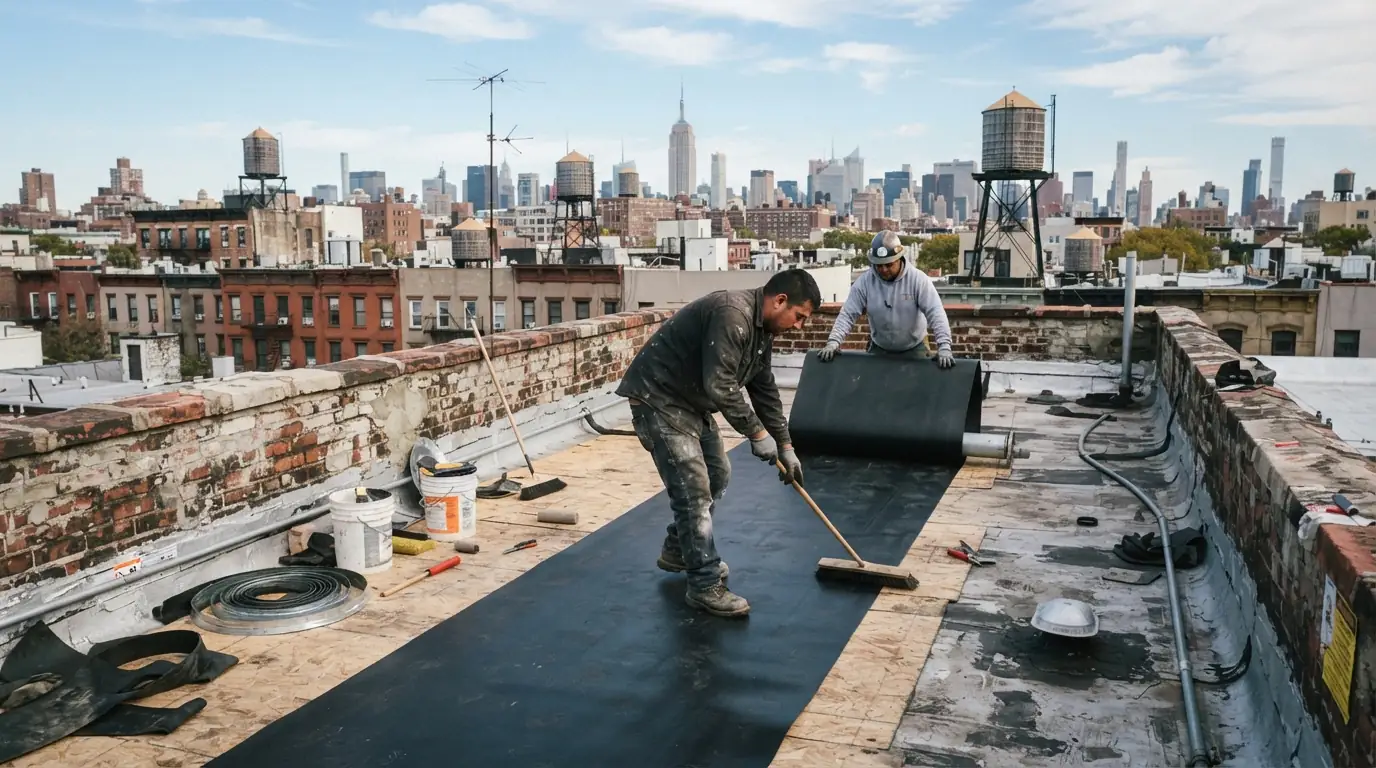
EPDM is a synthetic rubber sheet made in wide rolls, so a small rowhouse roof can be covered with very few seams. It stays flexible through freeze and thaw and is simple to patch years later with primer, seam tape and pressure-sensitive patches.
Its seams rely on tape and adhesive rather than welding, so seam work has to be careful. Asphalt-based products such as roof cement damage it. And standard black EPDM absorbs heat, so on most city roofs it needs a white EPDM sheet or a compatible reflective coating.
TPO
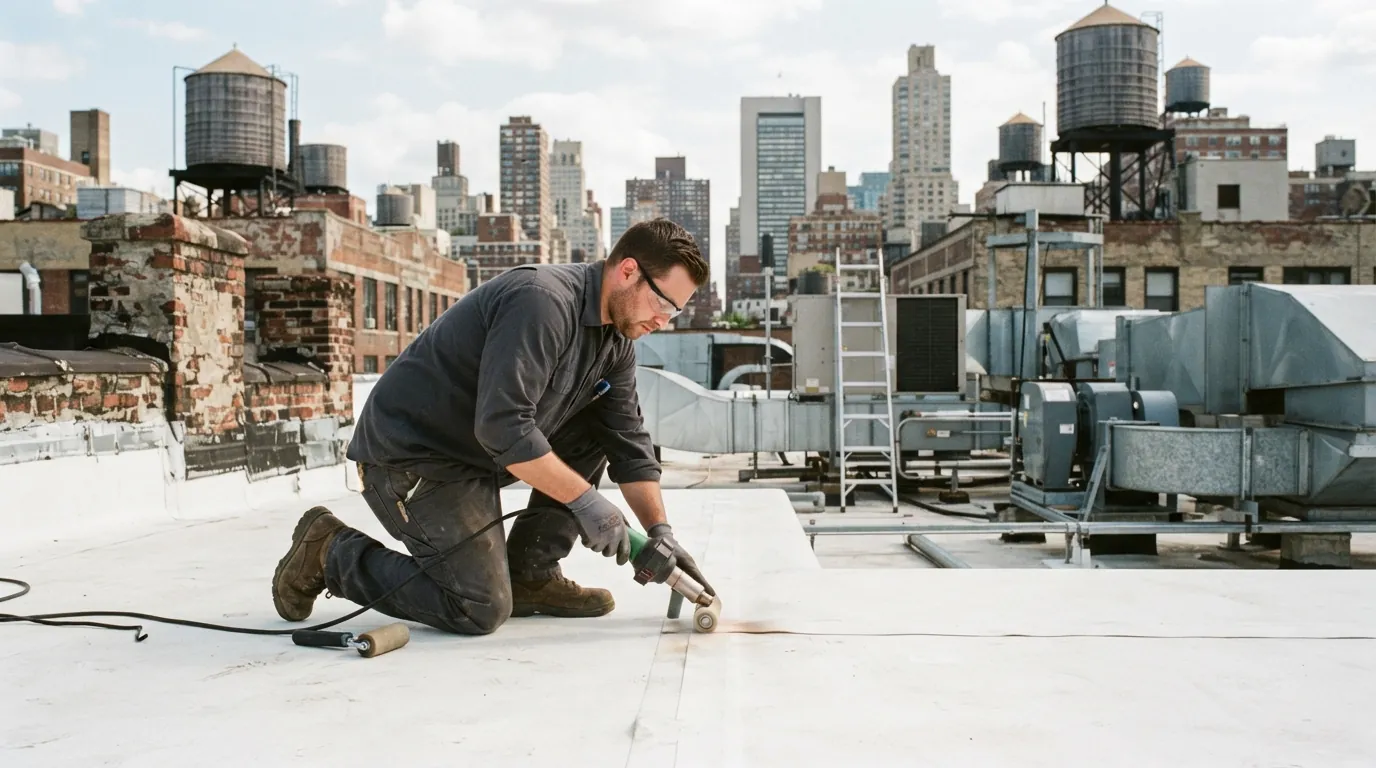
TPO is a white single-ply membrane whose seams are melted together with a hot-air welder, so the finished roof acts like one sheet. It is white from the factory, which meets the reflectivity requirement without a coating, and it suits larger roofs and roofs with equipment.
Weld quality is everything, so every seam should be probed along its length. Older TPO may need cleaning and conditioning before a repair patch will weld to it, and walkway pads should protect routes to equipment.
Modified bitumen
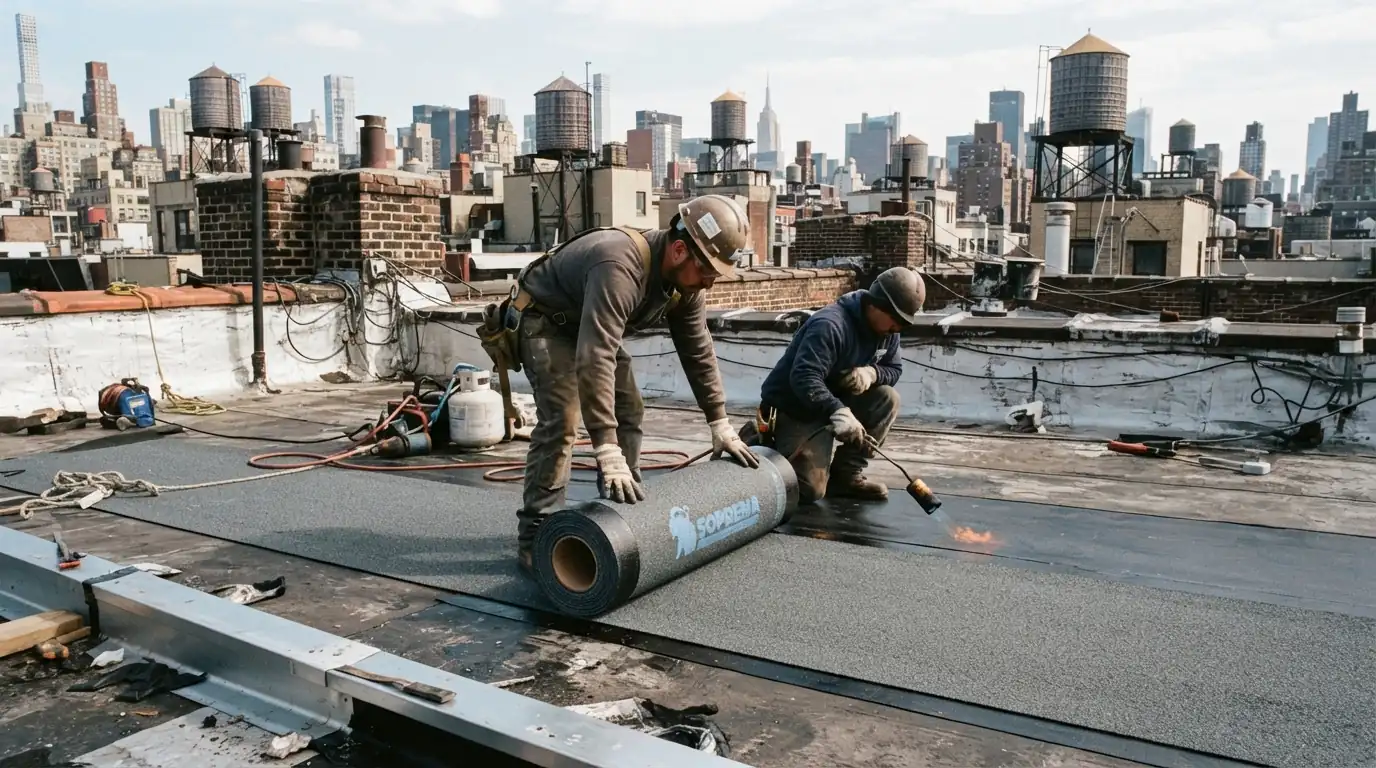
Modified bitumen builds the roof from two layers: a base sheet and a granulated cap sheet, laid with staggered laps. A scuff or puncture through the top layer does not have to become a leak, which makes it a strong choice for roofs with foot traffic, terraces and rooftop furniture.
How it is bonded matters. Torch application uses open flame, a fire risk at wood decks and parapets; cold adhesive and self-adhered sheets avoid the flame. Reflectivity comes from a white or reflective cap sheet or a coating.
The three side by side
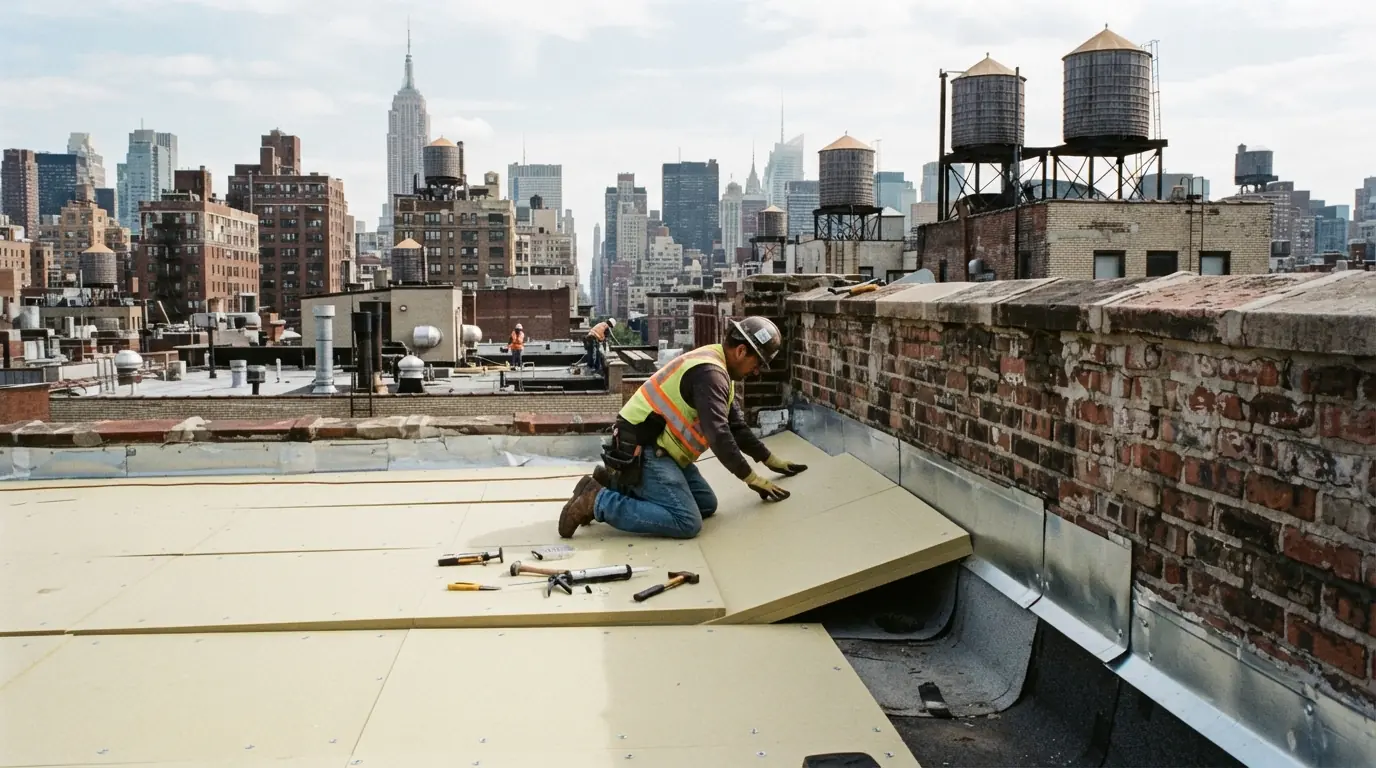
The table below sums up the differences that usually decide it. The cost figures are published planning ranges for New York City, not quotes.
| EPDM | TPO | Modified bitumen | |
|---|---|---|---|
| Seams | Taped or adhered | Heat-welded | Lapped, two plies |
| Reflectivity | White sheet or coating needed | White from the factory | Reflective cap or coating |
| Foot traffic | Fine with walkway pads | Fine with walkway pads | Strongest of the three |
| Repairs | Primer, tape, patches | Welded patches | Cap sheet patches |
| NYC cost per sq ft | $6.50 to $11.00 per sq ft | $8.00 to $13.00 per sq ft | No NYC-specific figure in our sources |
What matters more than the membrane
Any of the three fails early on a roof that ponds, with poor flashing at the parapets, or over wet insulation. Slope to the drains, flashing details at every wall and curb, insulation to the energy code, and careful installation decide how long the roof lasts far more than the brand name on the roll.
If you are comparing quotes, compare those details first: tear-off or recover, insulation thickness, flashing, drains and the reflective finish. The membrane choice usually follows from them.
Sources
Rules and figures in this guide come from these published sources. Check them for changes before relying on a rule for your building.
Get it done
Services related to this guide
EPDM Rubber Roofing
Fully adhered rubber membrane for rowhouses and small buildings: few seams, flexible through freeze and thaw, simple to patch years later.
Learn moreTPO Roofing
White heat-welded membrane that reflects summer sun and meets the city's cool roof rules without a coating. Strong seams for roofs with equipment.
Learn moreModified Bitumen Roofing
Cold-applied and self-adhered multi-ply systems for rowhouse roofs and roofs that take foot traffic, with a tough granulated cap sheet.
Learn moreNot sure which membrane fits?
Call for a roof survey and a straight comparison for your building.