Liquid-Applied Roof Waterproofing
Fluid-applied membranes for crowded roofs where sheet goods cannot reach: around dunnage, pipe clusters, railings and odd penetrations.
Learn moreA coating can add years to a sound flat roof and turn a dark roof reflective, for less than a replacement. It only works on a roof that is dry and repaired first.
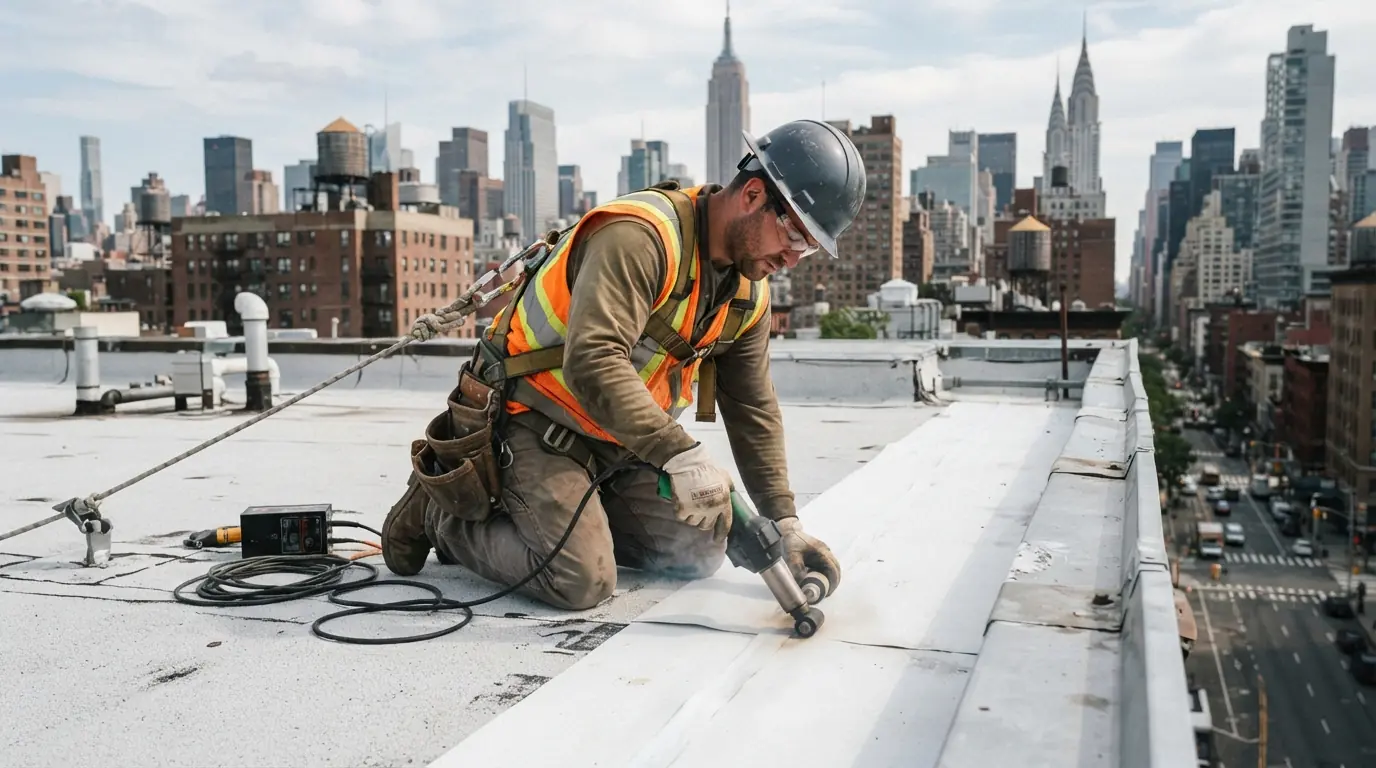
Quick answer: A roof coating is a liquid membrane rolled or sprayed over an existing flat roof. In New York, NY it suits roofs that are dry and sound but aging, and it adds reflectivity. Seams, flashings and wet areas are repaired first, because a coating over a wet or failing roof only traps the problem.
What the job involves
Coatings restore the surface, not the roof underneath. On a membrane that is weathered but watertight, a properly prepared coating adds a new wearing layer, seals small cracks, and turns a black or gray roof reflective.
On a roof with wet insulation, open seams or widespread blistering, a coating is money spent covering a problem. That is why a moisture check comes before any coating quote, and why seams and flashings are reinforced before the first coat.
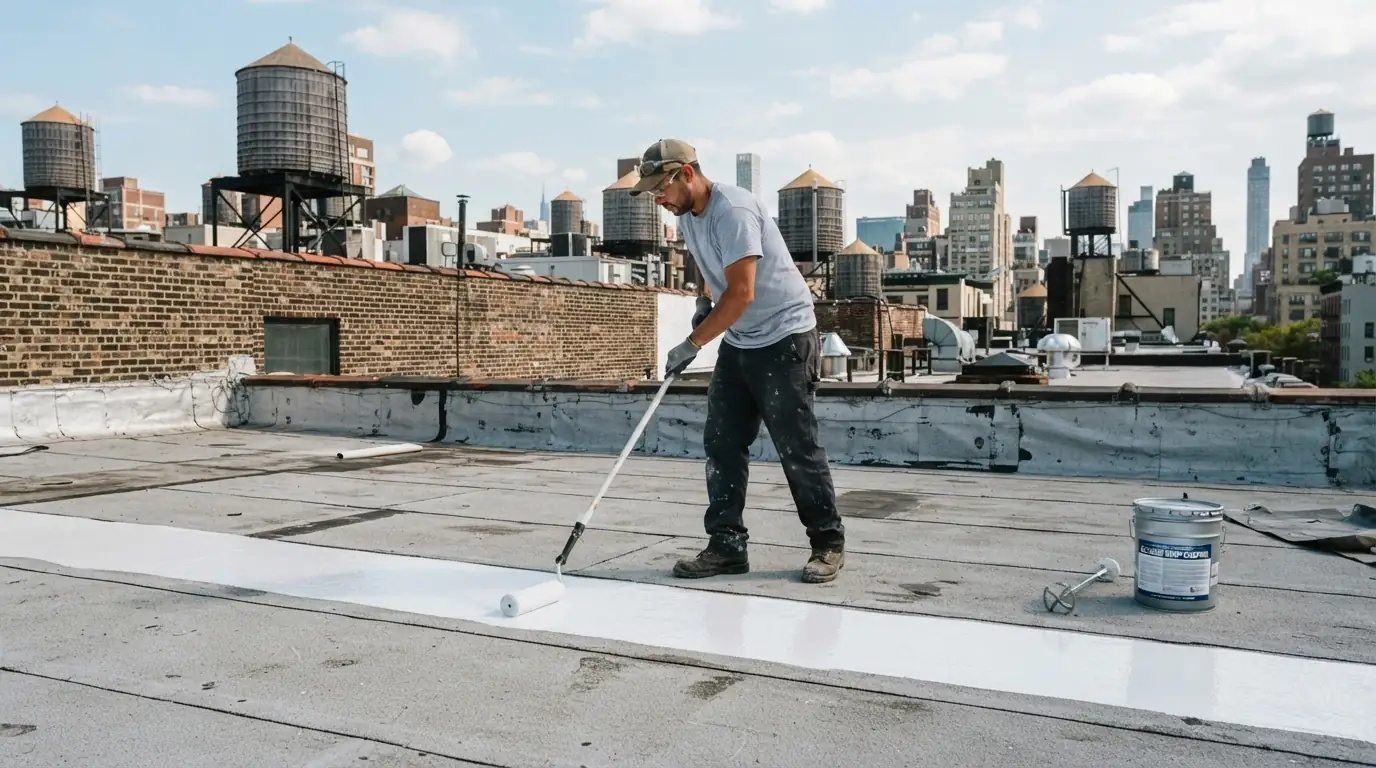
Variations of the job
Handles water that sits for a while, stays flexible in cold, and resists UV. It is hard to recoat with anything but more silicone, and it picks up dirt, which dulls the white over time.
Water-based, bright white and easy to recoat. It needs a roof that drains well, since standing water softens it, and it has to go on in dry weather above its minimum temperature.
An asphalt-based coating with aluminum flakes, common on older modified bitumen and built-up roofs. It reflects heat and protects the asphalt, and it needs periodic recoating.
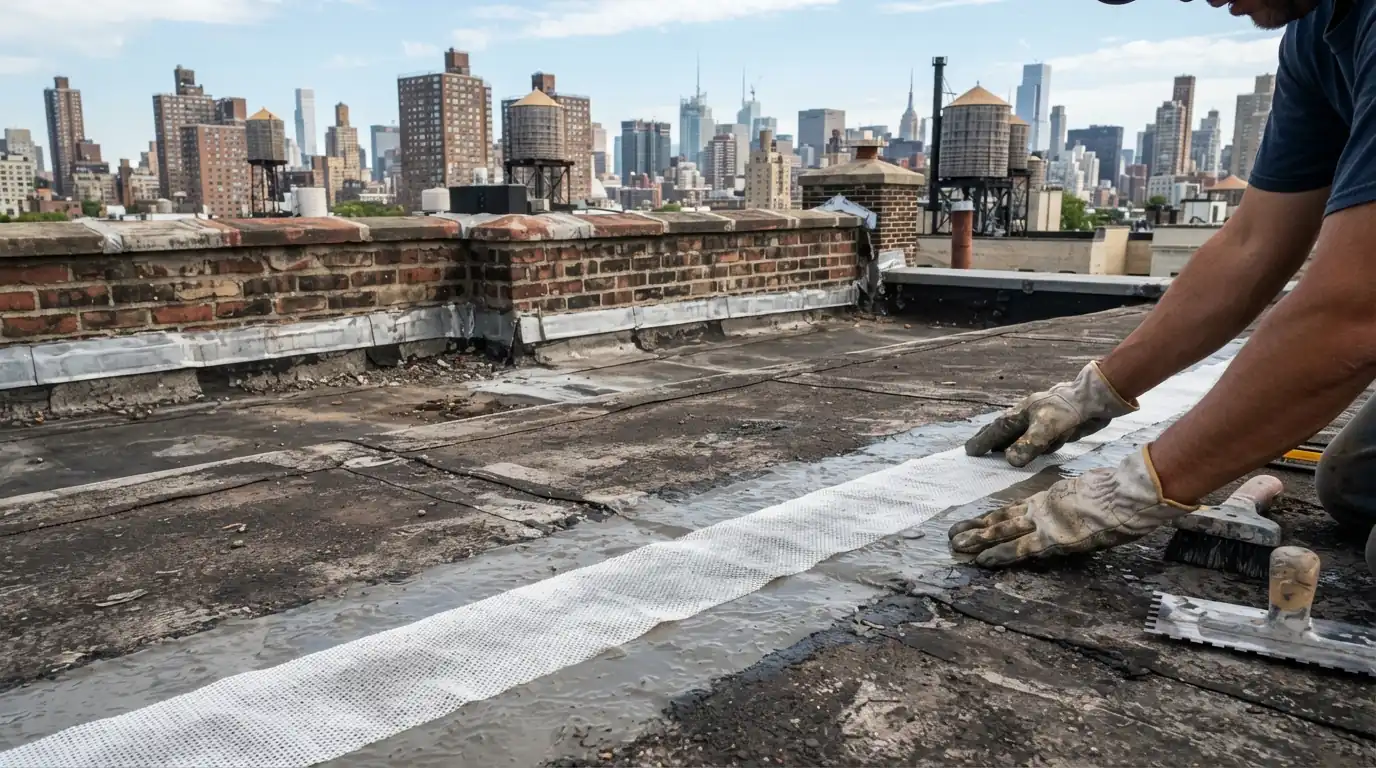
Before any coating, seams, flashings and penetrations are reinforced with fabric set in the base coat. Most coating failures start at details that were skipped.
Local conditions
Construction in the New York City metro costs well above the national average, and since 2019 replacing an entire roof assembly here also brings in the sustainable roofing zone. A coating over a sound roof restores the surface without replacing the assembly, which is why owners of aging but dry roofs ask about it first. We tell you plainly whether yours qualifies or has gone past the point where a coating helps.
How it runs
Readings across the roof to confirm it is dry enough to coat.
Wet areas replaced, open seams and loose flashings fixed.
Power washing and a primer suited to the roof surface.
Fabric set in base coat at seams, flashings and penetrations.
Coats built to the specified thickness, checked as they go on.
Cost factors
Repairs and wet areas fixed before coating add to the price.
Silicone, acrylic and aluminum differ in cost and coverage.
More coats and thicker film cost more and last longer.
Cleaning, priming and seam reinforcement are most of the labor.
Hoisting material and the area to cover.
Coatings need dry days above their minimum temperature.
Do it yourself or call
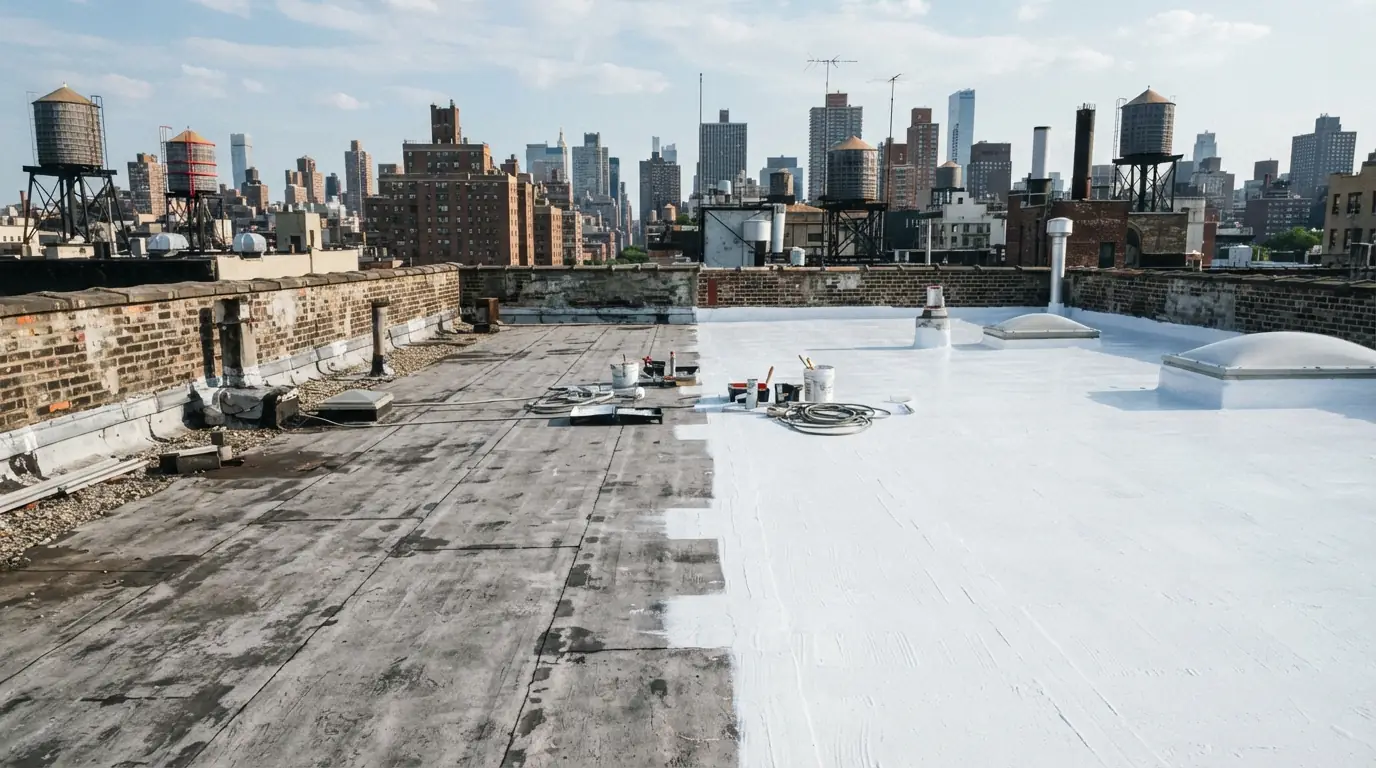
Coating makers whose systems you will find on city roofs. The product is chosen for your roof surface and drainage, not the other way round.
Questions we hear
It depends on the product, the thickness applied and the roof underneath. Most systems are designed to be recoated rather than torn off, which is part of their appeal.
Not on its own. The leak has to be found and repaired first. A coating over an unrepaired opening usually fails right there.
A reflective white coating is one of the ways older dark roofs are brought up to the city's reflectivity requirement, provided the product is rated for it.
Most flat membrane roofs can, if they are dry and sound. Roofs with wet insulation, heavy blistering or several failed layers are better replaced.
Silicone for roofs where water sits after rain, acrylic for roofs that drain well and where easy recoating matters. The roof decides, not a preferred product.
Related services
Fluid-applied membranes for crowded roofs where sheet goods cannot reach: around dunnage, pipe clusters, railings and odd penetrations.
Learn moreLeaks under a terrace are waterproofing leaks. We lift the pavers or decking, rebuild the membrane and drainage beneath, and put the surface back.
Learn moreTray and built-in-place green roofs for owners meeting the sustainable roofing zone requirement, over a membrane built to carry them.
Learn moreCall for a moisture check and an honest answer on whether a coating will work.
New York service office
1256 5th Ave, New York, NY 10029