Water pooled around the drain
The strainer or pipe is slowing the flow.
Every drop on a flat roof has to leave through a drain or a scupper. When one clogs, cracks or pulls loose from the membrane, the roof floods and the leak shows up far below.

Quick answer: Roof drain problems in New York, NY usually come from a clogged strainer or leader, a cracked or rusted drain bowl, or a failed seal where the membrane meets the drain. The repair ranges from clearing and resealing to replacing the drain body or fitting a retrofit drain into the old pipe.
What the job involves
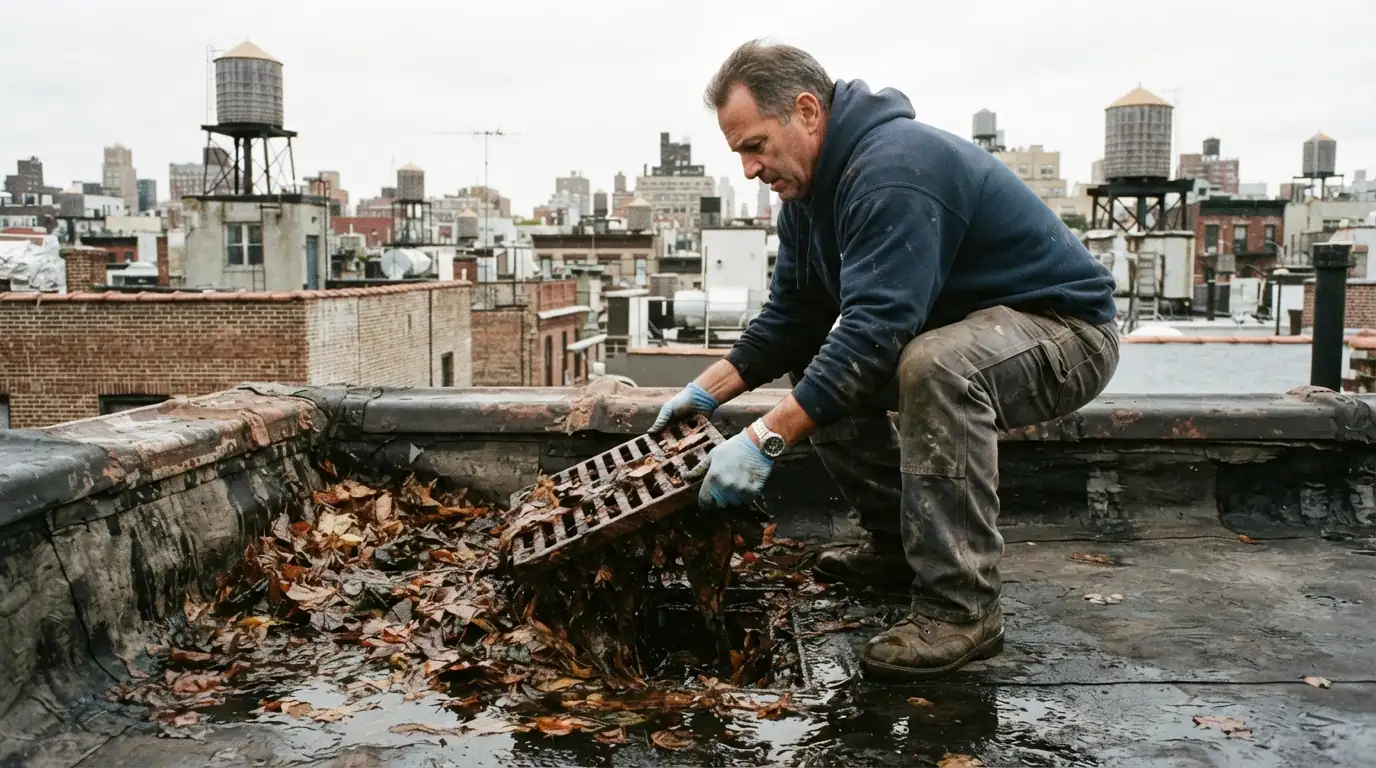
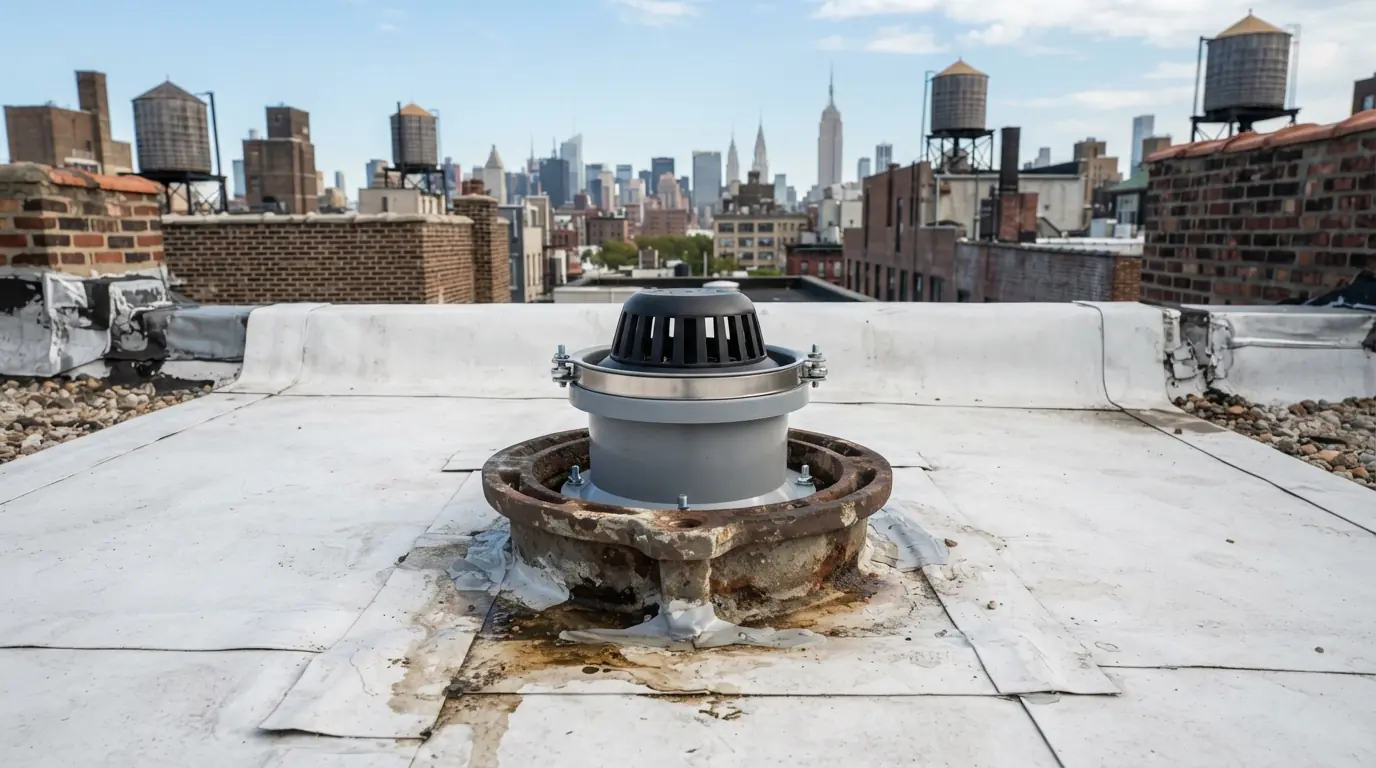
An interior drain has three parts that matter: the strainer that keeps debris out, the clamping ring that holds the membrane to the drain bowl, and the pipe below. Leaves and grit clog the strainer, old cast iron bowls rust and crack, and the membrane seal at the clamping ring dries out.
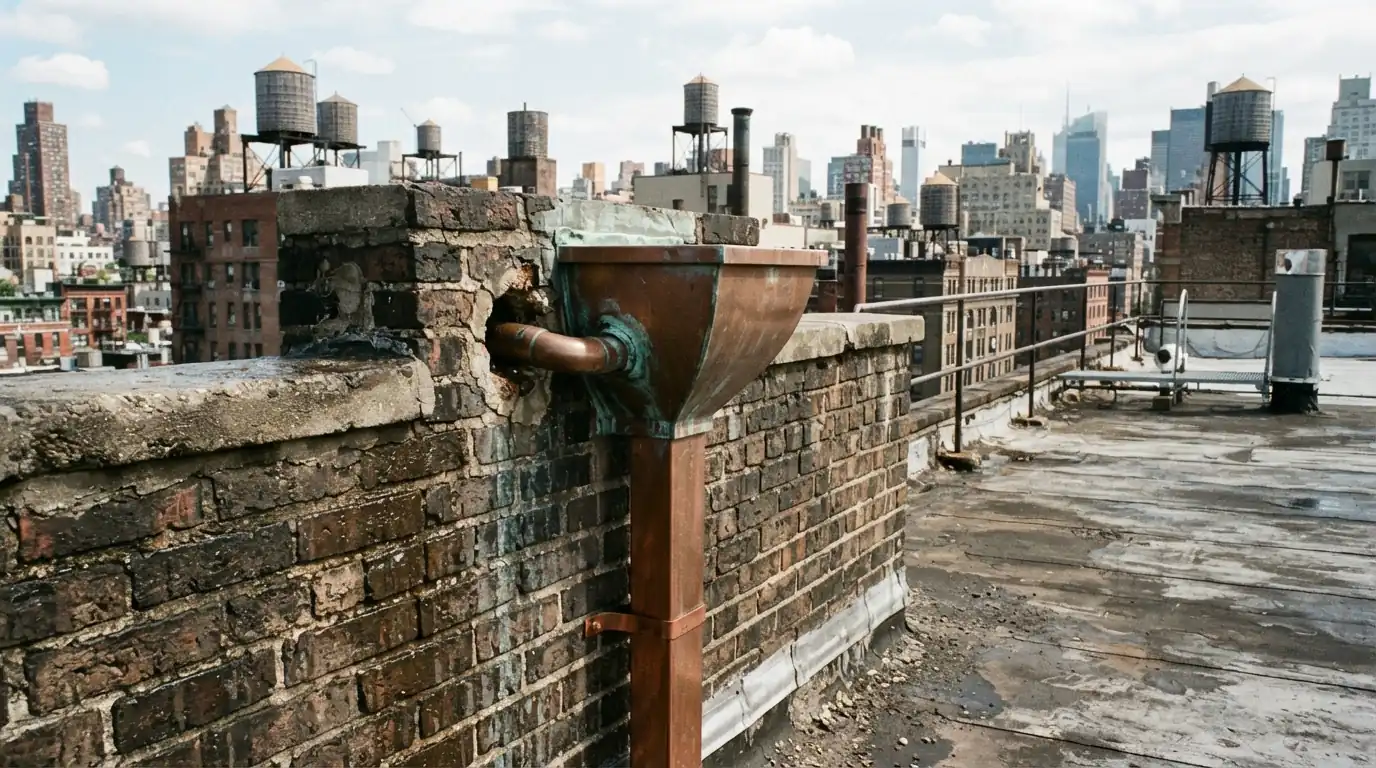
Scuppers fail differently. They pass through the parapet, so water can get into the masonry around them if the metal box or its flashing is loose. Both need treating as part of the roof, not only as plumbing.
Cost factors
Cast iron bowls, newer drains and scuppers each take different parts.
An insert into the old pipe is less invasive than replacing the drain body.
Work that needs a ceiling opened adds interior repair.
Wet insulation around a leaking drain is cut out and replaced.
Scuppers through a parapet can need brick repair around them.
A new opening through the parapet and new flashing.
Variations of the job
We remove the strainer, clear debris from the bowl and the leader as far as it can be reached from the roof, and refit a strainer that stays put. Deep blockages inside the building are plumbing work, and we say so.
Old cast iron bowls rust through or crack around the clamping ring. A retrofit drain insert with its own seal slides into the existing pipe, so the ceiling below stays closed.
The metal box through the parapet is replaced or resealed and flashed into both the membrane and the wall, with a conductor head and leader outside where needed.
A second, higher outlet through the parapet that lets water escape if the main drain clogs, so one blocked strainer cannot turn into a flooded roof.
Do it yourself or call
Local conditions
When the remnants of Ida dropped a record 3.15 inches of rain in an hour on Central Park, roofs with a partly blocked drain filled faster than they could empty. On a Manhattan rowhouse roof walled in by parapets and served by a single drain, that is how a clogged strainer becomes water through a top-floor ceiling. An overflow scupper gives that water a second way out before it finds its own.
How it runs
Strainer off, debris out, water run through.
Membrane at the clamping ring checked for splits and lifting.
Reseal, insert a retrofit drain, or replace the drain body or scupper.
New membrane flashing tied into the roof around the outlet.
Flood the area around the drain and check below.
Warning signs
The strainer or pipe is slowing the flow.
The seal between membrane and drain bowl has failed.
Old cast iron is corroding.
Debris can now wash into the pipe.
A partial blockage inside the building.
Water running down the facade instead of into a leader.
Questions we hear
At least every spring and fall, and after big storms if trees are nearby. Autumn leaves are one of the most common reasons a sound flat roof floods.
Often, yes. A retrofit drain insert slides into the existing pipe from the roof and seals to the membrane, so the ceiling below stays closed.
It is a second, higher outlet through the parapet. If the main drain clogs, water leaves through the overflow instead of building up on the roof.
Clogs reachable from the roof we clear. Blockages deeper in the building's pipe need a plumber with a snake or camera, and we tell you when that is the case.
Usually the membrane has split or lifted at the clamping ring, or the drain bowl itself has cracked. Both are repaired at the drain, not at the ceiling.
Related services
Water coming in right now, a membrane peeled back by wind, a branch through the deck. We make it watertight first and scope the permanent repair after.
Learn moreCeiling stains rarely sit under the hole. We trace the water back to the seam, flashing or drain that is letting it in, then fix that.
Learn moreFor the leak three roofers have already patched. Moisture surveys, core cuts and water tests show where the roof is wet and why.
Learn moreCall any time. A clogged drain after a storm is one of the most common roof emergencies.
New York service office
1256 5th Ave, New York, NY 10029