Rust stains running down the facade
Water inside the cornice rusting it from the back.
Pressed-metal cornices crown many older city walk-ups. Behind the ornament is a hollow metal box on a wood or steel frame, and when water gets inside it, the frame rots and the anchors let go.
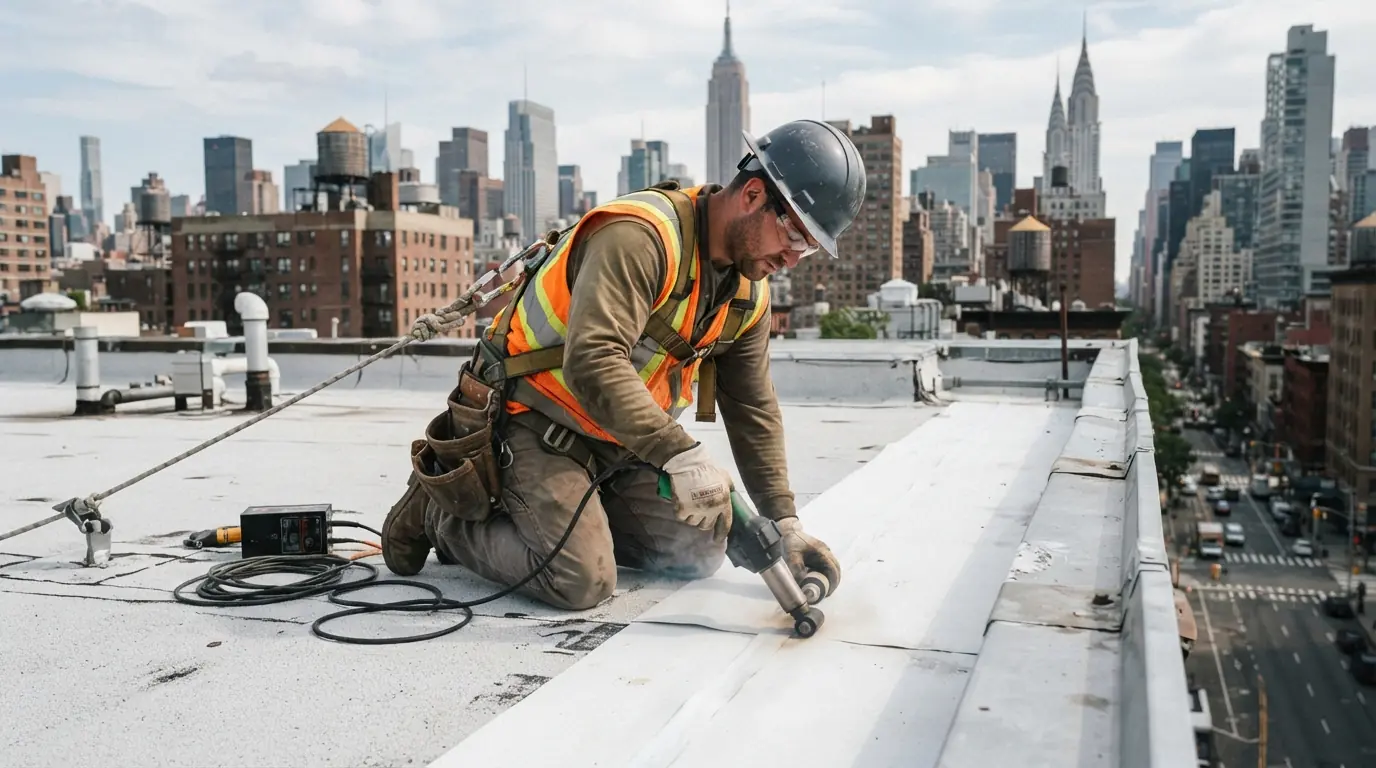
Quick answer: Sheet metal cornice repair in New York, NY starts at the roof edge, where the top of the cornice meets the roof and most water gets in. Rusted sections are patched or fabricated to match, loose sections are re-anchored to the framing, and the cornice top is capped and flashed into the roof so it stops collecting water.
What the job involves
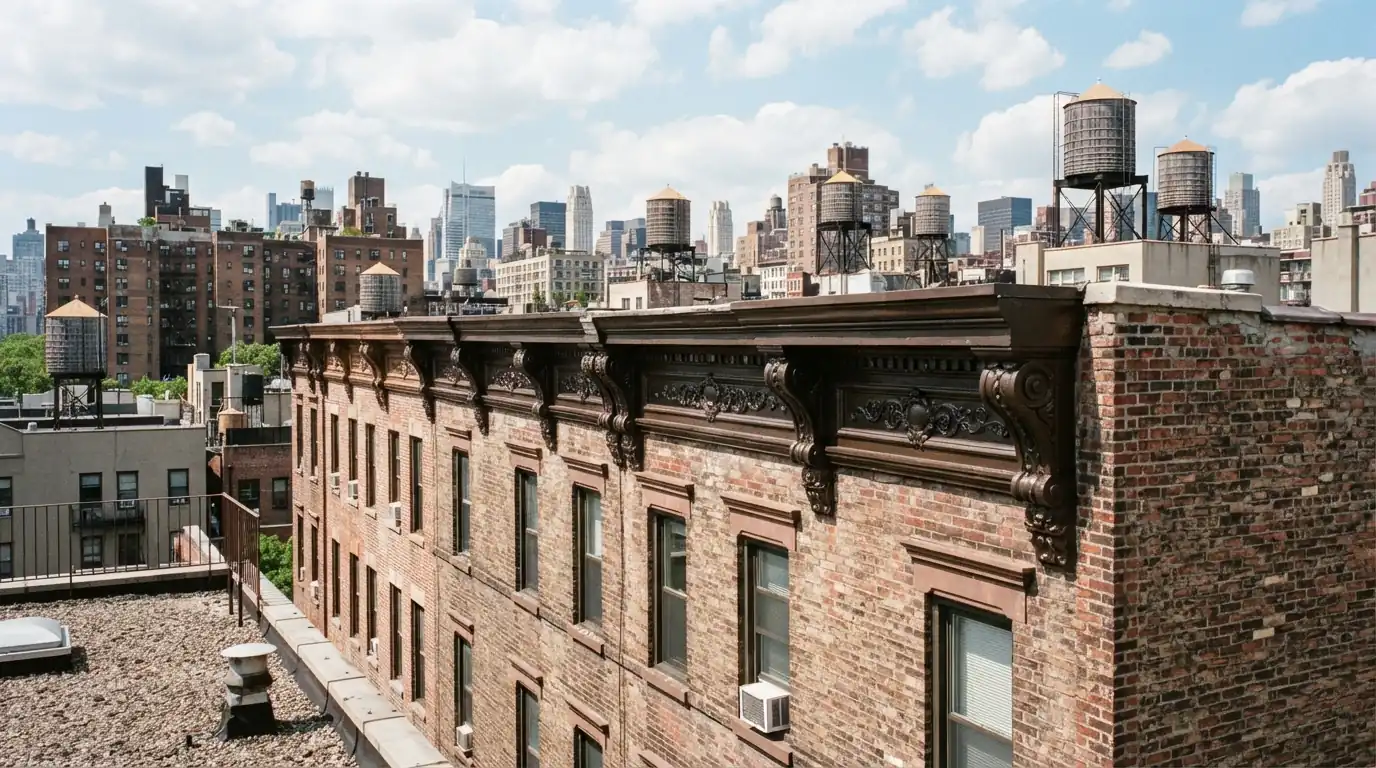
A pressed-metal cornice is thin galvanized or tin-coated sheet formed into moldings and brackets, fastened to a wood or steel framework cantilevered from the top of the wall. It is light and hollow, which is why it lasts only as long as it stays dry inside.
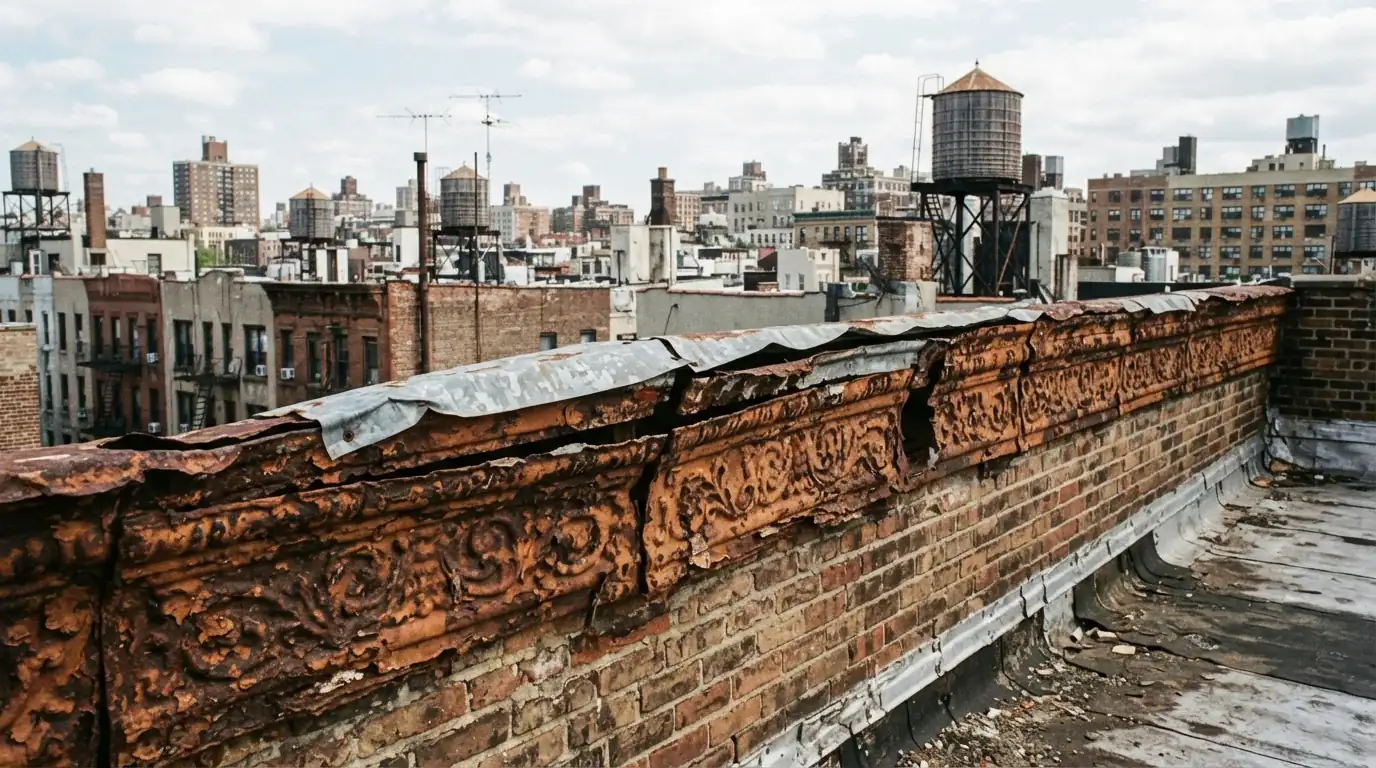
Water gets in at the top, where the cornice meets the roof, through open seams, and wherever paint has failed. Inside, it rusts the metal from the back and rots the lookouts that hold it, and a cornice that has lost its anchors can pull away from the building.
Cost factors
Scaffolding, a lift or rope access, plus sidewalk protection.
Patching holes versus fabricating whole sections.
Rotted lookouts or rusted steel inside the cornice.
Custom-bent moldings and brackets to match.
Capping and flashing the top into the roof.
Priming and painting the repaired and existing metal.
Variations of the job
Rust holes are cut out and patched with new metal, or whole sections are fabricated to match the profile and soldered or riveted in, then primed and painted.
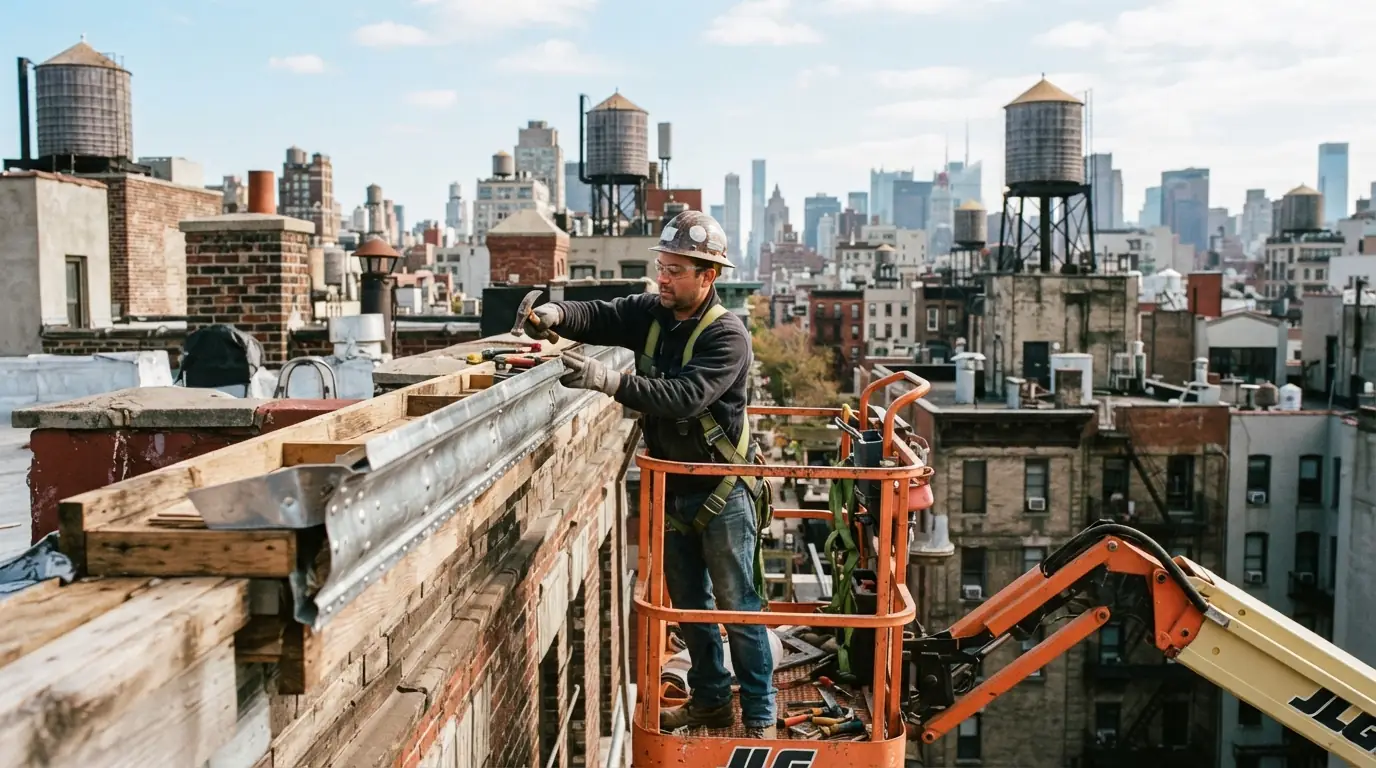
Sections that have pulled away are re-secured to sound framing. Rotted wood lookouts are replaced or reinforced, and new anchors are fastened into the masonry.
The top of the cornice is capped with sloped metal that laps into the roof membrane or flashing, so water drains onto the roof instead of into the cornice.
Local conditions
New York City's facade inspection program leaves out low-rise buildings, so on a four- or five-story walk-up no periodic facade inspection is required to look closely at the cornice. Loose sections are left for owners to catch themselves, and a failing cornice usually shows it first through rust stains, open seams and sagging. That is why a cornice check belongs in every roof visit we make.
What is included
How it runs
From staging, a lift or rope access, with photos.
Protection in place while work is overhead.
Lookouts and anchors repaired or replaced.
Rusted areas patched, missing sections fabricated.
Top capped into the roof, metal primed and painted.
Warning signs
Water inside the cornice rusting it from the back.
Water now gets straight inside.
Anchors or framing letting go.
The metal is exposed to weather.
Holes large enough to let rain in too.
Water from the cornice top reaching the building.
Questions we hear
Often. Rust holes can be patched and damaged sections fabricated to match. Replacing the whole cornice is only needed when rust and rot are widespread.
Usually from the top, where the cornice meets the roof without a proper cap, and through open seams and failed paint.
It can be. A section that pulls away from the building can fall to the sidewalk, which is why loose cornices are treated as urgent and the sidewalk is protected during work.
Sometimes, but it changes the building's face, and in a historic district removal generally needs Landmarks approval. Repair is usually preferred.
Whenever the paint starts to fail. Paint is what keeps the thin metal from rusting, so bare spots should not be left for years.
Related services
Missing tabs, valley leaks and lifted ridge caps on pitched roofs, matched as closely as the age of the roof allows.
Learn moreTear-off to the deck, ice barrier at the eaves and valleys, and architectural shingles fastened to the maker's nailing pattern.
Learn moreSlipped and broken slates replaced one at a time with matching stone and proper hooks or nails, so a slate roof keeps its long life.
Learn moreCall and we will inspect it up close and secure it before it gets worse.
New York service office
1256 5th Ave, New York, NY 10029