Gutters pulling away
Hangers losing their grip in soft fascia.
The boards along the roof edge hold up the gutters and close off the eaves. When water gets into them they rot, gutters sag, and animals find a way into the attic.
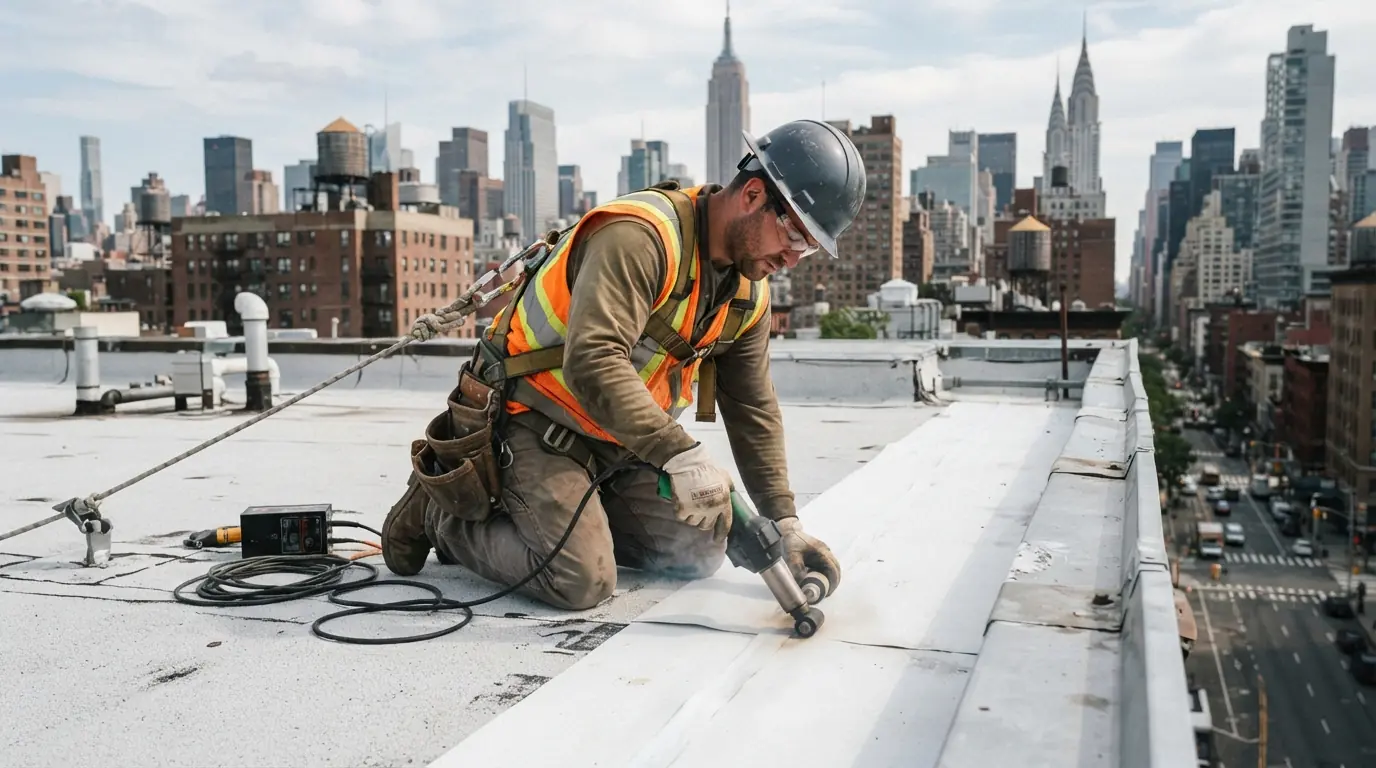
Quick answer: Fascia and soffit repair in New York, NY means replacing rotted fascia boards and soffit panels, capping new wood with aluminum trim, and restoring soffit ventilation. Rot usually starts behind a gutter or at a missing drip edge, so the roof edge is fixed at the same time or the new wood rots too.
What the job involves
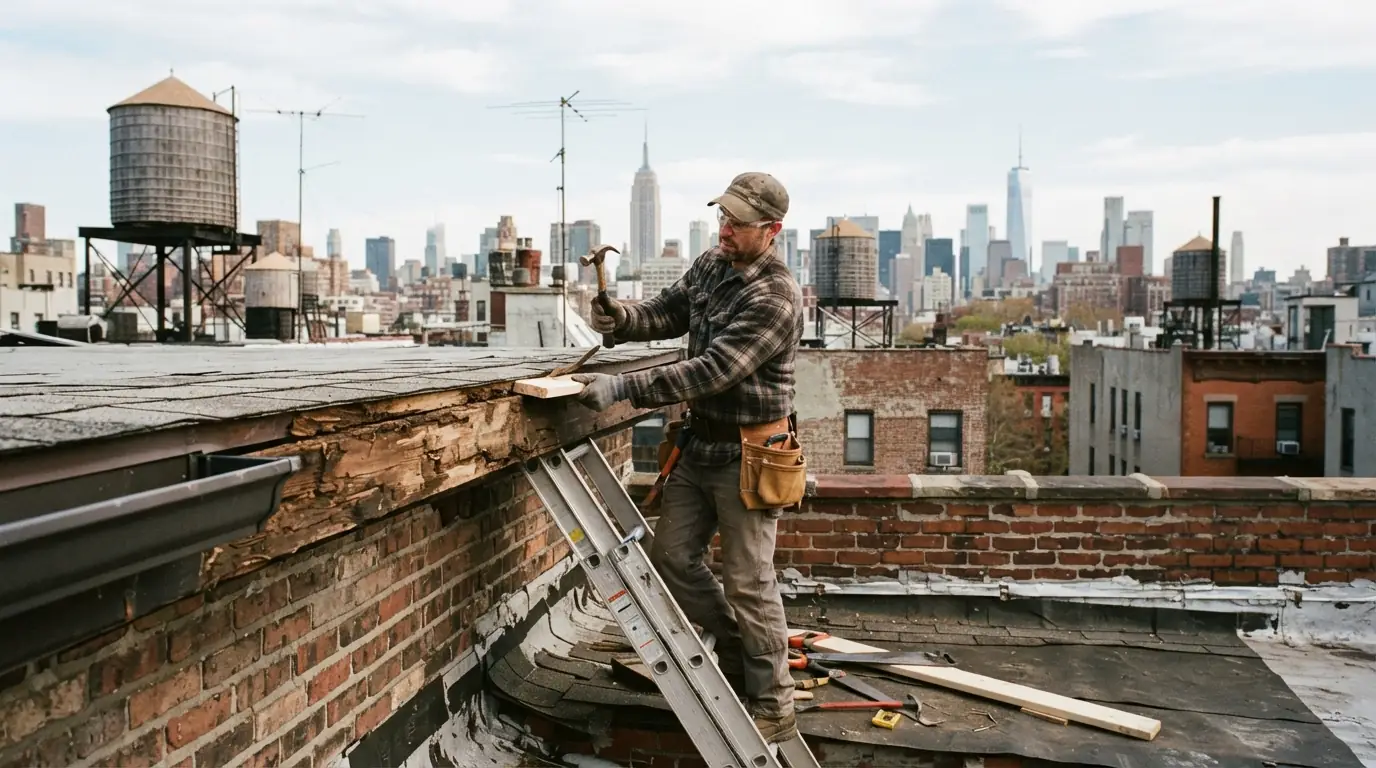
Fascia rots from water it was never meant to see: gutters that overflow behind themselves, roofs with no drip edge, and ice dams that push water back under the shingles at the eaves. Once the wood softens, gutter hangers pull out and the gutter sags, which makes the overflow worse.
Soffits close the underside of the eaves and, when vented, bring air into the attic. Damaged or blocked soffits cut that airflow and give squirrels and birds a way in.
Cost factors
Linear feet of board replaced.
Rot that reaches the rafters adds carpentry.
Aluminum trim over the new boards.
Vented vinyl, aluminum or wood.
Taking gutters down and rehanging them.
Ladders or staging on taller eaves.
Variations of the job
Rotted sections are cut out back to sound wood and replaced with primed lumber or a rot-resistant board, and the rafter tails behind them are checked before gutters go back up.
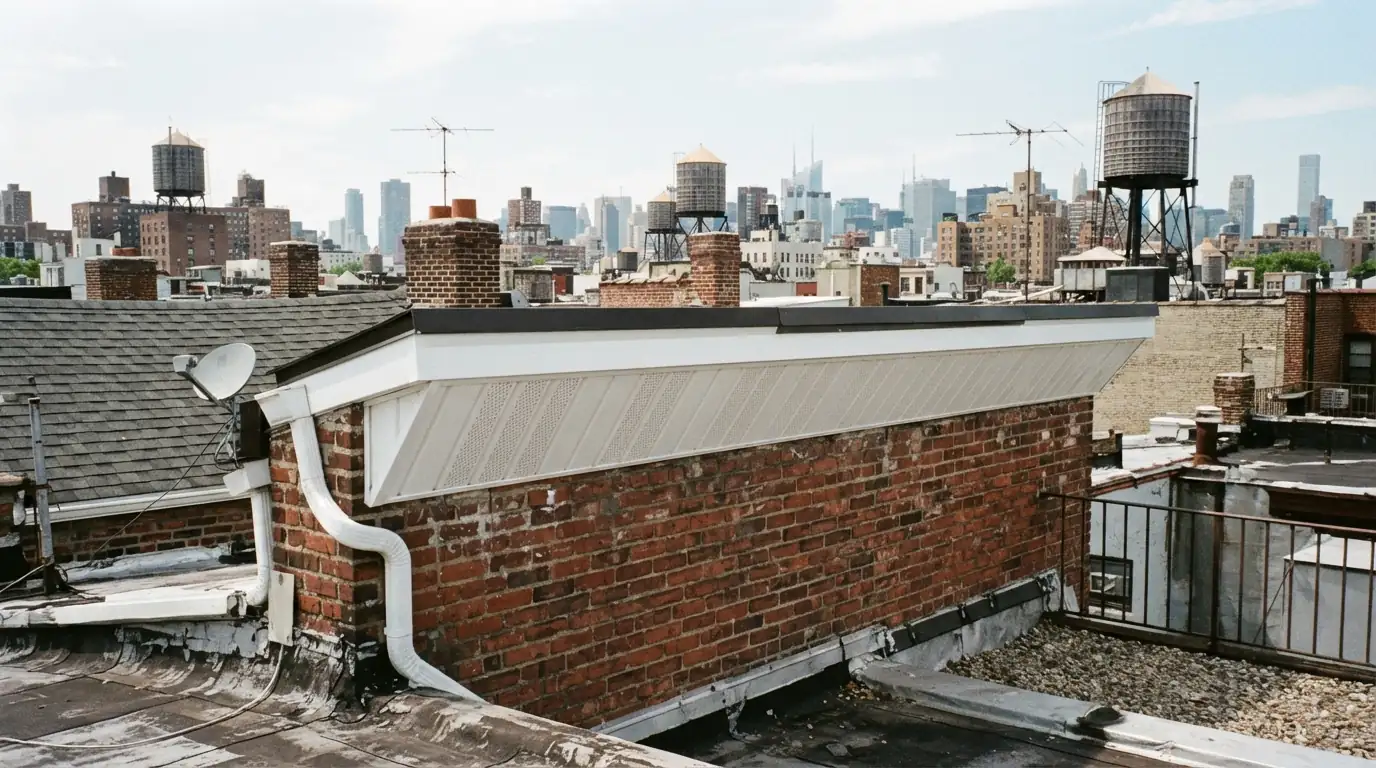
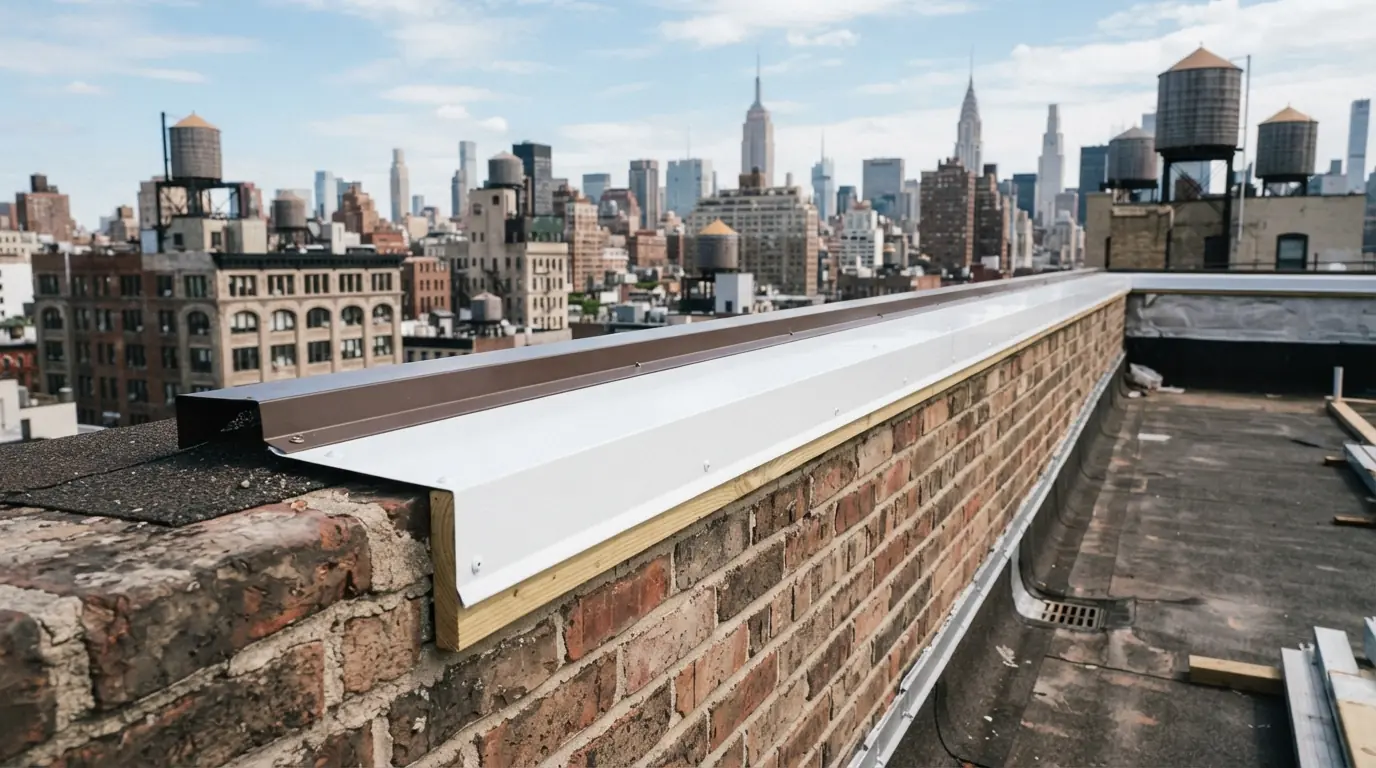
Bent aluminum coil wraps the new fascia so it needs little upkeep. Capping is only done over sound wood, because capping over rot just hides it while it spreads.
Solid or damaged soffit is replaced with vented panels, and baffles in the attic keep insulation from blocking the vents so air can reach the underside of the roof deck.
Do it yourself or call
Local conditions
A common pattern at the roof edge goes like this: a gutter hung with no drip edge above it, water running behind the gutter for years, and fascia that finally lets go of the hangers. The fix for the board is carpentry; the fix for the cause is a drip edge that laps into the gutter, added while the fascia is open. Skipping that step means the new board starts rotting the same way.
How it runs
Gutter overflow, missing drip edge or ice dams.
Back to sound material.
Rafter tails, fascia boards and soffit.
Aluminum capping and vented soffit panels.
Drip edge added, gutters rehung to pitch.
Warning signs
Hangers losing their grip in soft fascia.
Moisture in the wood.
Rot.
Water damage or animals.
An opening into the attic.
Water running behind the gutter.
Questions we hear
No. Capping over rot hides it while it spreads. Rotted wood is cut out and replaced first, then capped.
Usually the fascia behind them is soft. New hangers need sound wood to hold, so the board is replaced before the gutter is rehung.
A drip edge carries roof water into the gutter instead of letting it run down behind it onto the fascia. Without one, the board stays wet.
On most pitched roofs, yes. Vented soffits bring air into the attic, working with ridge or roof vents to keep the attic dry.
Have the opening repaired once the animals are out. Sealing them in causes worse damage, so a wildlife professional may be needed first.
Related services
Gutters, leaders and built-in box gutters cleared, resealed, rehung or replaced so roof water leaves the building instead of entering it.
Learn moreVinyl and fiber cement siding repaired after storms or replaced, with the trim and flashing details that keep water out of the wall.
Learn moreCall and we will replace the boards and fix what is making them wet.
New York service office
1256 5th Ave, New York, NY 10029