Ponding Water Correction
Water still sitting two days after rain wears a membrane out early. We correct the slope with tapered insulation, added drains or deck repair.
Learn moreFor the leak that has been patched three times and still drips. We map where the roof is wet, find where the water gets in, and show you both before anyone quotes a repair.
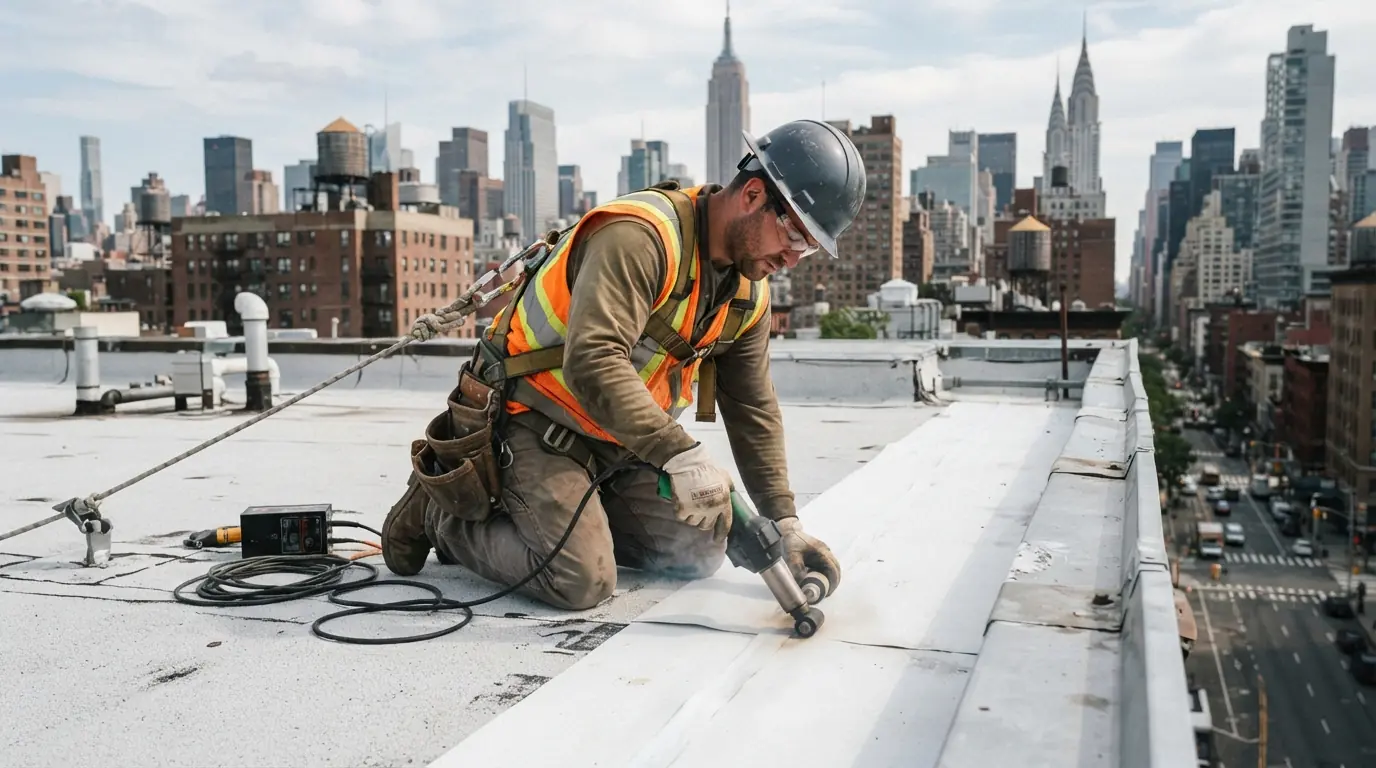
Quick answer: Roof leak detection in New York, NY maps where water sits inside a roof and where it enters, using moisture readings across the surface, small core cuts to confirm them, and controlled water tests on suspect areas. It separates one failed flashing from a roof that is wet across a wide area.
What the job involves
Some leaks are obvious: an open seam, a cracked pipe boot, a missing shingle. Others hide. On flat roofs with insulation above the deck, water can travel far from where it entered, and years of patches make it hard to tell which repair failed.
Leak detection answers two questions before money goes into repairs: where the water gets in, and how much of the roof is already wet. The second answer often decides between repair and replacement.

Cost factors
Surveys are priced by roof size and how tight the reading grid needs to be.
Older roofs with several layers need more core cuts to read clearly.
Water tests take hours, and a leak that only appears in certain conditions may need a second visit.
Someone watches the ceilings during testing, easier in an empty space than an occupied apartment.
Testing masonry adds time and sometimes a second trade.
A marked roof plan with photos takes office time as well as roof time.
Variations of the job
A meter reads moisture through the membrane on a grid across the roof. Wet areas show as clusters of high readings, which we mark on a roof plan for you.
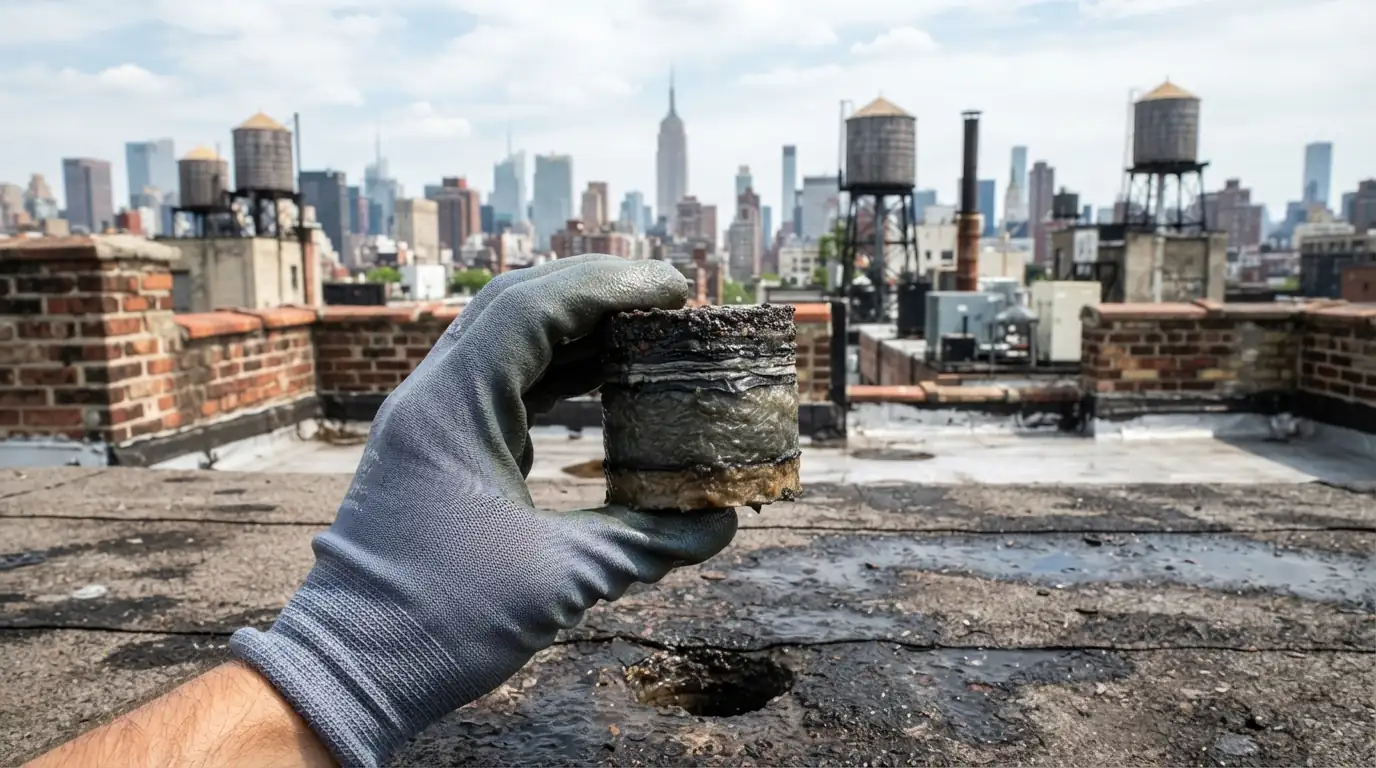
A small cut through the roof layers confirms what the meter shows: how many layers there are, how wet the insulation is, and the state of the deck. Each cut is patched the same visit.
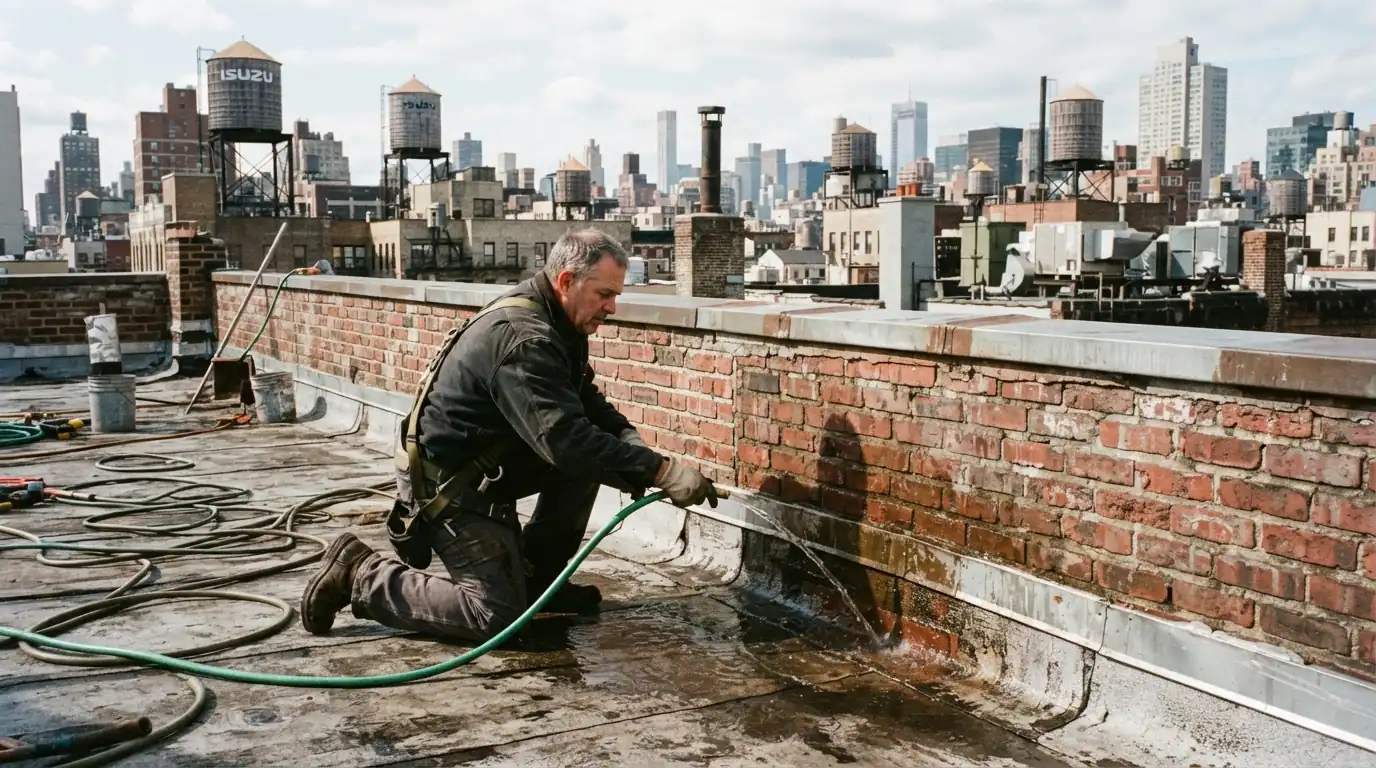
We water one section at a time, starting low and working up the slope, while someone watches inside. When the leak appears we know which section let it in.
The usual suspects are parapet walls, coping joints, window heads just below the roof and equipment curbs. We test the walls too when the roof alone does not explain the water.
Do it yourself or call
Local conditions
New York's energy code calls for R-30 of insulation above the deck on low-slope roofs, so newer and recently replaced flat roofs carry several inches of foam board between membrane and deck. When water gets under the membrane, that insulation soaks it up and spreads it sideways, and the wet area can end up far larger than the hole. That is why a moisture survey comes before a repair quote here.
What is included
How it runs
We record every stain, drip and damp spot inside.
Moisture readings on a grid, with suspect areas marked.
Small cuts where readings need confirming, patched the same visit.
Section by section, with someone watching inside.
A marked plan, photos, the entry point and the repair options that follow.
Questions we hear
No. Infrared reads heat differences across the roof at night and covers large areas quickly. A moisture survey takes direct readings through the membrane. Either way, core cuts confirm the findings before anything is decided.
Each cut is small and patched with matching material on the same visit. Cores are the only way to see what is actually inside the roof.
Usually. Moisture readings work on a dry day, and water testing recreates the rain on the section we suspect.
That is when it pays off most. It shows whether one failed detail is behind the repeat leaks or whether the roof is wet across a wide area and past patching.
Yes. Photos, a marked roof plan showing the wet areas and entry points, and the repair or replacement options that follow from them.
Related services
Water still sitting two days after rain wears a membrane out early. We correct the slope with tapered insulation, added drains or deck repair.
Learn moreA clogged or cracked drain bowl turns a sound roof into a pond. We clear, rebuild and replace interior drains, scuppers and overflows.
Learn moreWater coming in right now, a membrane peeled back by wind, a branch through the deck. We make it watertight first and scope the permanent repair after.
Learn moreCall to set up a leak detection visit. We answer around the clock.
New York service office
1256 5th Ave, New York, NY 10029