Water near light fixtures
Water tracking along wiring is an electrical hazard, not just a stain.
Rain through a light fixture, a membrane lifted by wind, a skylight cracked by a falling branch. Call at any hour and a person answers. The first job is stopping the water.

Quick answer: When water is coming through a roof in New York, NY, the first job is a temporary seal: a tarp, a membrane patch, or clearing a blocked drain that is flooding the roof. The permanent repair is scoped once the roof is dry and safe to open up.
What the job involves
Most roof emergencies in the city come down to three things: wind getting under a membrane edge or a run of shingles, water finding an open seam or flashing in a hard rain, and drains that clog until the roof holds water. Each needs a different temporary fix.
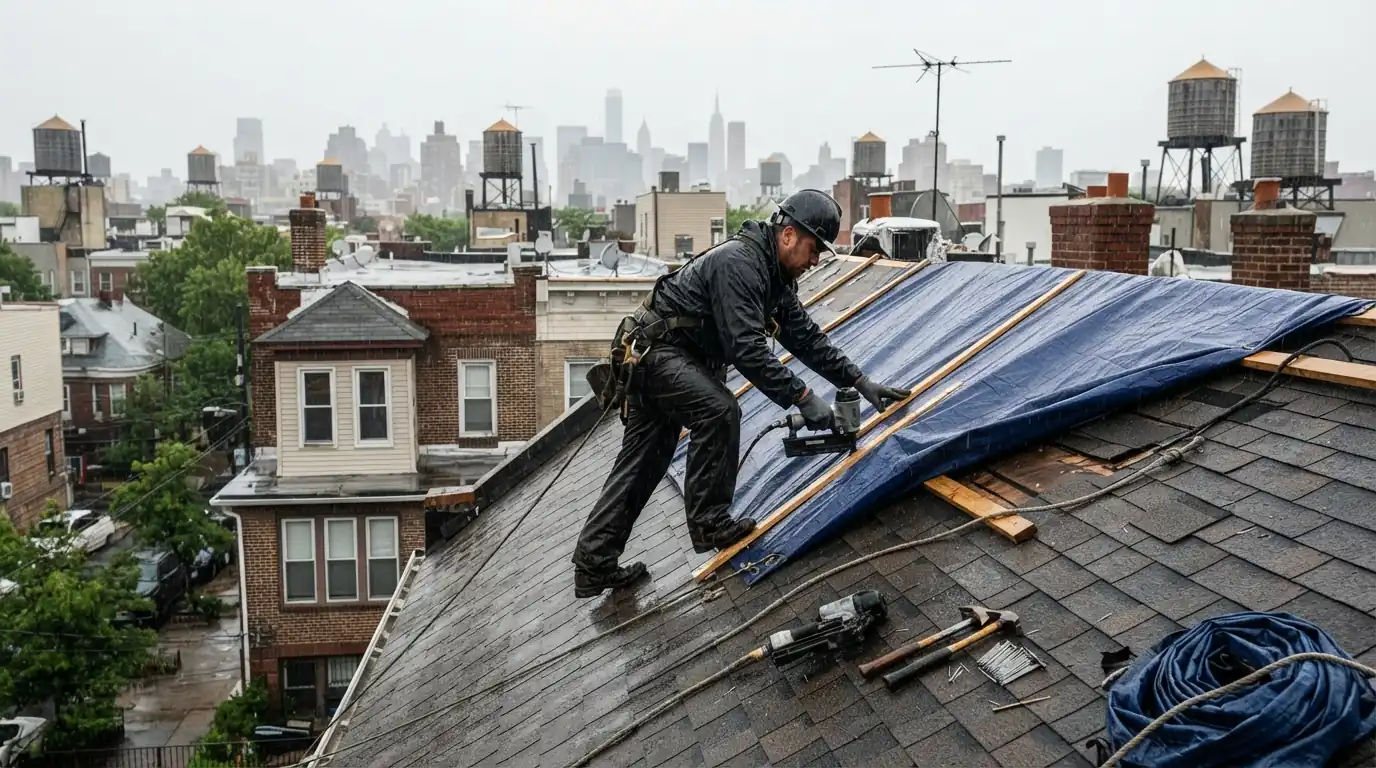
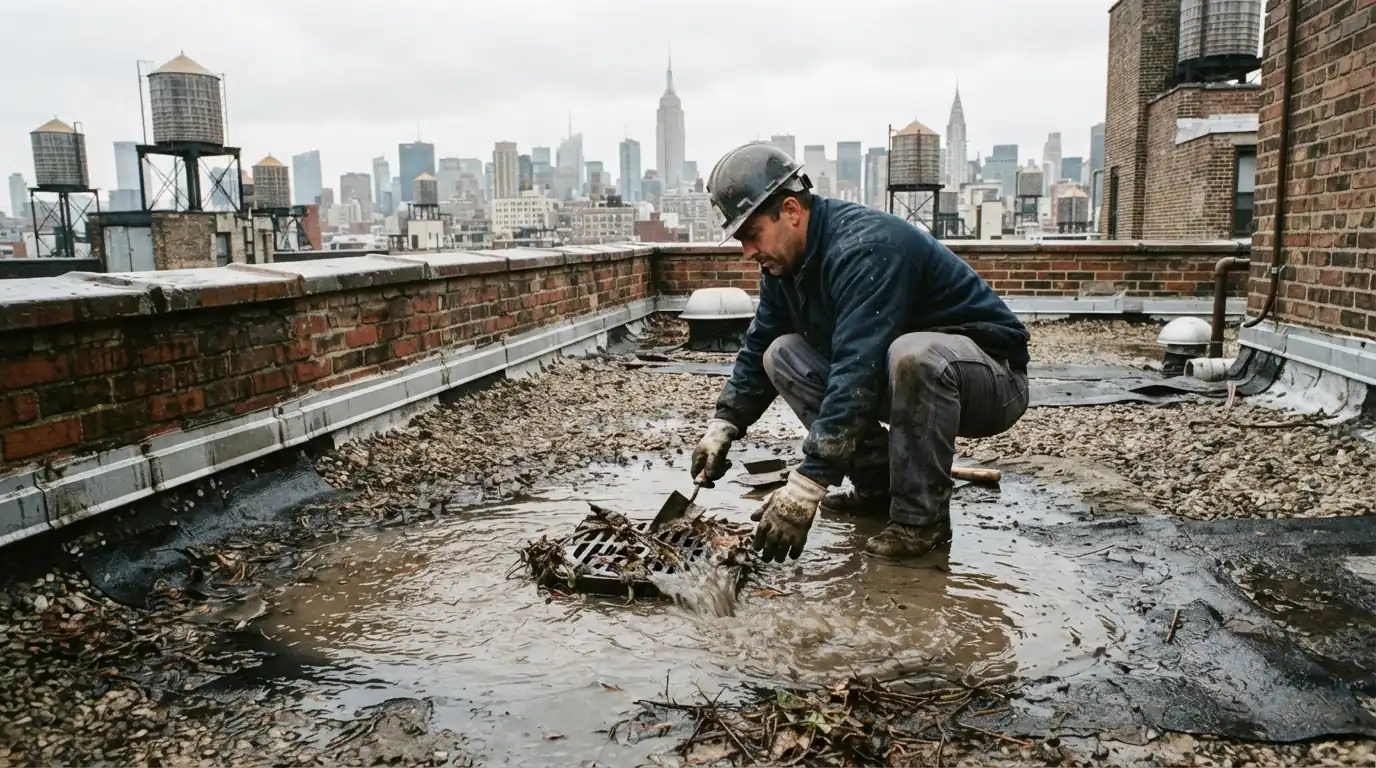
On a flat roof we clear the drains first, because a flooded roof keeps leaking whatever else is done, then seal the entry point with compatible material. On a pitched roof we secure loose material and tarp the damage, fastened so the tarp does not become its own wind problem.
How it runs
Where the water shows, what kind of roof, how we reach it, and how to protect the room below.
Check the roof can be walked, clear the drains and remove loose debris.
A tarp, patch or temporary seal fastened for the weather expected over the next days.
Photos of the entry point and the surrounding roof for you and your insurer.
A written scope, with repair versus replacement laid out if it comes to that.
Warning signs
Water tracking along wiring is an electrical hazard, not just a stain.
Trapped water is heavy, and a bulging ceiling can come down.
Once wind gets under a flat roof it keeps peeling it back.
Standing water above the drain line means a blocked drain and growing load.
Seen from a top-floor closet or attic, it means an open hole.
Often a parapet or coping failure, and it spreads fast inside masonry.
Variations of the job
Wind lifts membrane at roof edges and around rooftop units, and peels shingles from the rakes and ridge first. We refasten or cut out loose material, seal the edge and check the rest of the roof, since storm damage is rarely limited to one spot.
On a pitched roof an anchored tarp buys time until shingles or slate can be matched. On a flat roof a tarp can hold water and blow loose, so a temporary membrane patch usually holds better until the permanent repair.
After dark we talk you through protecting the room below, then get on the roof once it is safe to walk. Wet membrane, ice and darkness are how roofers get hurt.
A limb through a roof usually damages the deck, not just the covering. We remove the debris, check the rafters or joists for cracks, and close the opening with sheathing and a temporary cover.
Local conditions
On the night of September 1, 2021, the National Weather Service measured 3.15 inches of rain in one hour in Central Park, beating a record set during Tropical Storm Henri less than two weeks earlier. Rain like that overwhelms roof drains that are only partly clogged, and a flat roof in Manhattan with a slow drain fills like a tray and finds every weak seam. That is why our emergency visits start at the drains.
Cost factors
Night, weekend and storm-day visits pull crews off scheduled work. Ask for the rate before anyone comes out.
A garage roof and a six-story walk-up are different jobs once access and hoisting are counted.
Wet insulation has to be cut out eventually, and more of it means a bigger permanent repair.
Some damage is repaired properly on the first visit. Some needs a seal now and a second trip.
Common membranes and shingles match easily. Old slate, discontinued shingles and copper take longer.
Broken decking or a cracked joist turns a roof repair into a small structural job.

Do it yourself or call
Questions we hear
We answer around the clock and tell you on the call when a crew can reach you. If the roof is not safe to walk in the dark or in lightning, we talk you through protecting the inside and schedule the roof visit for first light.
A well-fastened temporary seal is meant to hold for days, sometimes a few weeks depending on the weather. It is not meant to last a season.
Stop the water first, since most policies expect you to prevent further damage. Photograph everything, keep receipts for the emergency work, and call your insurer as soon as practical.
No. A drip that stops when the rain stops can usually wait for a scheduled visit. Water near electrics, a sagging ceiling, a flooded roof or material blowing loose cannot.
Stay away from the fixture and the wet area, switch off that circuit at the panel if it is dry and safe to reach, and do not use the fixture until an electrician has checked it.
Related services
Ceiling stains rarely sit under the hole. We trace the water back to the seam, flashing or drain that is letting it in, then fix that.
Learn moreFor the leak three roofers have already patched. Moisture surveys, core cuts and water tests show where the roof is wet and why.
Learn moreWater still sitting two days after rain wears a membrane out early. We correct the slope with tapered insulation, added drains or deck repair.
Learn moreCall and a person answers, day or night. Tell us what you see and we will tell you what happens next.
New York service office
1256 5th Ave, New York, NY 10029