Skylight Repair & Replacement
Leaking curbs, cracked domes and rusted roof hatches repaired or replaced, with the curb flashed into the roof properly.
Learn moreThe box on the roof that houses the stair or elevator has its own roof, four walls, a door and a sill, and every one of them can leak. Fixing one and missing the rest is why bulkhead leaks come back.
Quick answer: A bulkhead leak in New York, NY can come from the bulkhead's own small roof, the flashing where its walls meet the main roof, the wall cladding, or the door sill at roof level. Repair means checking all four and rebuilding the detail that failed, most often the base flashing or an unflashed door sill.
What the job involves
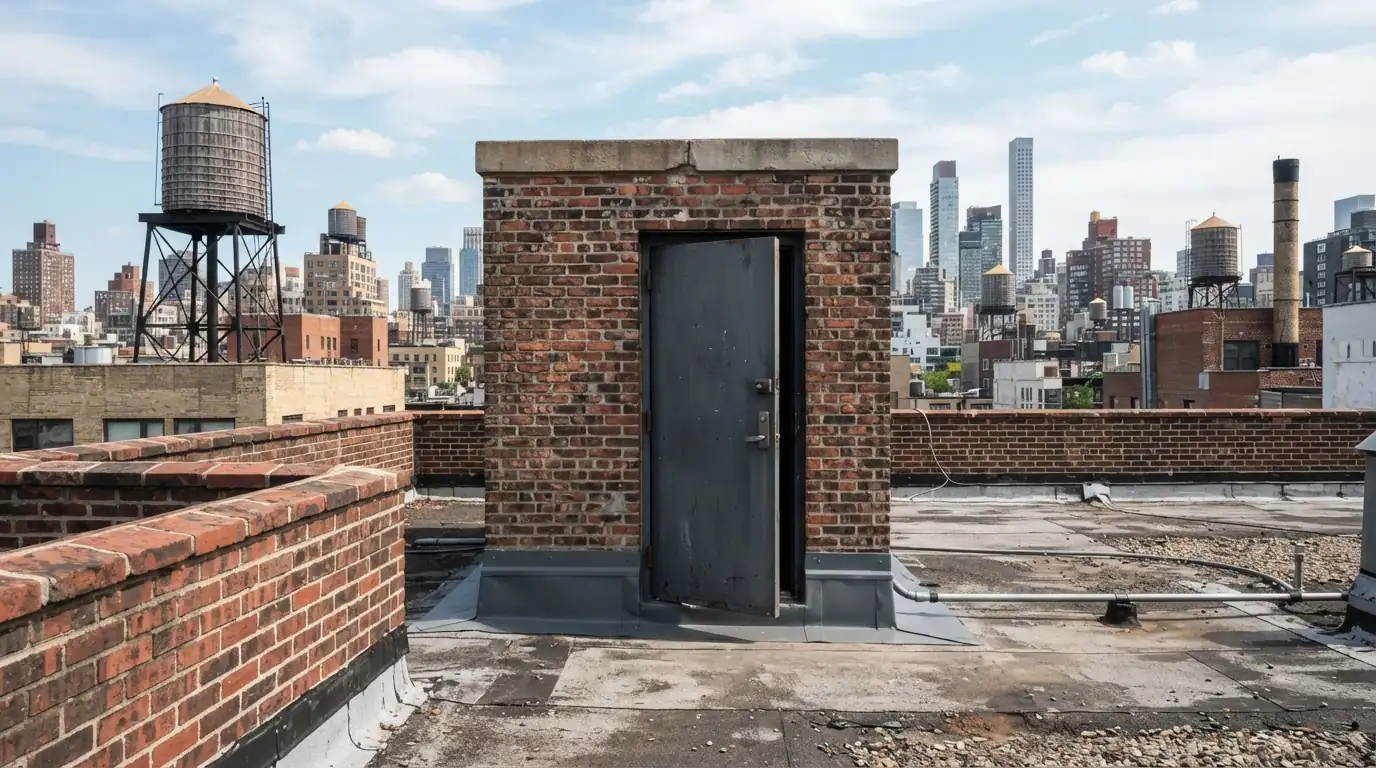
A stair bulkhead is a small room on the roof with its own roof, walls and door. Its roof is easy to forget: a patched membrane or old metal that nobody checks because it sits above eye level. Its walls may be brick, stucco or metal cladding, each with its own ways to fail.
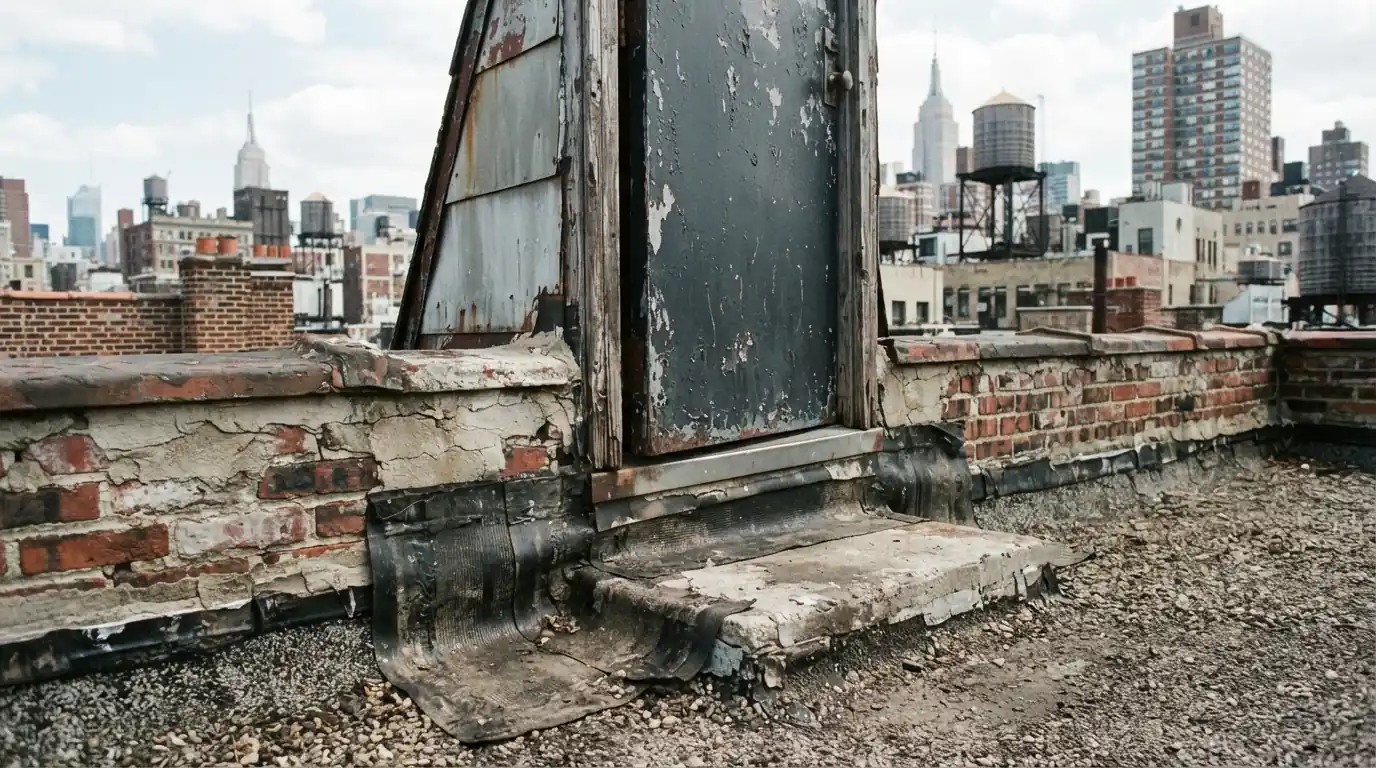
The weak spot is usually the door. The sill sits close to the main roof surface, and many were installed with no membrane turned up under them. Rain running across the roof reaches the sill and runs straight down the stairwell.
Cost factors
Roof, base flashing, walls or door sill.
Stair bulkheads are small; elevator bulkheads are larger and busier.
Brick, stucco and metal cladding repair differently.
Raising a sill can mean adjusting or replacing the door.
New flashing lapped into the main roof system.
Ladders onto the bulkhead roof and material handling.
Variations of the job
The small roof on top is repaired or reroofed to suit the main roof system, with edge metal and flashing that carry water off rather than down the bulkhead walls.
The sill is flashed with membrane turned up under the threshold, and where the roof has been built up over the years, the sill is raised so water cannot reach the gap.
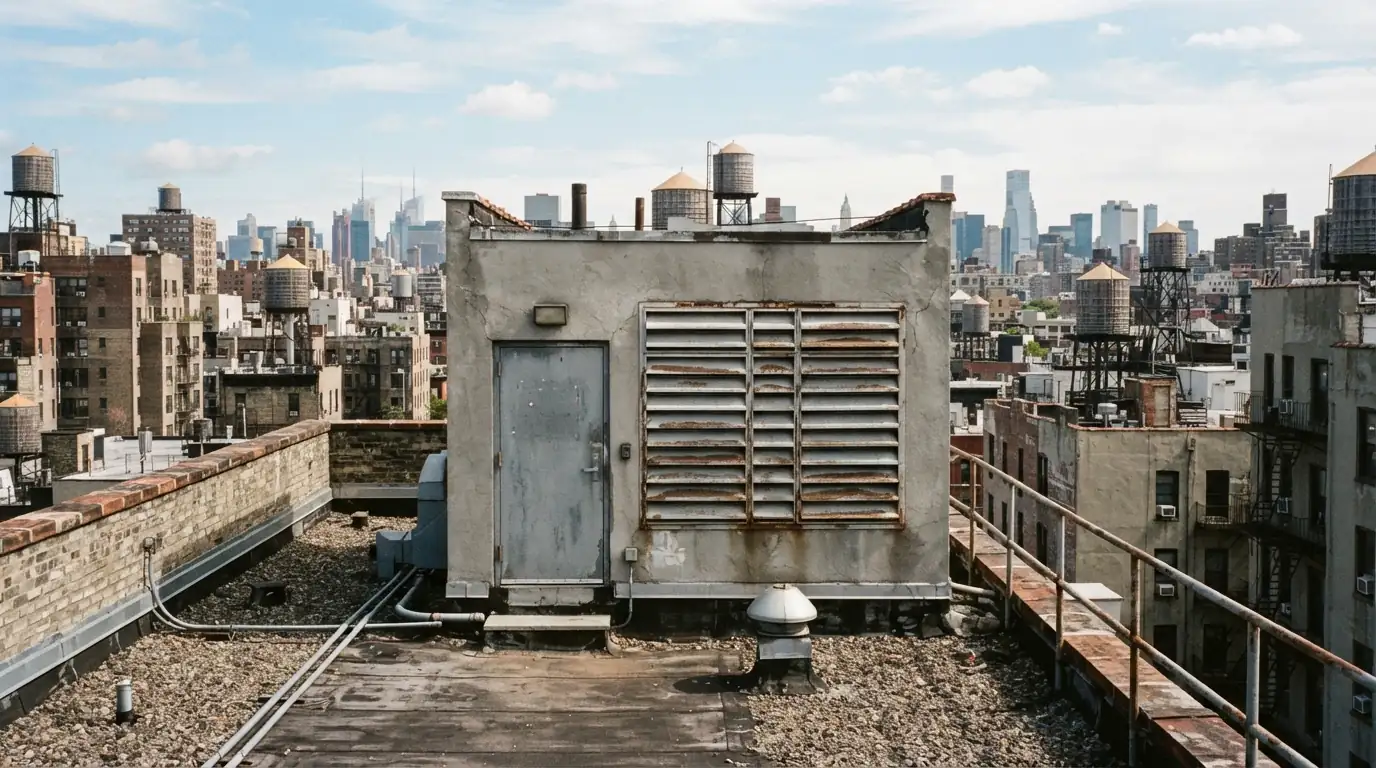
Machine room bulkheads have louvers, vents and larger roofs. Flashing at the base, the vents and the roof edge is rebuilt, working around the elevator contractor's access needs.
Local conditions
On a typical walk-up, the stair bulkhead is the only way onto the roof, which makes it the most used and least examined part of it. Every trip up for a satellite dish, a condenser service or a roof check crosses its door sill. After years of roof layers building up around it, many sills end up level with or below the roof surface, and that is where the water gets in.
What is included
Timing
Most bulkhead repairs take a day or two. Door sill work can take the roof door out of use for part of that time, which matters in buildings where residents or equipment contractors rely on getting onto the roof.
Elevator bulkheads take longer, because work around the machine room is coordinated with the elevator contractor and sometimes scheduled around their service visits.
How it runs
Bulkhead roof, base flashing, walls and door sill.
Isolate which part lets the water in.
Sill flashing, base flashing, roof or cladding.
New flashing lapped into the main membrane.
Water test and before-and-after photos.
Questions we hear
Usually the bulkhead door sill. If the membrane is not turned up under the threshold, or the roof has been built up to the sill, water crossing the roof runs under the door.
Yes. The bulkhead's flashing, sill and roof are separate details that can be rebuilt and tied into a sound main roof.
Each re-roof adds height around the bulkhead. Raising the sill puts the threshold back above the roof surface, so water has to climb to get in.
The roofing, flashing and walls are roofing work. Anything inside the machine room is coordinated with your elevator contractor.
Whenever the main roof is, at least spring and fall. It is small and easy to forget, which is why its leaks get blamed on the main roof.
Related services
Leaking curbs, cracked domes and rusted roof hatches repaired or replaced, with the curb flashed into the roof properly.
Learn moreOpen joints, bulging brick and failed inside-face flashing are where many top-floor leaks begin. We repoint, rebuild and reflash.
Learn moreCracked clay tile, loose stone and rusted metal caps let water straight into the top of a wall. We reset, replace and flash coping.
Learn moreCall and we will check the bulkhead roof, walls and door sill.
New York service office
1256 5th Ave, New York, NY 10029