Roof Insulation & Tapered Systems
Polyiso and tapered insulation that meets energy code at re-roof time and gives a flat roof the slope it needs to drain.
Learn moreA green roof is only as good as the roof under it. We build the waterproofing, root barrier and drainage first, then the tray or built-in-place green roof on top.
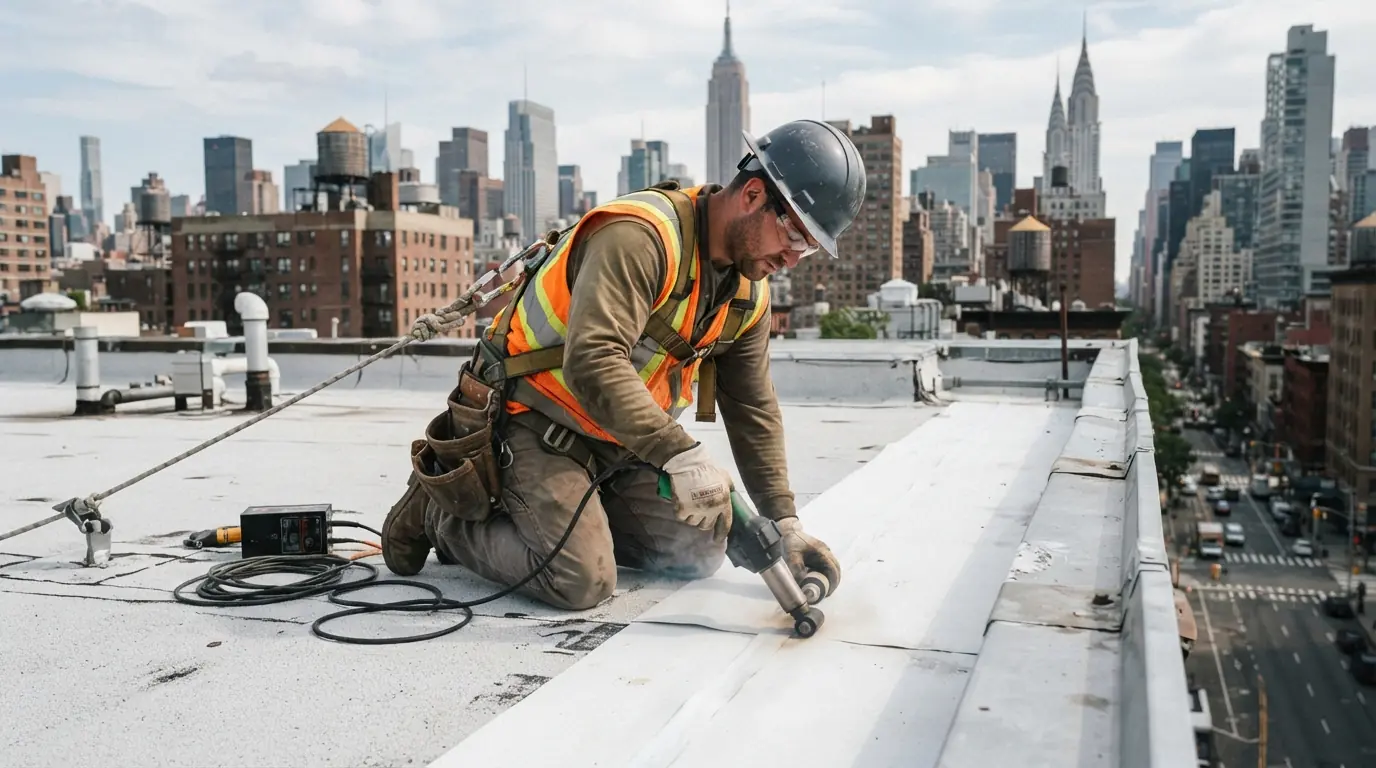
Quick answer: A green roof in New York, NY is a layered system over a waterproof roof: root barrier, drainage and retention layer, filter fabric, lightweight growing medium, and hardy plants such as sedum. It can cover the city's sustainable roofing zone on a full replacement, alone or with solar, if the structure can carry the weight.
What the job involves
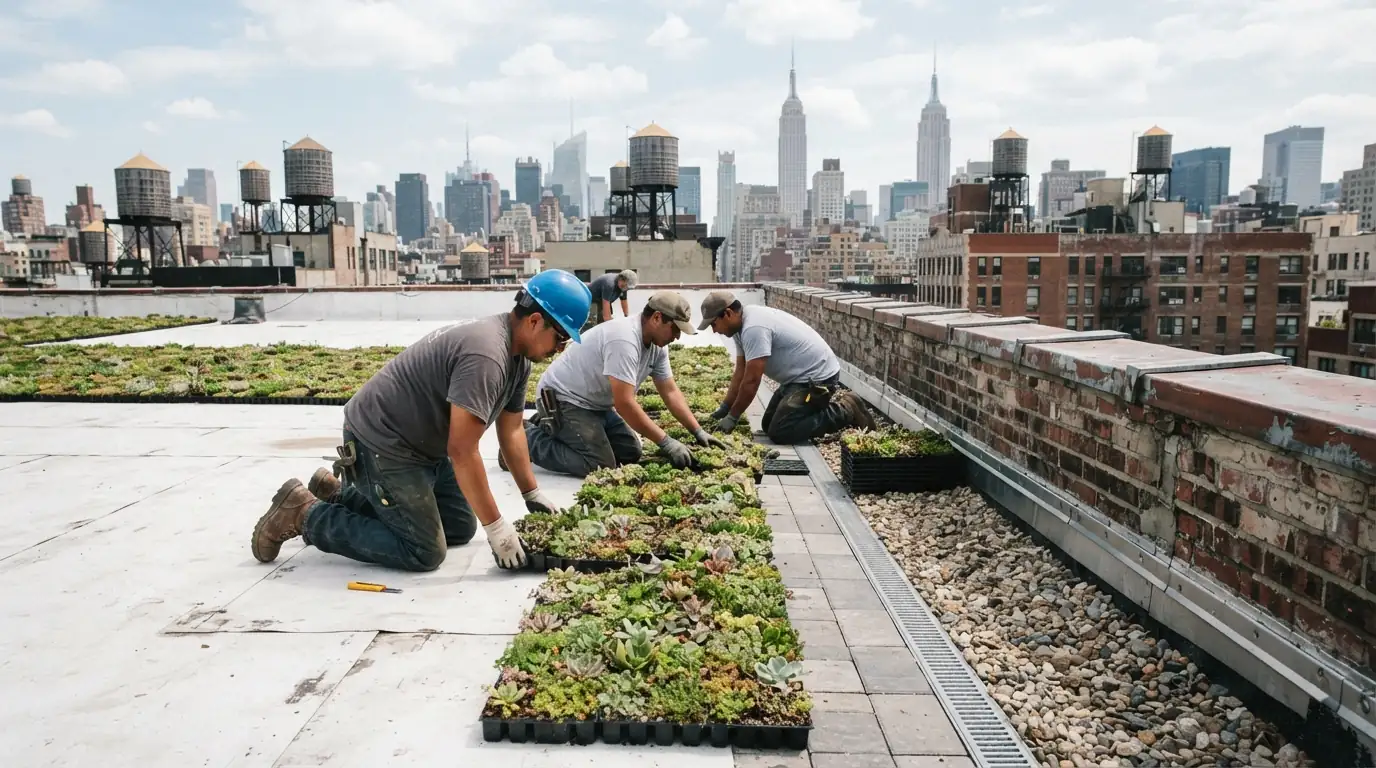
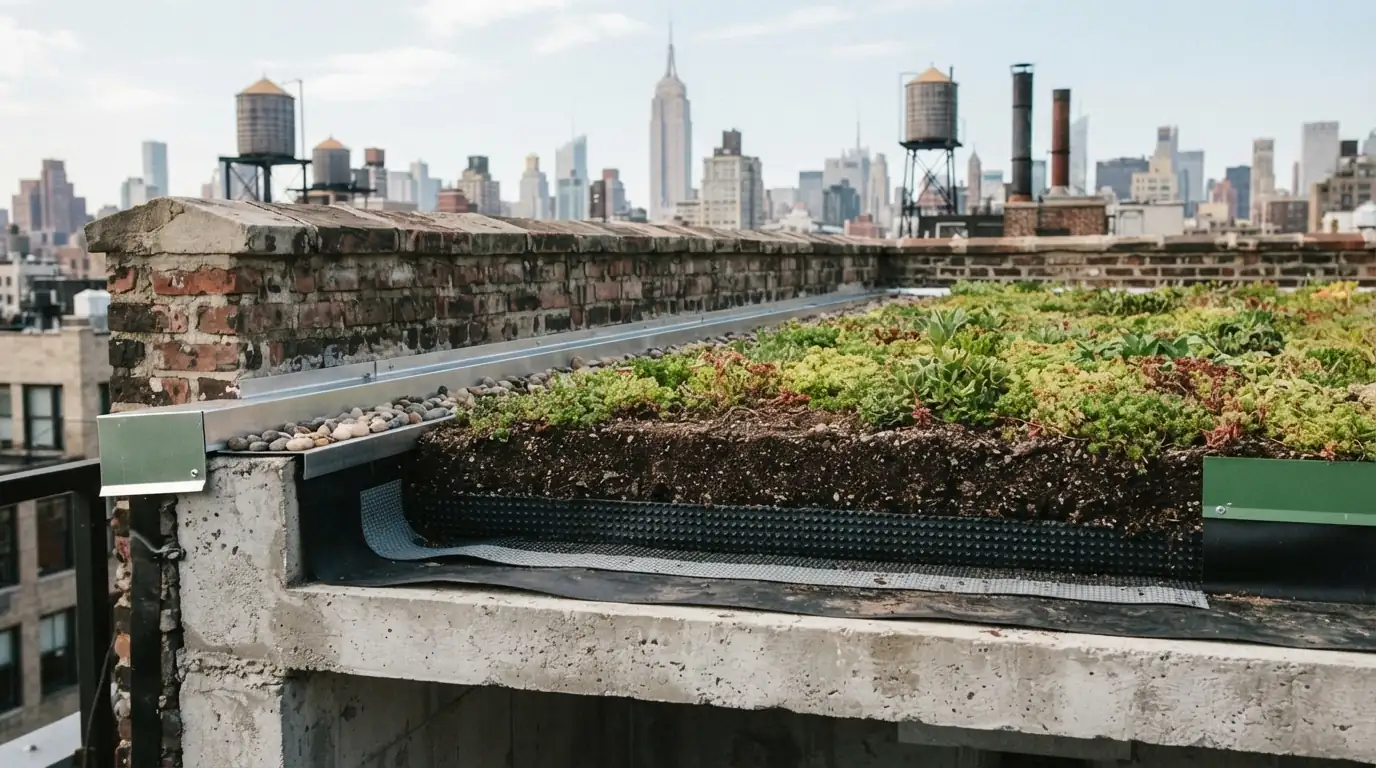
Most city green roofs are extensive systems: a few inches of engineered growing medium planted with hardy sedums that need little water or care. The plants sit on a drainage and retention layer, over a root barrier, over the roofing membrane itself.
Two things decide whether it works. The membrane underneath has to be sound and flood tested before anything goes on top, because finding a leak later means lifting the garden. And the structure has to carry the saturated weight of the system, which an engineer confirms before design.
Your options
| Option | Good for | Keep in mind |
|---|---|---|
| Green roof | Shaded roofs, and owners who want stormwater retained on the roof. | Needs structure for the saturated weight, and periodic maintenance. |
| Solar | Sunny roofs with clear, open area. | Racking has to be flashed or ballasted without damaging the new membrane. |
| Both | Roofs that are partly shaded and partly clear. | Fire access paths still have to be kept clear across the roof. |
Cost factors
Trays and built-in-place systems differ in material and labor.
Deeper systems weigh more and cost more.
An engineer confirms the building can carry the load.
The waterproofing under the garden has to be right first.
Getting growing medium and trays onto a city roof can mean a crane.
Watering while plants take hold, then periodic care.
Variations of the job
When a full roof replacement triggers the requirement, a green roof, solar, or a mix can cover the zone. The qualifying area is worked out with the building's design professional before a system is chosen.
Pre-planted modules that lock together on the roof. Quick to install and easy to lift for membrane access, which makes them a sensible choice where the roof will need future work.
Drainage, fabric, growing medium and plants installed as continuous layers. More flexible around odd shapes and tight corners, but slower to install and harder to lift later.
Local conditions
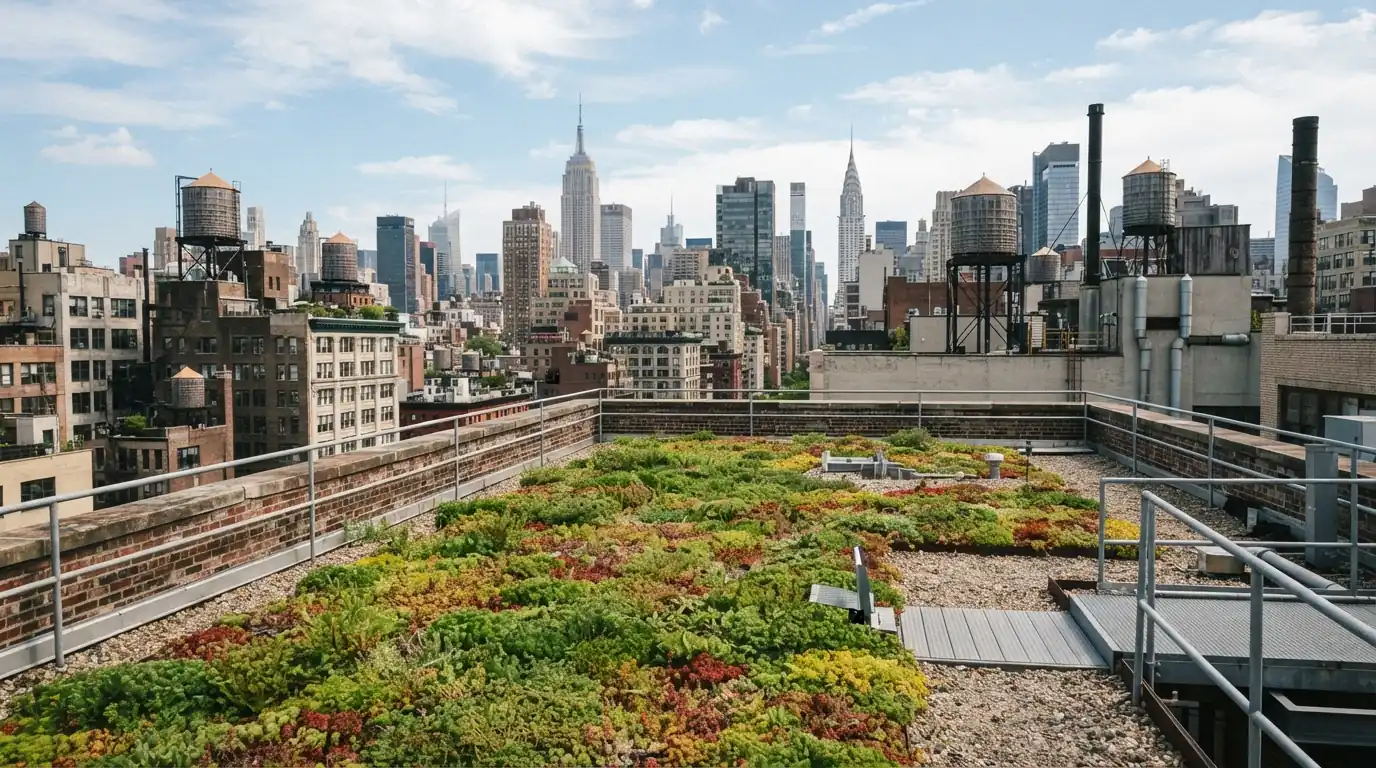
Since November 15, 2019, New York City has required a sustainable roofing zone, meaning solar, a green roof or both, on new buildings and on existing buildings replacing an entire roof deck or roof assembly, with equipment areas, fire access paths and parapets excluded. For a building that cannot fit much solar, a green roof is often how the zone gets covered. It is planned with the replacement, not added afterwards.
What is included
How it runs
Engineer's load check and the sustainable roofing zone layout.
New membrane with root barrier, flood tested before anything covers it.
Retention and drainage board, with clear zones kept at the drains.
Trays set or layers built, then planted.
Watering while plants take hold, then seasonal visits.
Questions we hear
Not if the membrane under it is sound and flood tested before the garden goes on. Most green roof leaks trace back to membrane work done before the plants, or to drains buried under growing medium.
Watering while it establishes, then a few visits a year to weed, clear drains and check coverage. Sedum roofs are low-maintenance, not no-maintenance.
That is an engineer's call. Shallow sedum systems are the lightest, but even they weigh a lot when saturated, so the structure is checked before design.
Yes. A green roof, solar, or a combination are the ways the zone can be covered. Sun, structure and budget decide which fits.
Only if the existing membrane is sound and suitable, usually with a new root barrier. Older roofs are often better replaced first, since the garden will sit on them for years.
Related services
Polyiso and tapered insulation that meets energy code at re-roof time and gives a flat roof the slope it needs to drain.
Learn moreBlisters, split seams, punctures and cracked surfacing repaired with materials that match the membrane already on your roof.
Learn moreTear-off or recover, new insulation, new flashings and drains, with the DOB filing and the sustainable-roof question settled before work starts.
Learn moreCall and we will plan the waterproofing and the garden as one roof.
New York service office
1256 5th Ave, New York, NY 10029