EPDM Rubber Roofing
Fully adhered rubber membrane for rowhouses and small buildings: few seams, flexible through freeze and thaw, simple to patch years later.
Learn moreTear-off or recover, the right membrane for the building, insulation to current code, and new flashings and drains, with the city's sustainable roof and cool roof rules settled before the first roll goes down.
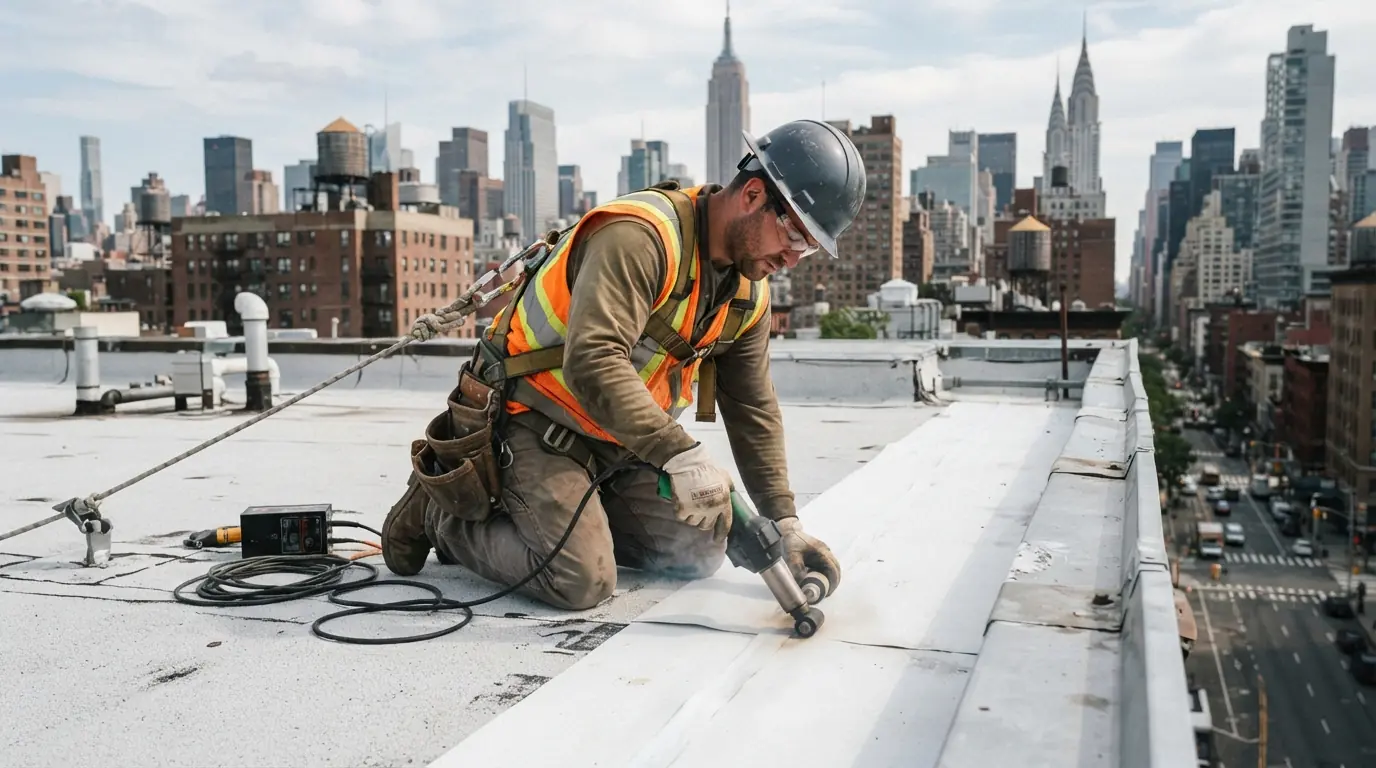
Quick answer: A flat roof replacement in New York, NY removes the old layers down to a sound deck, adds insulation and a new membrane such as EPDM, TPO or modified bitumen, and rebuilds every flashing and drain. Replacing the entire roof assembly also brings the city's sustainable roofing zone requirement into the planning.
What the job involves
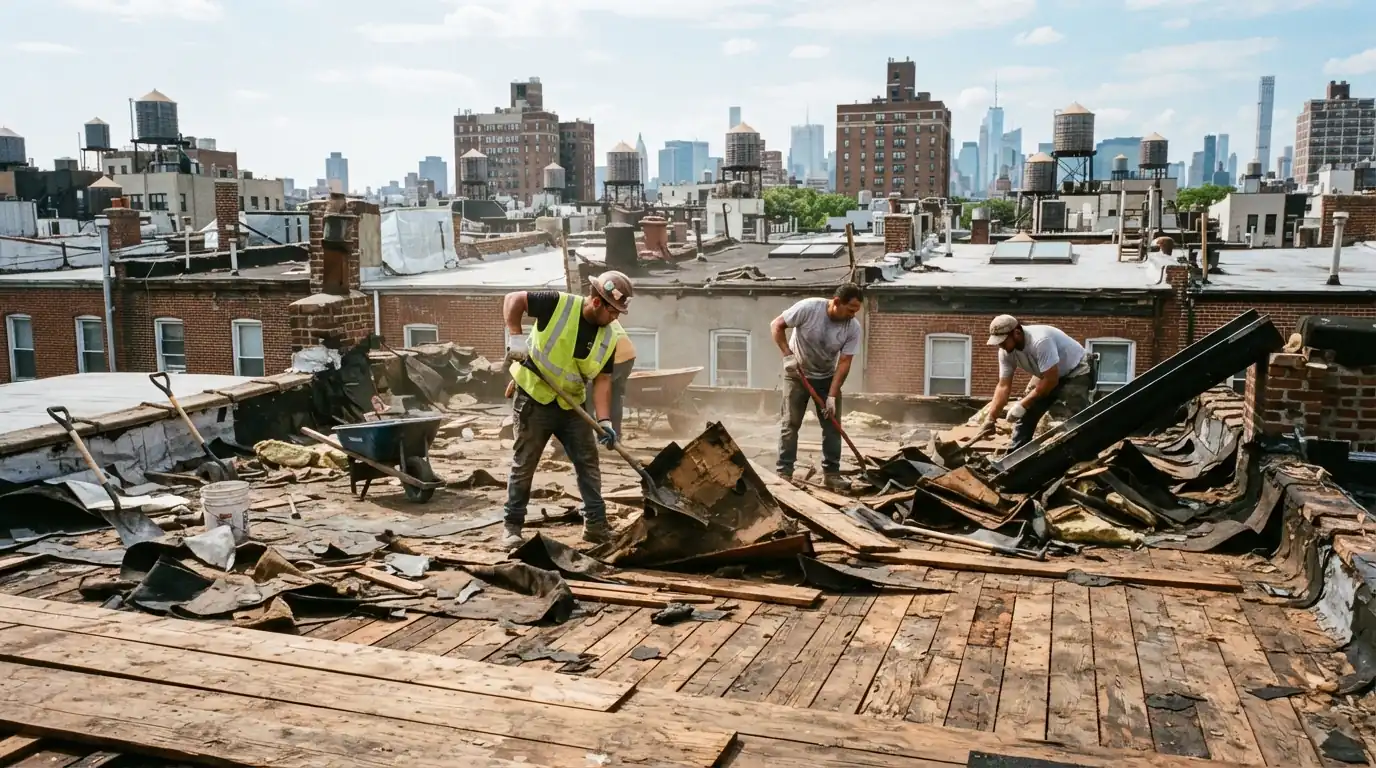
A new membrane over old problems fails early. A proper replacement strips the roof to the deck or to one sound layer, repairs rotten decking, installs insulation and cover board, then the membrane, and finishes with new base flashings, counter flashings, drains and edge metal.
The planning matters as much as the roofing. Codes limit when a new roof can go over an old one, and in New York City replacing an entire roof assembly means dealing with the sustainable roofing zone and cool roof reflectivity. We raise all of it at the estimate.
Your options
| System | Where it fits | Worth knowing |
|---|---|---|
| EPDM rubber | Small and medium roofs, simple shapes, few penetrations. | Very few seams on small roofs. Black EPDM needs a white sheet or reflective coating for cool roof rules. |
| TPO | Roofs with equipment, larger footprints, owners who want a white roof. | Heat-welded seams, and white from the factory. |
| Modified bitumen | Roofs with foot traffic, terraces, rowhouses. | Multi-ply toughness. Choose a reflective cap sheet or coating for cool roof rules. |
Cost factors
Removing layers, especially several, is labor and disposal.
Meeting energy code above the deck is a large share of the material cost.
EPDM, TPO and modified bitumen are priced differently per square foot.
Rotten boards found at tear-off add to the job.
Parapets, skylights, bulkheads and drains each need new details.
Permits, dumpsters, hoisting and sidewalk protection.
Solar or green roof requirements, where they apply, change the budget.
Typical range: Published 2026 cost guides put New York City residential flat roof replacement at about $7 to $15 per sq ft installed, TPO at $8.00 to $13.00 per sq ft and EPDM at $6.50 to $11.00 per sq ft, with Manhattan logistics adding $1,000 to $5,000. Planning figures, not a quote.
Variations of the job
Needed when the roof is wet, already has two or more layers, or the deck needs inspection. Everything comes off to the deck, damaged boards are replaced, and the new roof is built up from there.
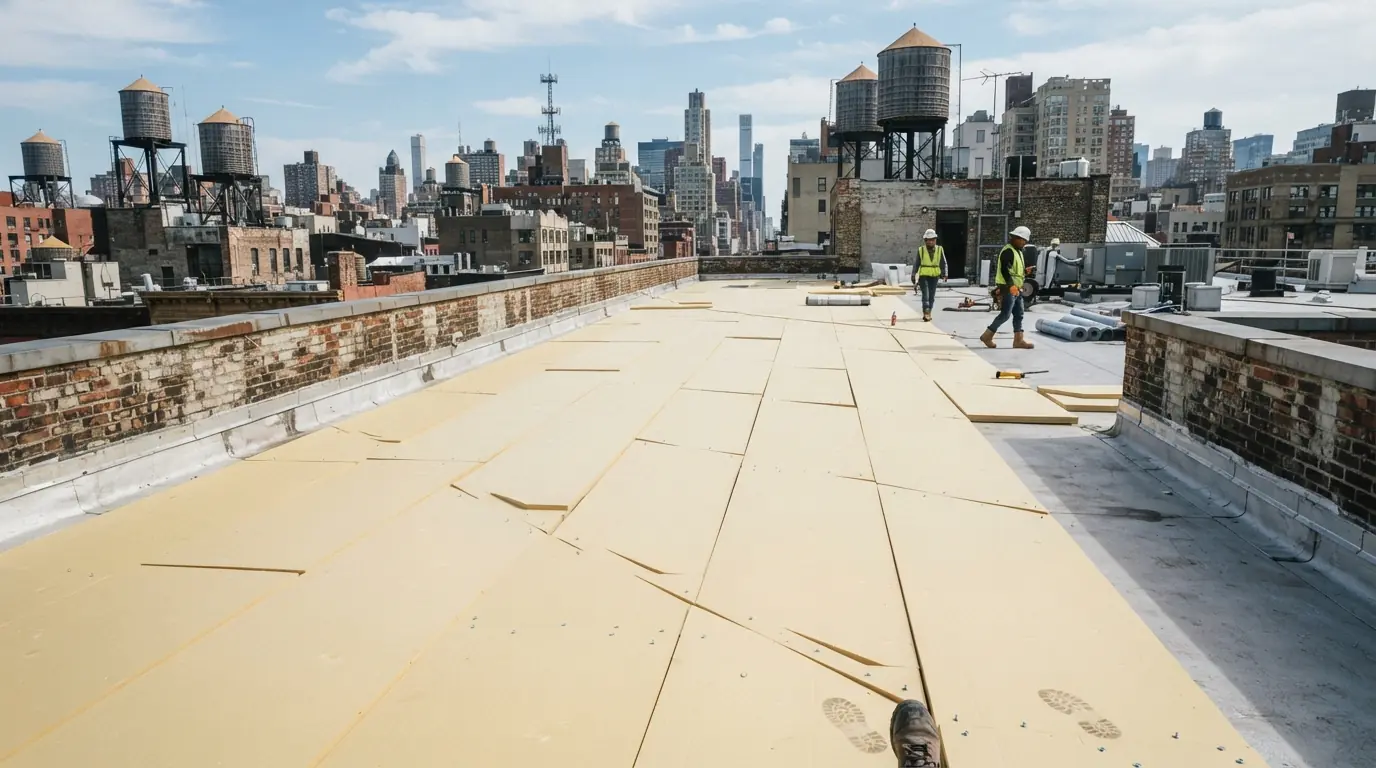
Where one dry, sound layer exists, a recover board and new membrane can go over it, saving tear-off cost and debris. Moisture readings decide whether the old roof qualifies.
Small roofs with tight access, shared parapets and skylights. Material comes up through the building or by hoist, and the party wall flashings get as much attention as the membrane.
Larger roofs with bulkheads and dunnage, and residents below. The work is phased so each section is closed up watertight at the end of every day.
Local conditions
Since November 15, 2019, replacing an entire roof deck or roof assembly in New York City triggers a sustainable roofing zone, meaning solar, a green roof or both, with areas for equipment, fire access paths and parapets excluded. In Manhattan the job also carries logistics a suburban roof does not, from dumpster permits to sidewalk staging in the early morning. We settle both before the tear-off date is set.
What is included
How it runs
Decide tear-off or recover and check the deck.
DOB filing, sustainable roofing zone, cool roof, Landmarks or board approval where they apply.
Sidewalk, skylights and the top floor below.
Each section closed up watertight before the crew leaves.
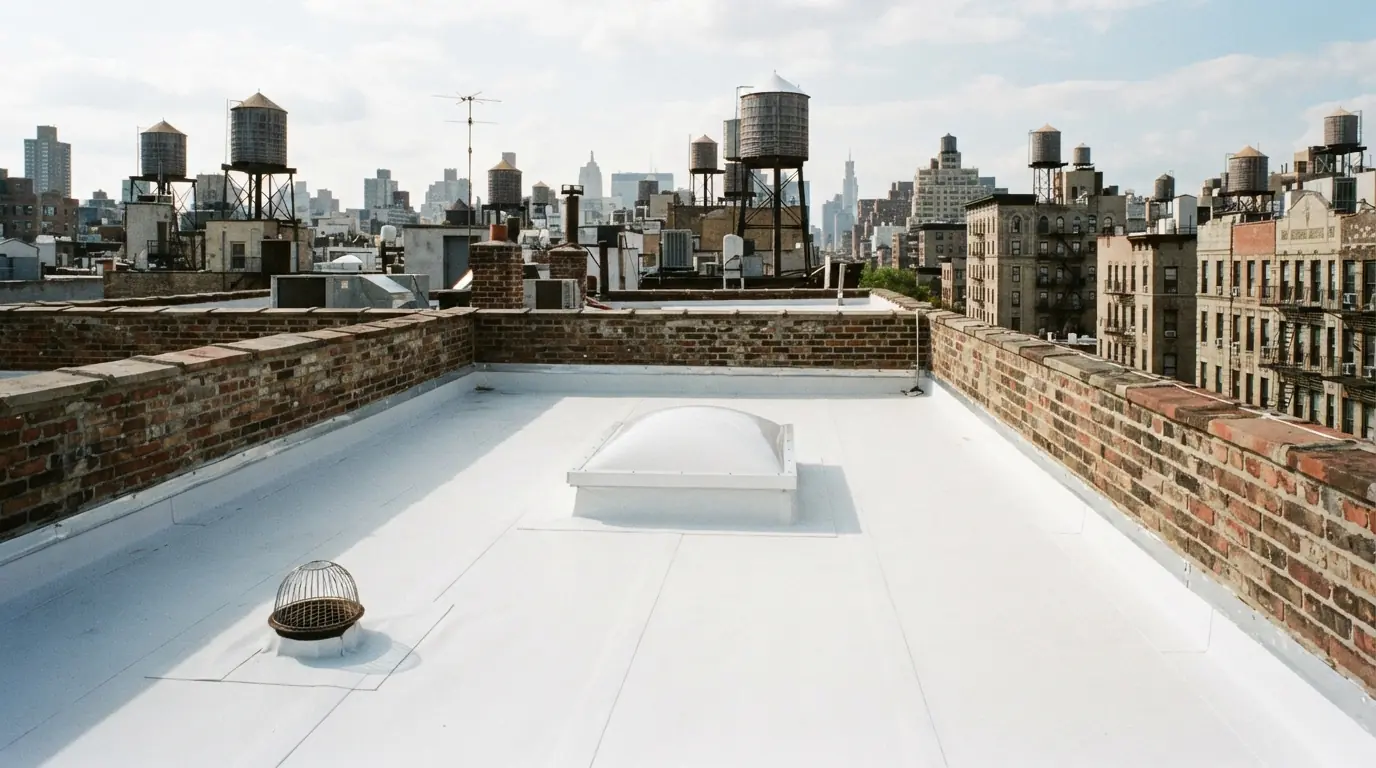
New details at every wall and penetration, then a walk-through with photos.
Membrane makers we choose between for New York flat roofs, picked for the building rather than by habit.
Questions we hear
A full replacement of the roof assembly generally goes through the Department of Buildings, and the filing has to address the sustainable roofing zone. Small repairs usually do not. We check your building before quoting.
If the entire roof assembly is replaced, the sustainable roofing zone applies, with exclusions for equipment, access paths, parapets and steep slopes. Some roofs end up with little qualifying area. We work it out early.
Only if there is a single existing layer that is dry and sound. Codes do not allow recovering a roof that is water-soaked or already has two or more layers.
A small rowhouse roof is often a few days of roofing. Larger roofs, deck repairs and permit or approval time stretch the schedule. The timeline comes with the estimate.
It adds a step. The Landmarks Preservation Commission permits roof work in historic districts, and a flat roof hidden behind a parapet is usually a simpler review than visible roofing.
Related services
Fully adhered rubber membrane for rowhouses and small buildings: few seams, flexible through freeze and thaw, simple to patch years later.
Learn moreWhite heat-welded membrane that reflects summer sun and meets the city's cool roof rules without a coating. Strong seams for roofs with equipment.
Learn moreCold-applied and self-adhered multi-ply systems for rowhouse roofs and roofs that take foot traffic, with a tough granulated cap sheet.
Learn moreCall for a roof survey and a quote that deals with the city's rules up front.
New York service office
1256 5th Ave, New York, NY 10029