Open or sandy mortar joints
Mortar washing out lets water into the wall.
The low wall around a flat roof takes weather from both sides and the top. When its joints open or its flashing fails, water runs down inside the wall and shows up on the top floor.
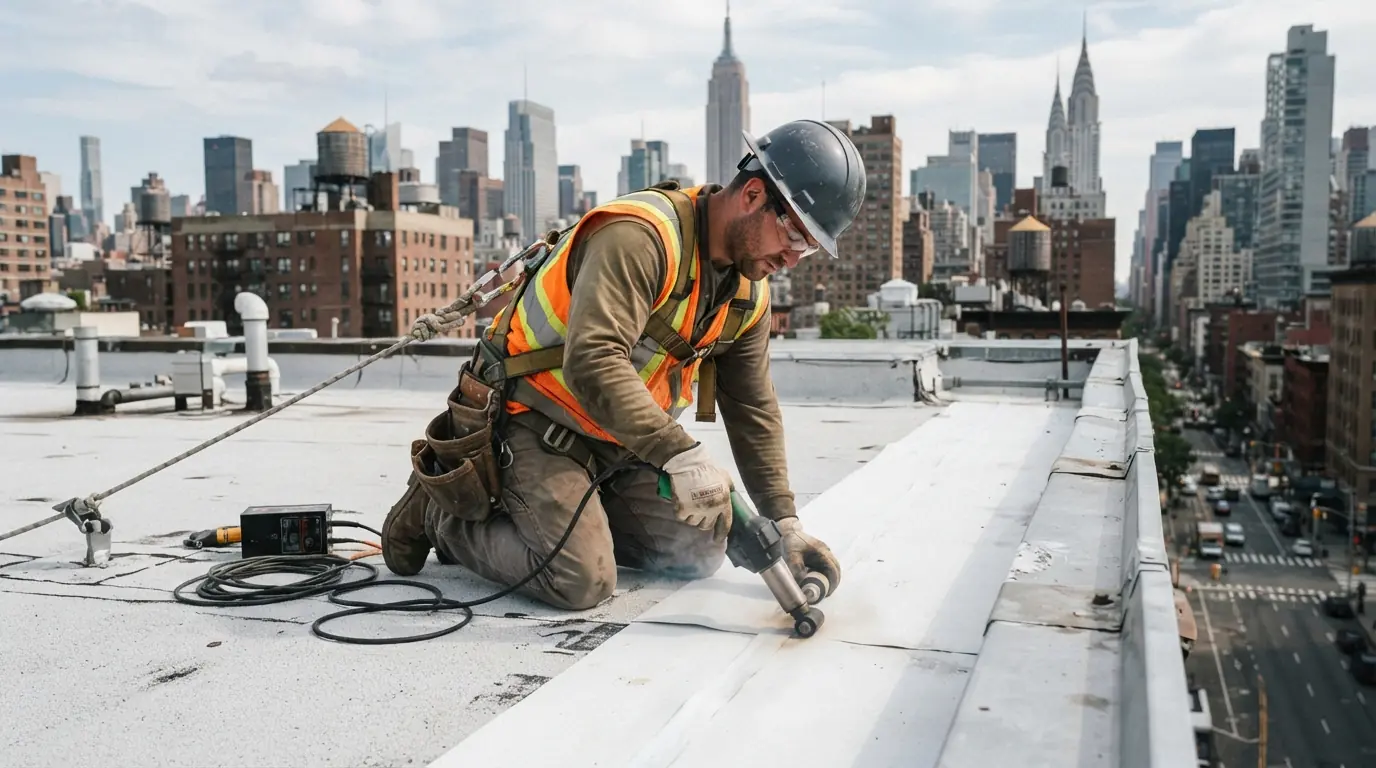
Quick answer: Parapet repair in New York, NY ranges from repointing open mortar joints and renewing the roof-side flashing to taking down and rebuilding a leaning or bulging parapet. Street-facing parapets also fall under the city's annual observation rule, and an unsafe condition has to be corrected within 90 days.
What the job involves
A parapet is exposed on both faces and the top, so it gets wetter and goes through more freeze and thaw than any other part of the building. Mortar washes out, brick faces spall, and the steel anchors that tie coping and wall together rust and expand.
On the roof side, the membrane turns up the wall as base flashing, with counter flashing lapped over its top. When either fails, water gets behind the membrane and into the wall. Repairing the roof without the parapet leaves the leak where it was.
Your options
| Option | When it fits | What to know |
|---|---|---|
| Repointing | The wall is plumb and the bricks are sound; only the joints have failed. | Least disruptive. The mortar has to suit the brick. |
| Partial rebuild | Top courses loose, cracked or out of line. | Unsound courses come down; new ties and flashing go in. |
| Full rebuild | The whole parapet is leaning, bulging or unstable. | The biggest job, often with sidewalk protection and filings. |
Cost factors
Repointing costs far less than taking down and rebuilding courses.
Linear feet of wall and how many courses are affected.
Street-facing work can need a sidewalk shed or netting.
Salvaged or matched brick and a compatible mortar.
New through-wall and roof-side flashing.
Filings, and Landmarks review in historic districts.
Variations of the job
A parapet out of plumb or bulging has lost its bond or its ties. It is checked for stability, and a section that is unsafe is taken down and rebuilt rather than patched.
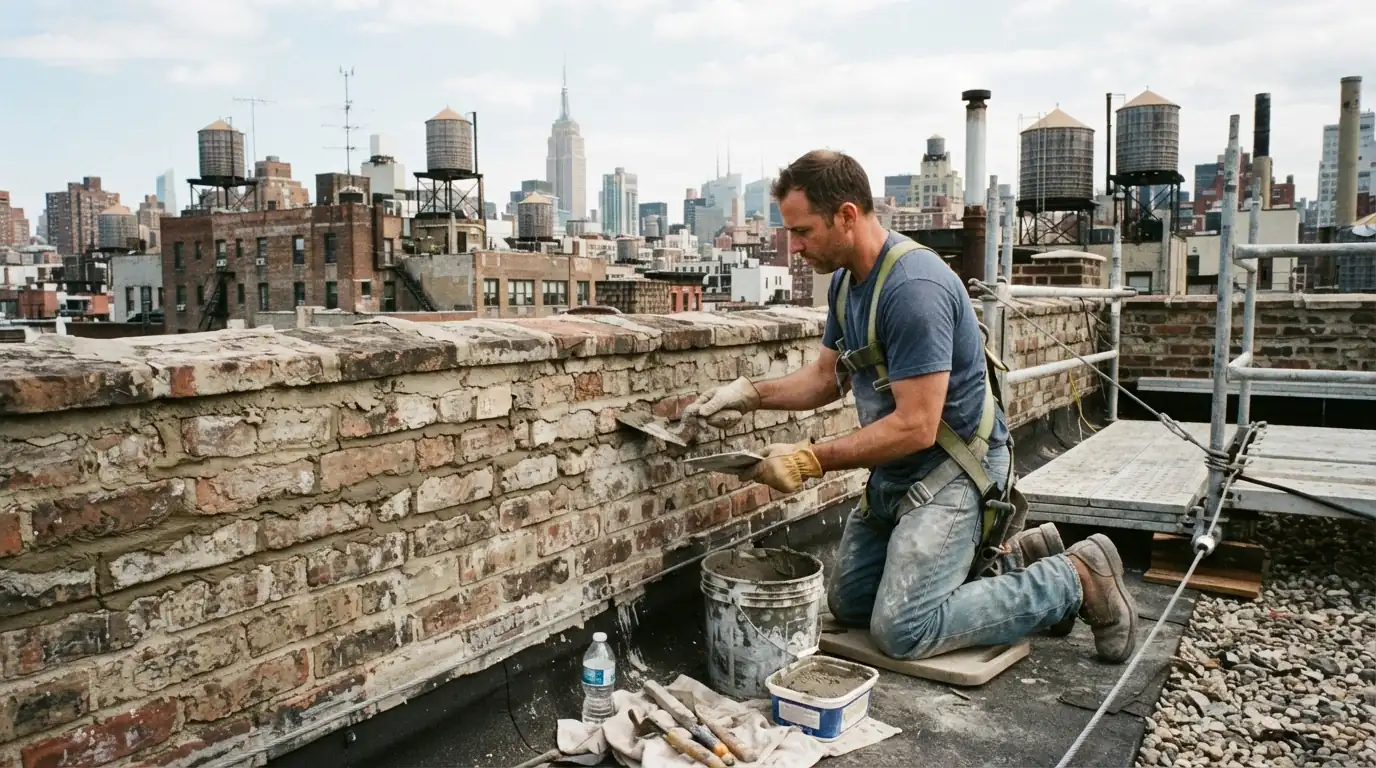
Joints are ground out to a sound depth and repointed with mortar matched to the brick. Mortar harder than the brick makes the brick itself crack, so the mix matters.
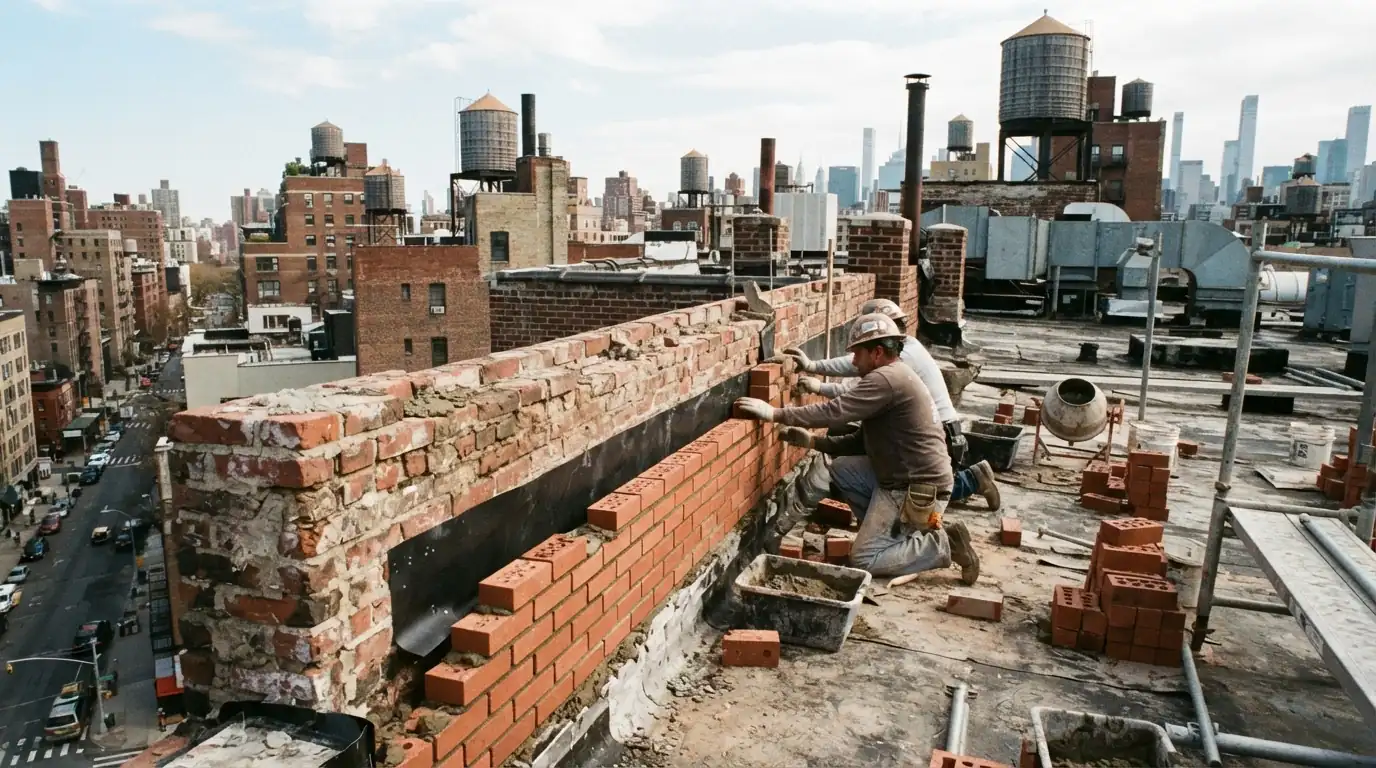
The unsound courses come down, bricks are salvaged where possible, and the wall is rebuilt with new ties and a through-wall flashing under the coping.
The roof-side flashing is renewed up the wall and under a counter flashing or the coping, so water running down the wall is shed onto the roof, not behind it.
Local conditions
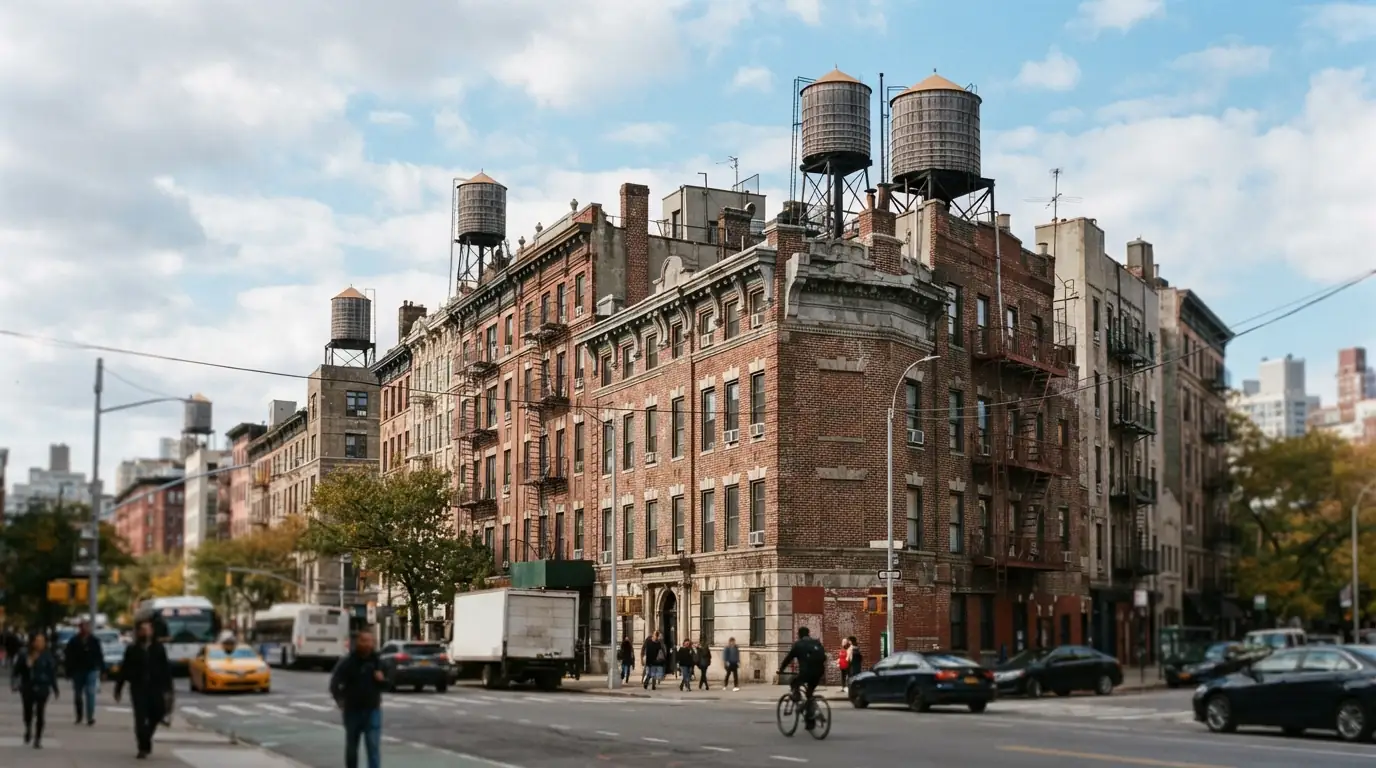
Since January 1, 2024, every New York City building with a parapet facing a street, sidewalk or other public right-of-way needs that parapet observed once a year, whatever its height, with detached one- and two-family homes exempt. It closes a gap, since the facade inspection program leaves out low-rise buildings. When an observation finds an unsafe condition, the repair has to be done within 90 days.
How it runs
From the roof, with photos of cracks, bulges and open joints.
Sidewalk protection where street-facing work needs it.
Repoint or rebuild the unsound sections.
Through-wall flashing, coping and roof-side flashing.
Photos and notes to keep with the building's records.
Warning signs
Mortar washing out lets water into the wall.
Freeze and thaw breaking the face off bricks.
Leaning or bulging means lost bond or failed ties.
Water gets straight into the top of the wall.
Water running behind the membrane.
Water traveling down inside the masonry.
Questions we hear
If it has a parapet facing a street, sidewalk or other public right-of-way, very likely yes, whatever its height. Detached one- and two-family homes are exempt.
It is not filed with the Department of Buildings. The owner keeps each report for six years and provides it if the department asks.
An unsafe condition has to be reported, the public protected with a shed, fence or netting, and the condition corrected within 90 days.
Clear sealers and coatings can trap moisture in brick and speed up spalling. The joints, flashing and coping have to be repaired properly.
Both. The masonry, the coping and the roof flashing work as one system, which is why they are repaired together.
Related services
Cracked clay tile, loose stone and rusted metal caps let water straight into the top of a wall. We reset, replace and flash coping.
Learn moreBase flashing, counter flashing and pitch pockets fail long before the open field of the roof does. Often the most cost-effective fix on a building.
Learn moreStep flashing, counter flashing and crowns where brick meets roof, repaired so the chimney stops feeding water into the top floor.
Learn moreCall and we will look at it up close and tell you whether it needs repointing or rebuilding.
New York service office
1256 5th Ave, New York, NY 10029