Puddles two days after rain
The standard sign of ponding.
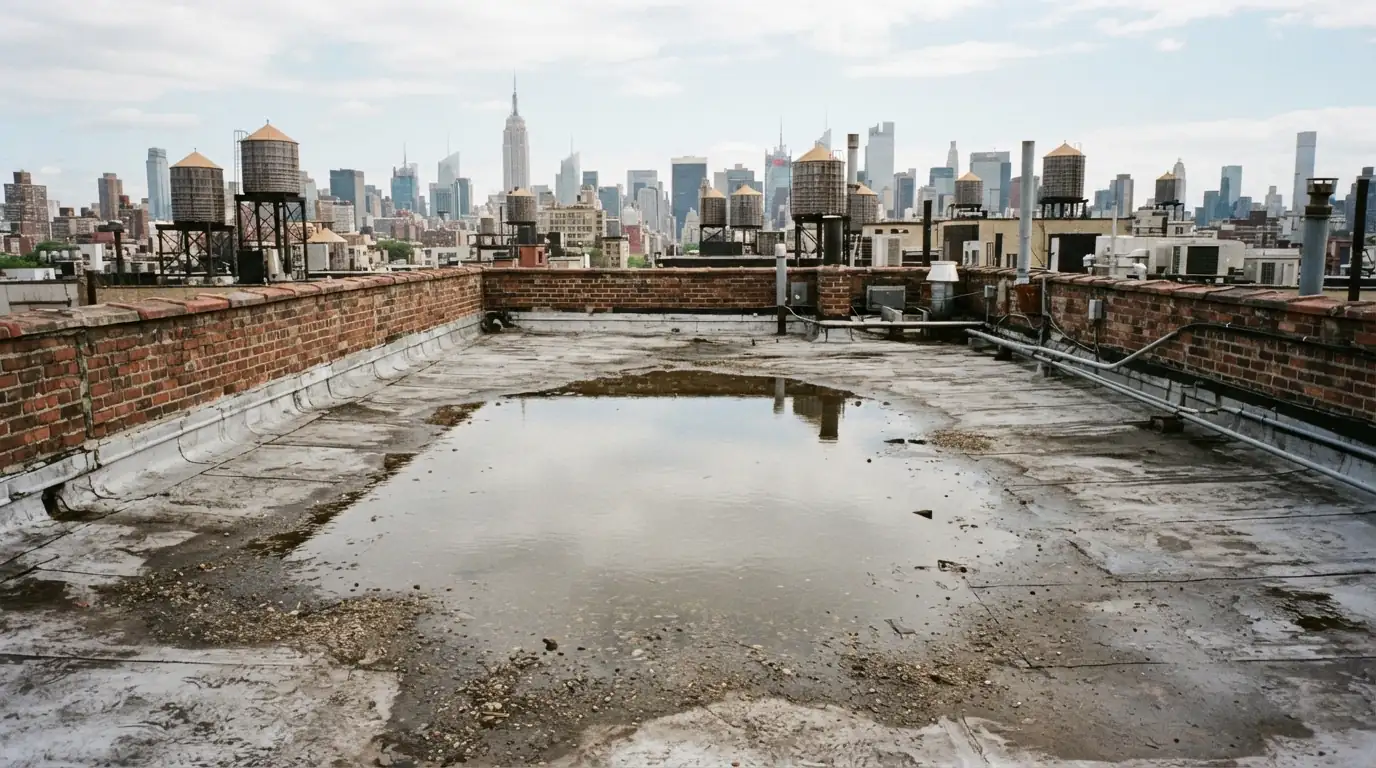
A flat roof should drain within a day or two. When water sits longer, the membrane wears, seams soak, and every small defect becomes a leak.
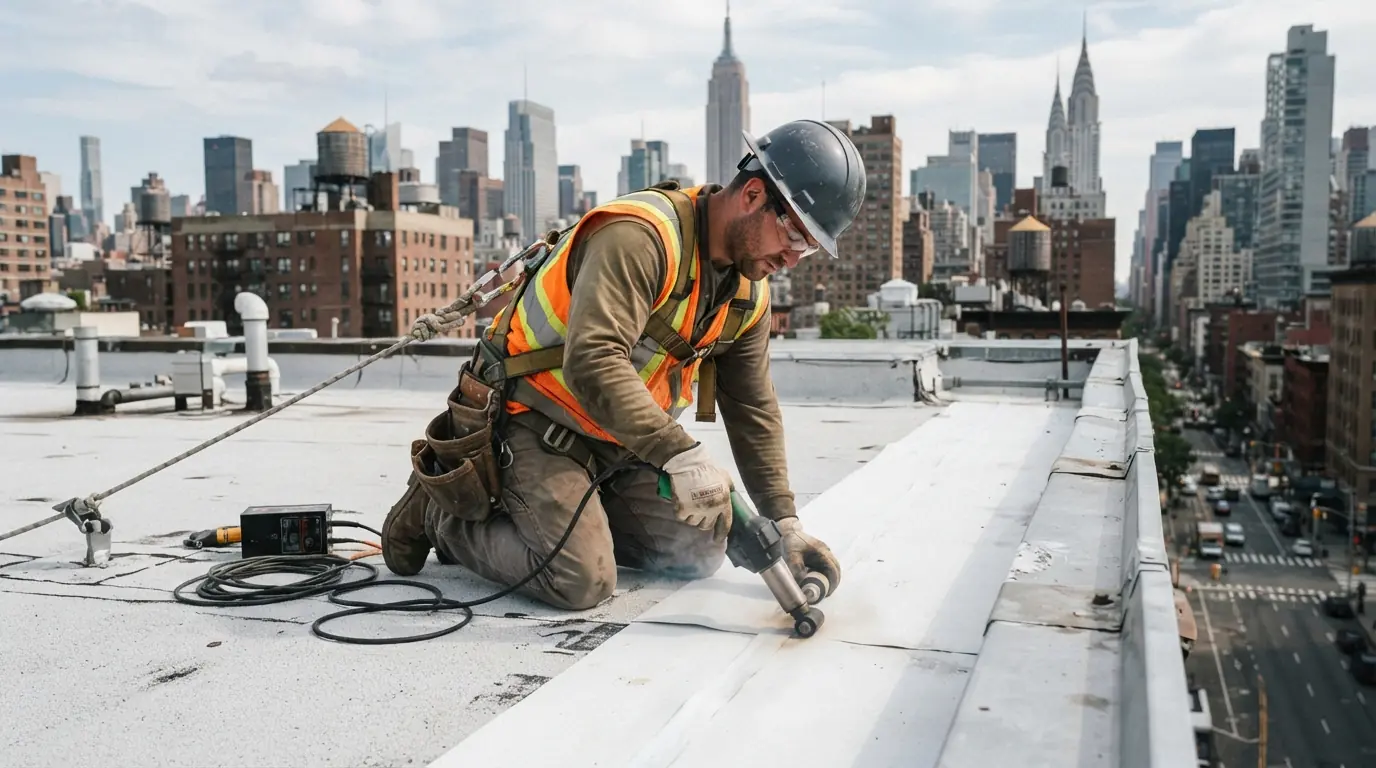
Quick answer: Ponding water is water still standing on a flat roof about 48 hours after rain stops. In New York, NY it is usually corrected by adding tapered insulation to build slope toward the drains, adding a drain or scupper at the low spot, or repairing a sagging deck, whichever matches the cause.
What the job involves
Flat roofs are built with a small slope toward drains or scuppers. Over the years that slope disappears: the deck sags between joists, insulation compresses, and layers added on top fill the low path to the drain. Water collects in the dips instead of leaving.
Standing water wears a membrane faster, adds weight, and gives every pinhole and open lap a steady supply. It also freezes and thaws through the winter, prying seams apart. The fix depends on the cause, so we survey the slope before recommending anything.
Your options
| Fix | When it fits | Tradeoff |
|---|---|---|
| Tapered insulation | Slope has flattened or never existed. | Adds height, so flashings and door sills need checking. |
| New drain or scupper | Slope is fine but water collects far from the outlet. | An interior drain needs a pipe run inside the building. |
| Deck repair | The dip is caused by sagging or rotted decking. | The roof has to be opened in that area. |
Cost factors
Slope, drain placement and deck damage each call for different work.
One low spot by a parapet is small. A roof that dishes toward the middle is not.
On a roof near the end of its life, the correction is best done during replacement.
Rotted boards or damaged joists under the dip add carpentry.
An added interior drain needs a leader run inside the building.
Tapered systems are laid out to the roof's measurements, which takes planning.
Variations of the job
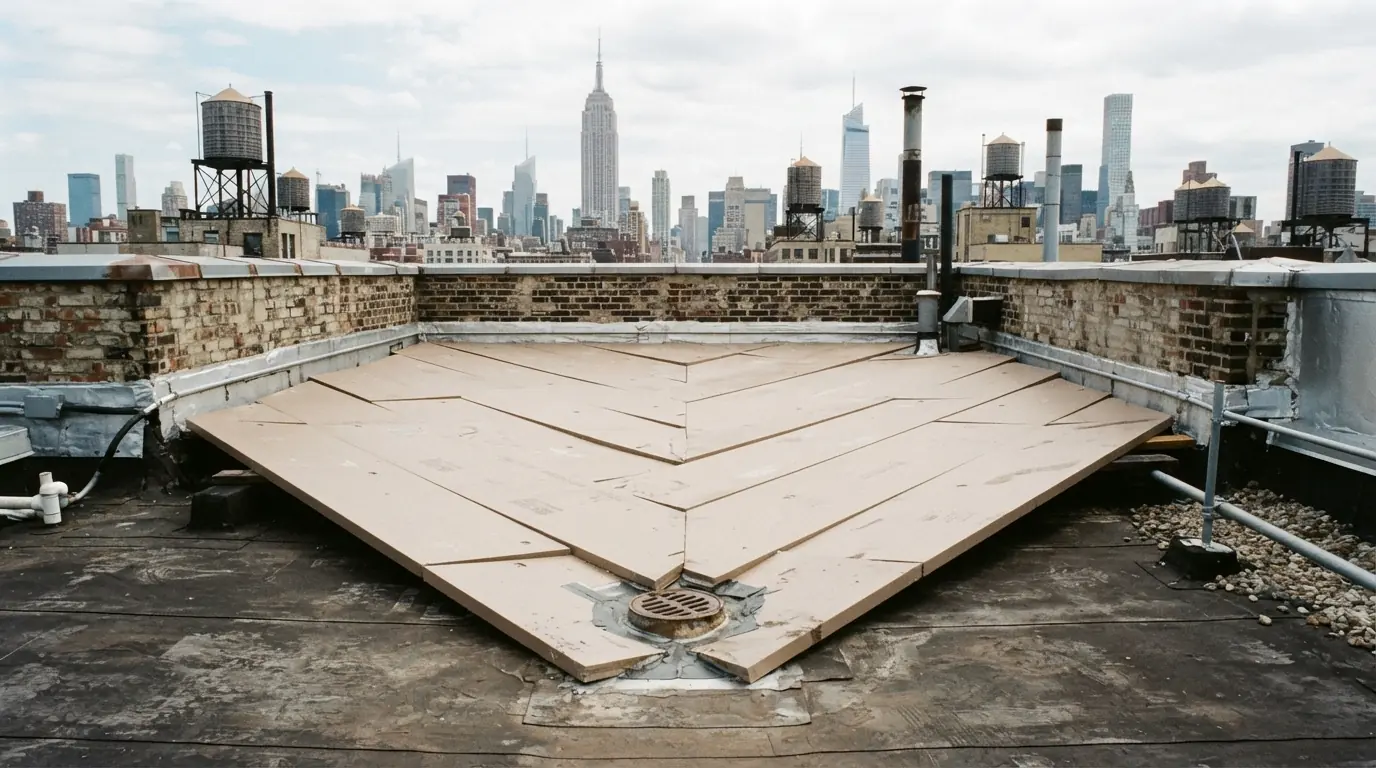
Factory-cut boards that step up in thickness create slope toward the drains. On a re-roof they go in under the new membrane. On a sound roof they can go into the low areas alone, with the membrane rebuilt over them.
Sometimes the slope is fine but the drain sits in the wrong place, or one drain serves too large an area. A new interior drain or a through-wall scupper at the low point takes water where it collects.
A dip that keeps deepening often means a wet or rotted deck, or a cracked joist. That section is opened, the framing and decking repaired, and the roof rebuilt level.
Local conditions
Rain in the city can arrive fast. The National Weather Service measured 3.15 inches in one hour in Central Park on September 1, 2021, and a roof that ponds on an ordinary day is badly overloaded in a storm like that. When we correct slope here we also plan around the energy code, which calls for R-30 above the deck on low-slope roofs, because tapered boards and that insulation go in as one layer.
How it runs
Measure the ponded areas after rain and map how the water moves.
Slope survey, drain check and moisture readings in the low areas.
Tapered insulation, a new drain or scupper, deck repair, or a combination.
Membrane opened, correction installed, membrane rebuilt and flashed.
The corrected area should be dry within a day or two of the next rain.
Warning signs
The standard sign of ponding.
Rings of silt mark where water sits and dries.
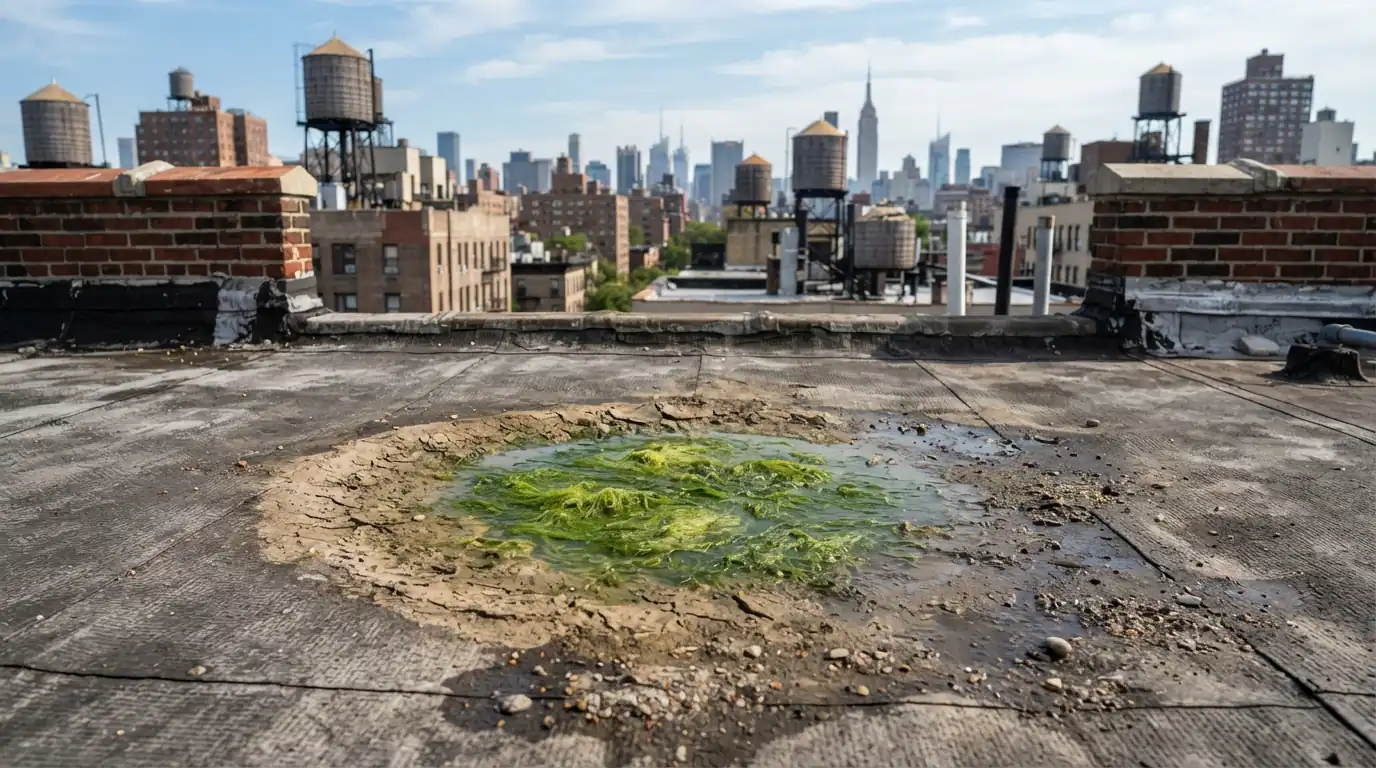
Green patches need standing water to survive.
Water finding a pinhole under a ponded area.
Frozen ponds that outlast the snow elsewhere.
Can mean the deck above is bending under the weight.
Questions we hear
The common industry test is 48 hours. Water still there two days after rain, in drying weather, is ponding and worth correcting.
Small, shallow puddles that dry within a day or two are common on flat roofs. It is the lasting, recurring ponds that shorten a roof's life.
Some coatings are rated for ponding water, but a coating does not add slope. The water still sits there, and the weight and freeze cycles keep working on the roof.
It removes the constant water that finds every weak point, but existing openings still need repair. Both are handled in the same visit where the roof allows.
Many membrane warranties exclude damage caused by ponding water. Check the terms of yours; correcting slope during any major repair protects it.
Related services
A clogged or cracked drain bowl turns a sound roof into a pond. We clear, rebuild and replace interior drains, scuppers and overflows.
Learn moreWater coming in right now, a membrane peeled back by wind, a branch through the deck. We make it watertight first and scope the permanent repair after.
Learn moreCeiling stains rarely sit under the hole. We trace the water back to the seam, flashing or drain that is letting it in, then fix that.
Learn moreCall and we will measure it, find the cause, and tell you which fix fits.
New York service office
1256 5th Ave, New York, NY 10029