Annual Parapet Observation
For buildings with a street-facing parapet: a yearly up-close look, a written observation report, and repair of anything unsafe.
Learn moreBefore you buy a building, after a big storm, or before a board meeting, a roof inspection tells you what you have, what it needs and what to budget, in writing and with photos.
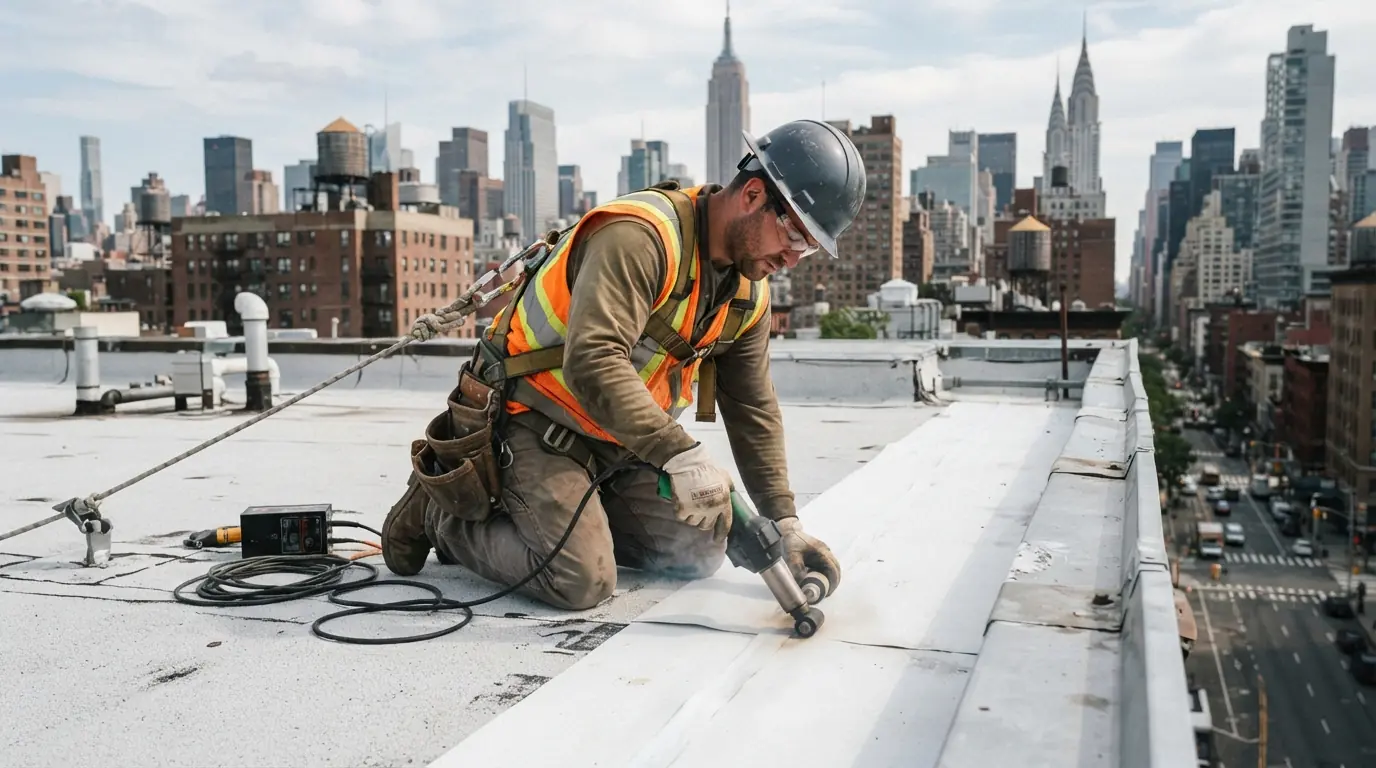
Quick answer: A roof inspection in New York, NY covers the roof surface, seams, flashings, parapets, drains, skylights and bulkheads, with moisture readings where the roof is suspect. You get photos and a written report that separates what needs repair now from what can wait, with an estimate of the life the roof has left.
What the job involves
An inspection is a walk of every part of the roof, not a look from the hatch. On a flat roof that means the membrane field, every seam and flashing, the parapets and coping, drains and scuppers, skylights, hatches and bulkheads, and the curbs under rooftop equipment.
On a pitched roof it means every slope, the valleys, the flashing at walls and chimneys, the gutters and, where there is an attic, the underside of the deck. The report sorts findings by urgency, so you know what needs fixing this season and what belongs in next year's budget.

What is included

Variations of the job
Before buying a building or a top-floor unit, an inspection tells you the roof system, its condition, the number of layers and the likely cost ahead, which can change what you offer.
After high winds or a heavy storm, every slope and edge is checked for lifted material and damage not visible from the street, with dated photos for an insurance claim.
Some membrane warranties and insurers expect periodic inspections and records. A dated report with photos gives you that paper trail when it is asked for.
Local conditions
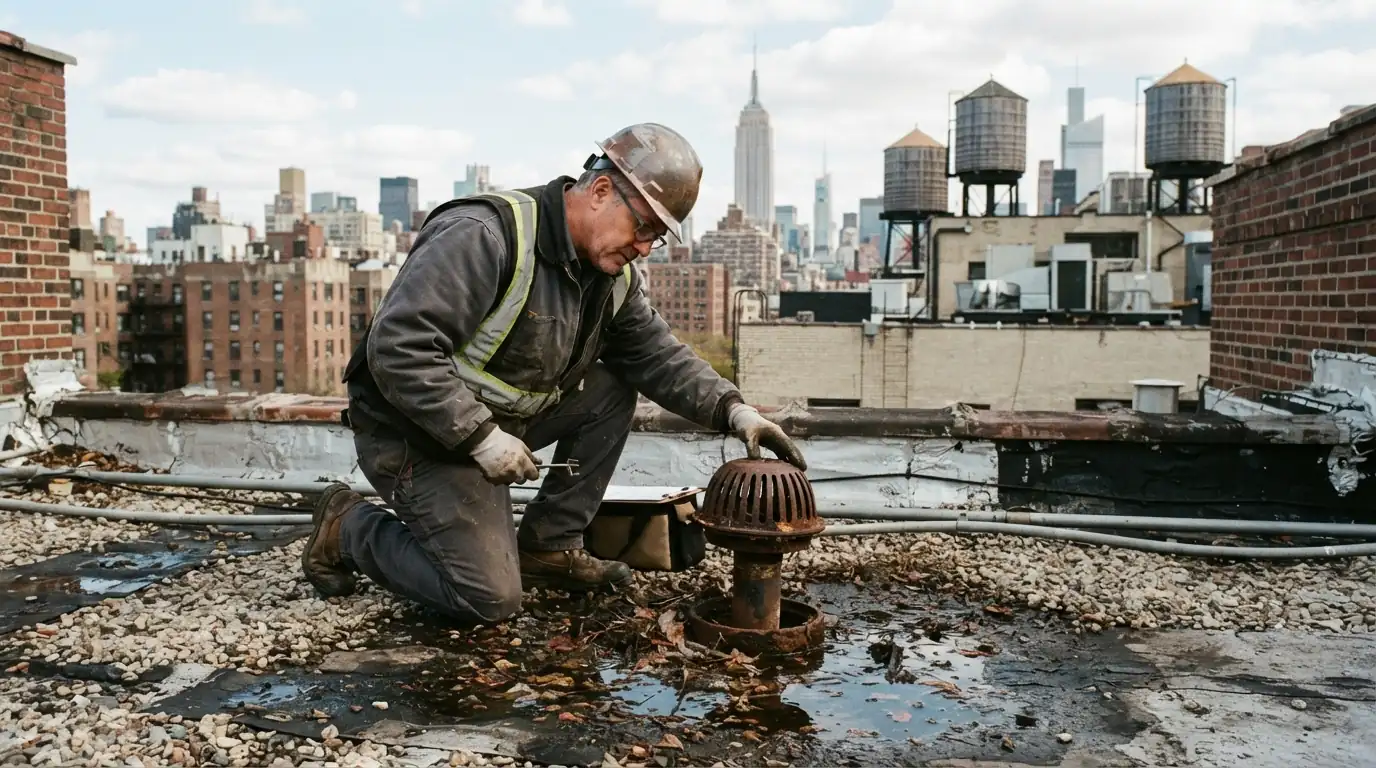
Under the New York State residential code, a new roof cannot go over one that is water-soaked or already carries two or more layers of roofing. So one of the first things an inspection records is how many layers are on the roof and whether they are dry. That single finding often decides whether the next roof can be a recover or has to be a full tear-off, and it moves the budget accordingly.
How it runs
Top-floor ceilings, the attic and any known leak spots.
Every surface, seam, flashing and drain.
Moisture readings and cores where the roof is suspect.
Each finding located on a sketch of the roof.
Findings sorted by urgency, with options and remaining life.
Cost factors
Larger roofs take longer to walk and document.
Main roof, bulkheads, extensions and garages.
Hatches, ladders, and steep or tall pitched roofs.
Readings and cores add time where the roof is suspect.
A short condition summary or a full report for a board or buyer.
Rush inspections ahead of a closing date.
Do it yourself or call
Questions we hear
At least once a year, ideally in spring or fall, and after any major storm. Older roofs and roofs with a history of leaks benefit from two visits a year.
A general home inspection often views the roof from the ground or a ladder. A roofing inspection walks the roof, checks flashing and drains, and can take moisture readings.
Yes. Every finding is photographed and located on a sketch of the roof, so you can see what was found without climbing up.
It gives an honest estimate of remaining life based on condition, layers and moisture, with the caveat that weather and upkeep change the answer.
Dated photos and notes of storm damage help document a claim. Your insurer will usually still send its own adjuster.
Related services
For buildings with a street-facing parapet: a yearly up-close look, a written observation report, and repair of anything unsafe.
Learn moreScheduled spring and fall visits to clear drains, check seams and flashings, and fix small defects before they become ceiling leaks.
Learn moreRetail, mixed-use and warehouse roofs repaired and replaced around your trading hours, including roofs crowded with rooftop equipment.
Learn moreCall to book an inspection and get the findings in writing.
New York service office
1256 5th Ave, New York, NY 10029