Roof Inspection
A written roof condition report with photos: what needs doing now, what can wait, and what to budget for.
Learn moreA co-op roof decision passes through a board, a managing agent and sometimes an engineer before anyone picks up a tool. We write proposals built for that process and plan the work around residents.
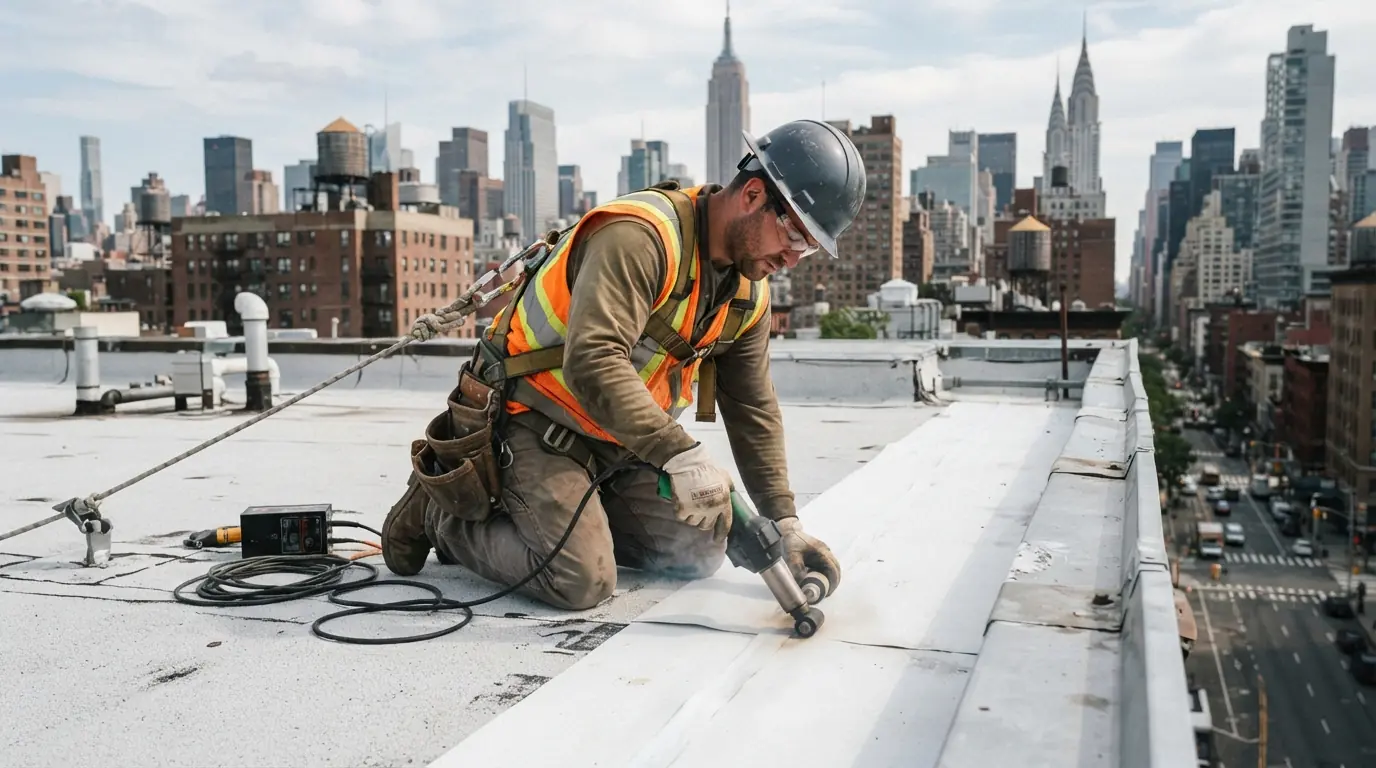
Quick answer: Roofing for co-op and condo buildings in New York, NY means a written scope a board can compare line by line, coordination with the managing agent and any engineer, and work phased so residents keep access and each section is closed up daily. Repairs, coatings and full replacements all follow the same process.
What the job involves
In a co-op or condo, the people paying for the roof rarely see it. They see a proposal, a presentation from the managing agent, and sometimes an engineer's report. A proposal that is vague about tear-off, insulation or flashing makes it hard for a board to compare bids fairly.
So the proposal is written for the board: what is wrong with the roof, the options and their tradeoffs, what each price includes, the city rules that apply, and a schedule. Photos of the existing roof go with it, because most board members will never climb up there.
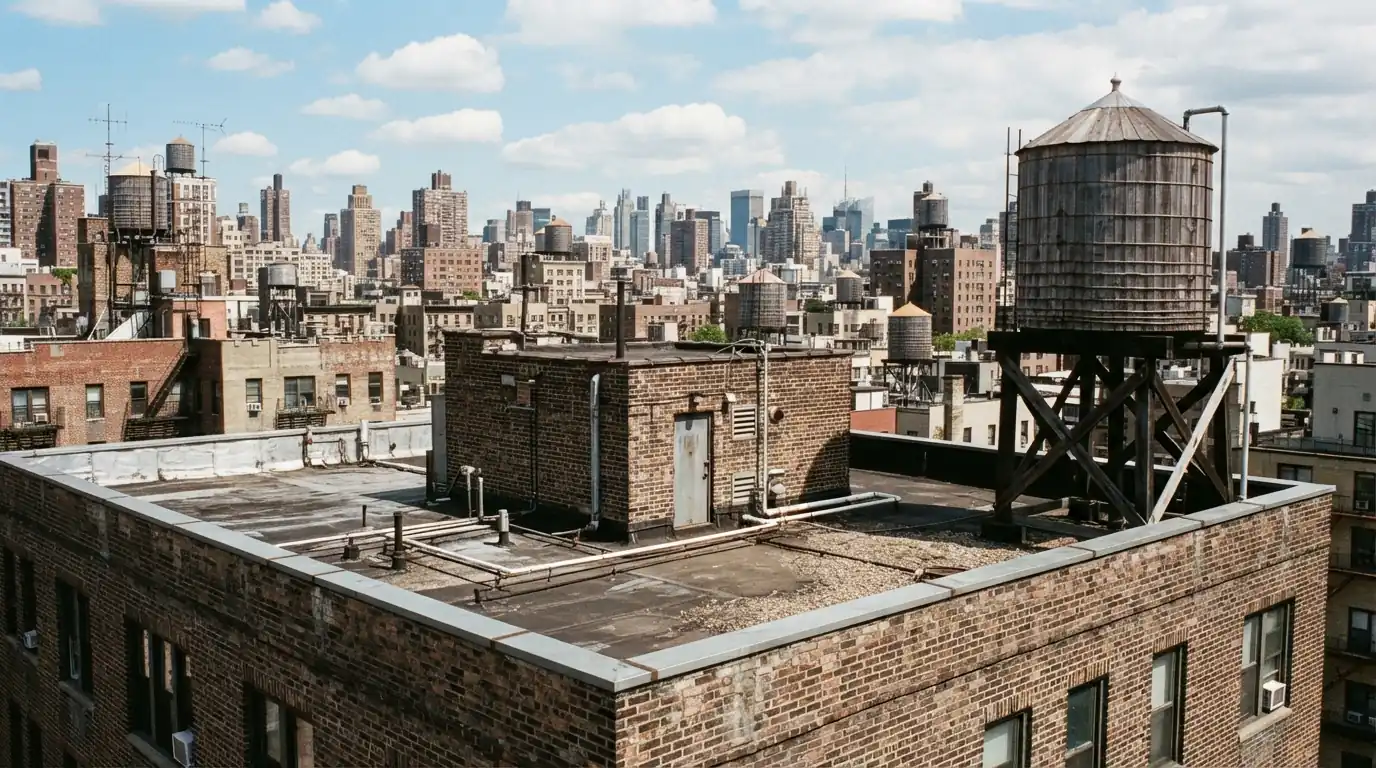
Cost factors
Repair, coating, recover or full replacement.
Square footage and what has to come off.
Specifications or oversight by the board's engineer.
More phases mean more setup and closing up.
Keeping terraces, bulkheads and roof doors usable.
DOB filings, Landmarks review and the sustainable roofing zone.
Variations of the job
A written scope with photos, options from repair to replacement, and line items a board can compare with other bids, delivered in time for the meeting where it will be discussed.
Access, resident notices, building rules and scheduling all go through the managing agent, with one point of contact on our side from survey to closeout.
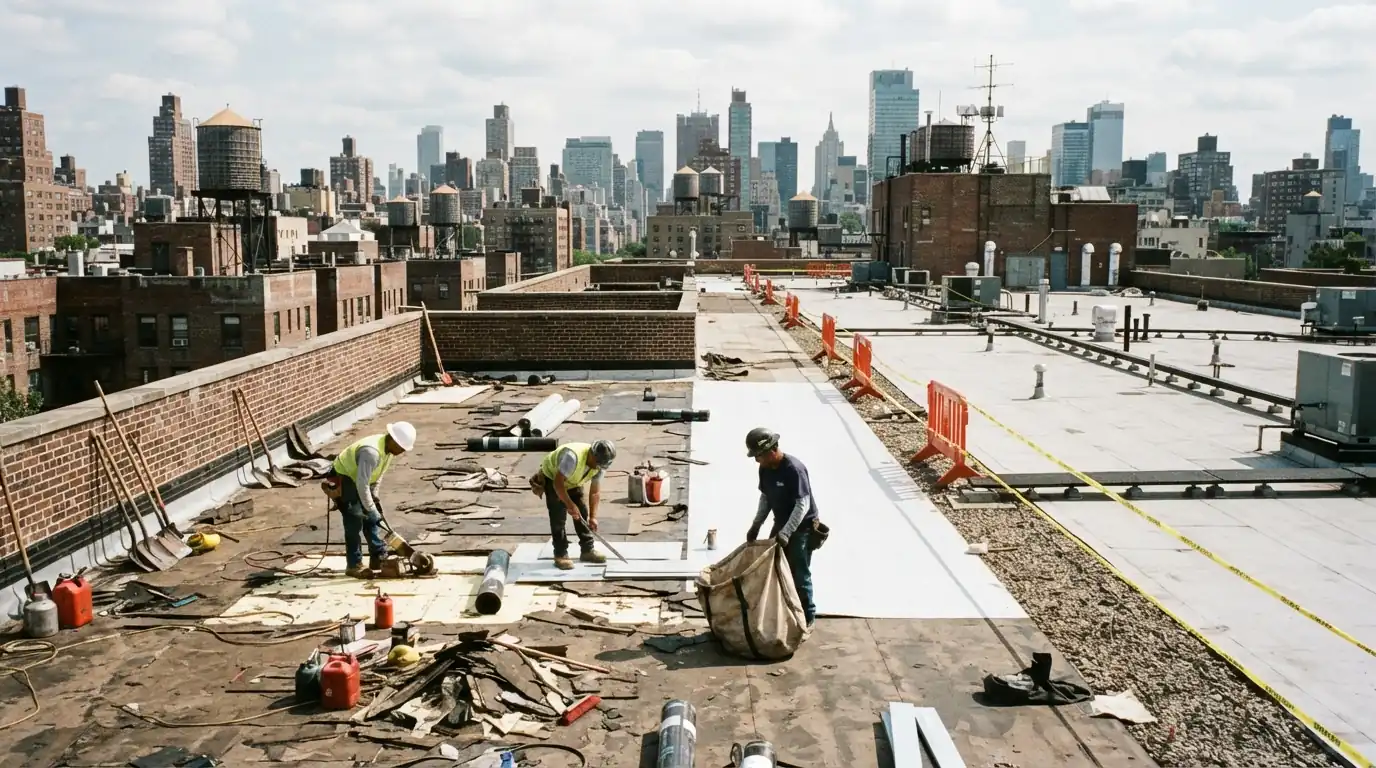
Large roofs are done in sections, each one closed up watertight at the end of the day, with roof access, bulkhead doors and any roof terraces kept usable where possible.
Local conditions
Landmarks review is the extra step for boards on historic blocks. For out-of-sight roof work the lighter path is a Certificate of No Effect, which is how a Park Slope flat roof replacement with vents, condensers and railings was approved. A proposal for a building in a district like that should name the approval it expects and build the review time into its schedule, so the board is not surprised halfway through.
What is included
Timing
Most board decisions follow the meeting calendar, so the proposal needs to reach the managing agent early enough to circulate. Approvals, filings and material lead times then set the start date.
On site, work is phased so residents keep access to the roof door and any terraces where possible, and noisy work keeps to the hours the building allows.
How it runs
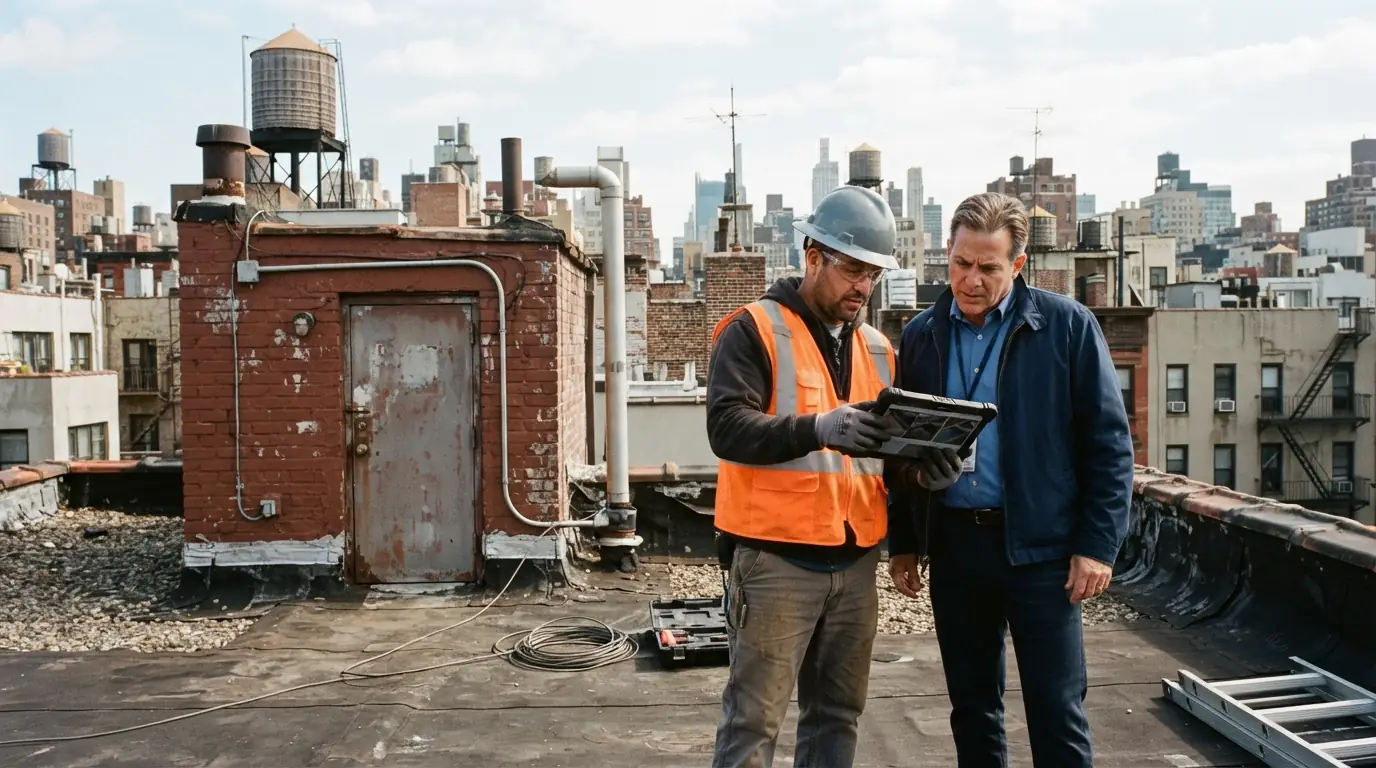
Condition, layers, moisture and every detail photographed.
Repair to replacement, priced line by line.
Questions answered in writing for the record.
Residents informed through the managing agent.
Sections closed up daily, photos and records at the end.
Questions we hear
We can walk the managing agent or a board member through the roof and the proposal, and answer questions in writing so the board has them on record.
Yes. If the board's engineer writes the specification or oversees the work, the proposal follows that spec and site visits are coordinated with them.
Notices go out through the managing agent before work starts and before any disruptive phase, covering dates, hours and roof access.
Often. A roof can be phased by section, or urgent repairs done now with a replacement planned for the following year. The proposal lays out both paths.
Replacing the entire roof assembly in New York City generally does, with exclusions for equipment, access paths and parapets. The proposal addresses it so the board is not surprised.
Related services
A written roof condition report with photos: what needs doing now, what can wait, and what to budget for.
Learn moreFor buildings with a street-facing parapet: a yearly up-close look, a written observation report, and repair of anything unsafe.
Learn moreScheduled spring and fall visits to clear drains, check seams and flashings, and fix small defects before they become ceiling leaks.
Learn moreCall for a survey and a proposal the board can compare line by line.
New York service office
1256 5th Ave, New York, NY 10029