Roof Flashing Repair
Base flashing, counter flashing and pitch pockets fail long before the open field of the roof does. Often the most cost-effective fix on a building.
Learn moreCoping is the cap on top of a parapet. When it cracks, loosens or loses its joints, rain goes straight into the top of the wall and down to the floors below.
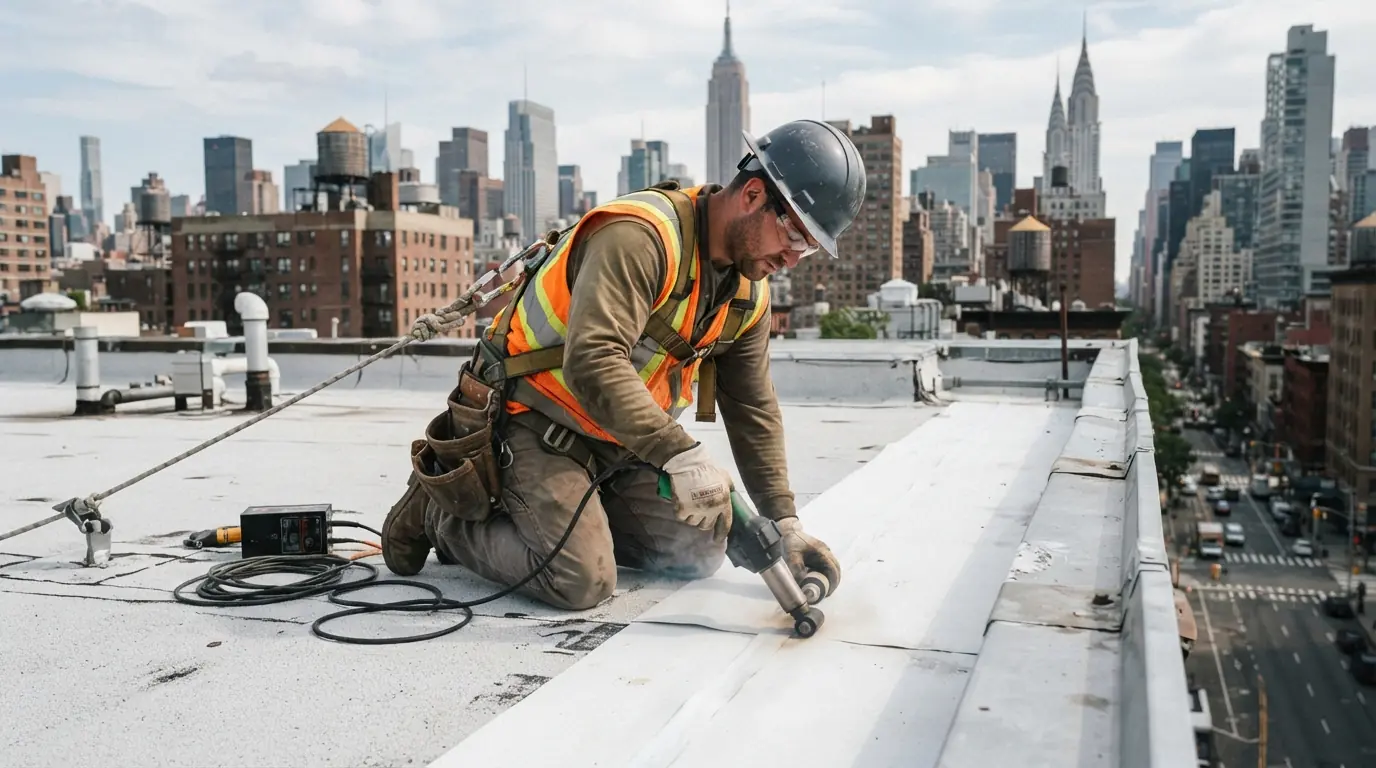
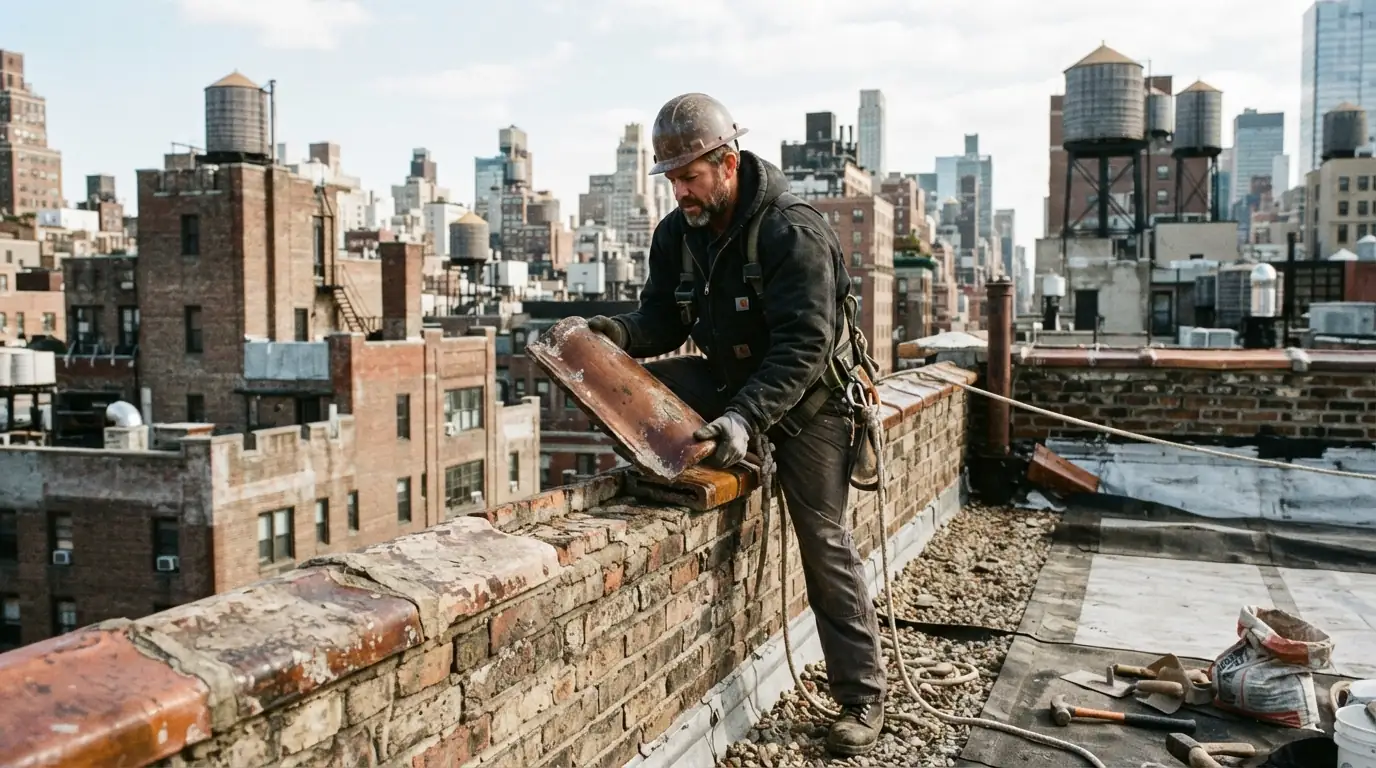
Quick answer: Coping replacement in New York, NY means removing cracked clay tile, loose stone or failed metal caps from a parapet, installing a through-wall flashing underneath, and resetting or replacing the coping with sloped tops and drips that shed water off the wall. Loose coping on a street-facing parapet is also a falling hazard.
What the job involves
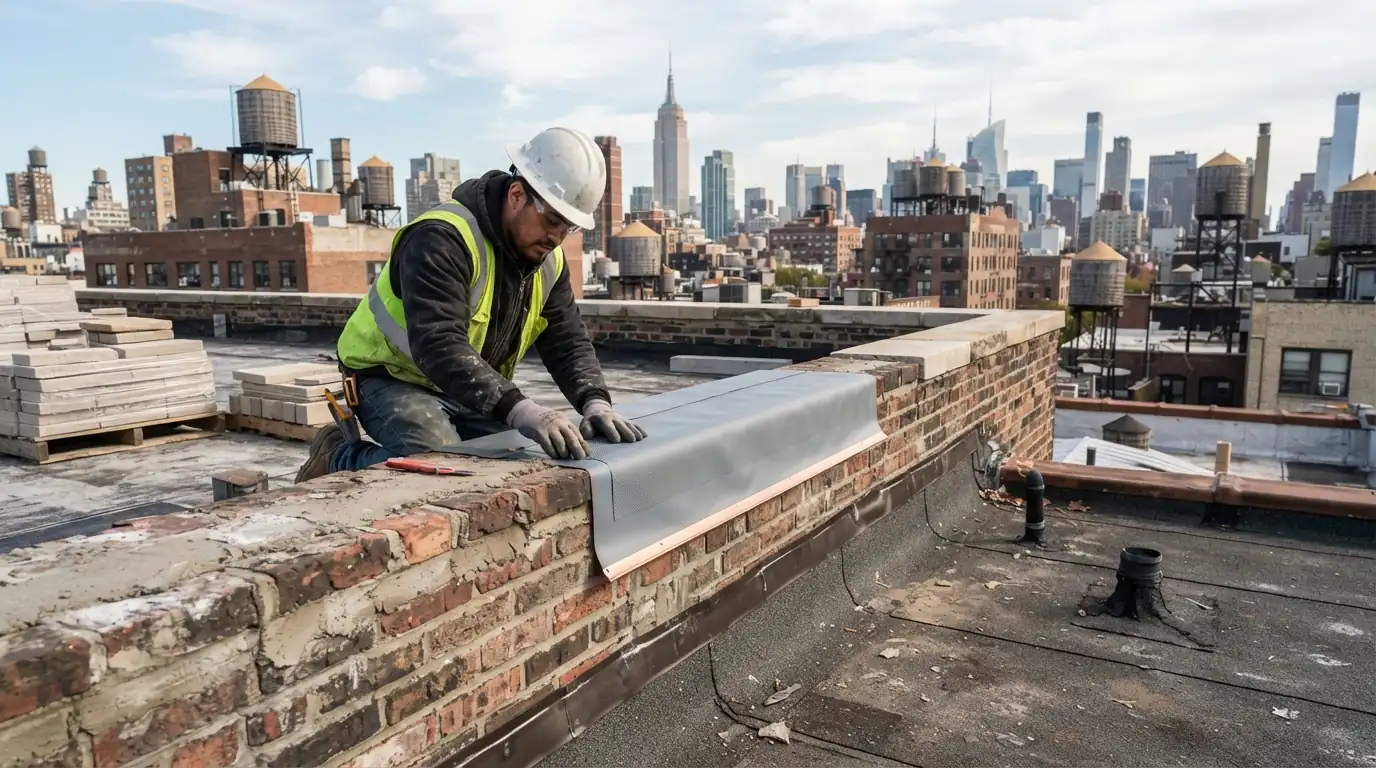
Good coping sheds water off both sides of the wall. It slopes toward the roof, overhangs the wall faces, and has drip edges underneath so water falls clear instead of running down the brick. Under it, a flashing stops any water that gets through the joints.
A lot of old coping in the city was set in mortar with no flashing below. Once the joints open, every storm soaks the top of the wall. Resetting the pieces without adding flashing only restarts the clock.
Cost factors
Clay tile, stone and metal differ in cost and labor.
Priced by the linear foot of parapet.
Through-wall flashing adds material and time, and it is the point.
Top courses often need repointing or rebuilding first.
Street-facing work may need sidewalk protection.
Historic tile or stone takes longer to source.
Variations of the job
Glazed clay tile coping is common on older brick buildings and cracks as it ages. Broken pieces are replaced with matching tile where it is available, set over new flashing with sealed joints.
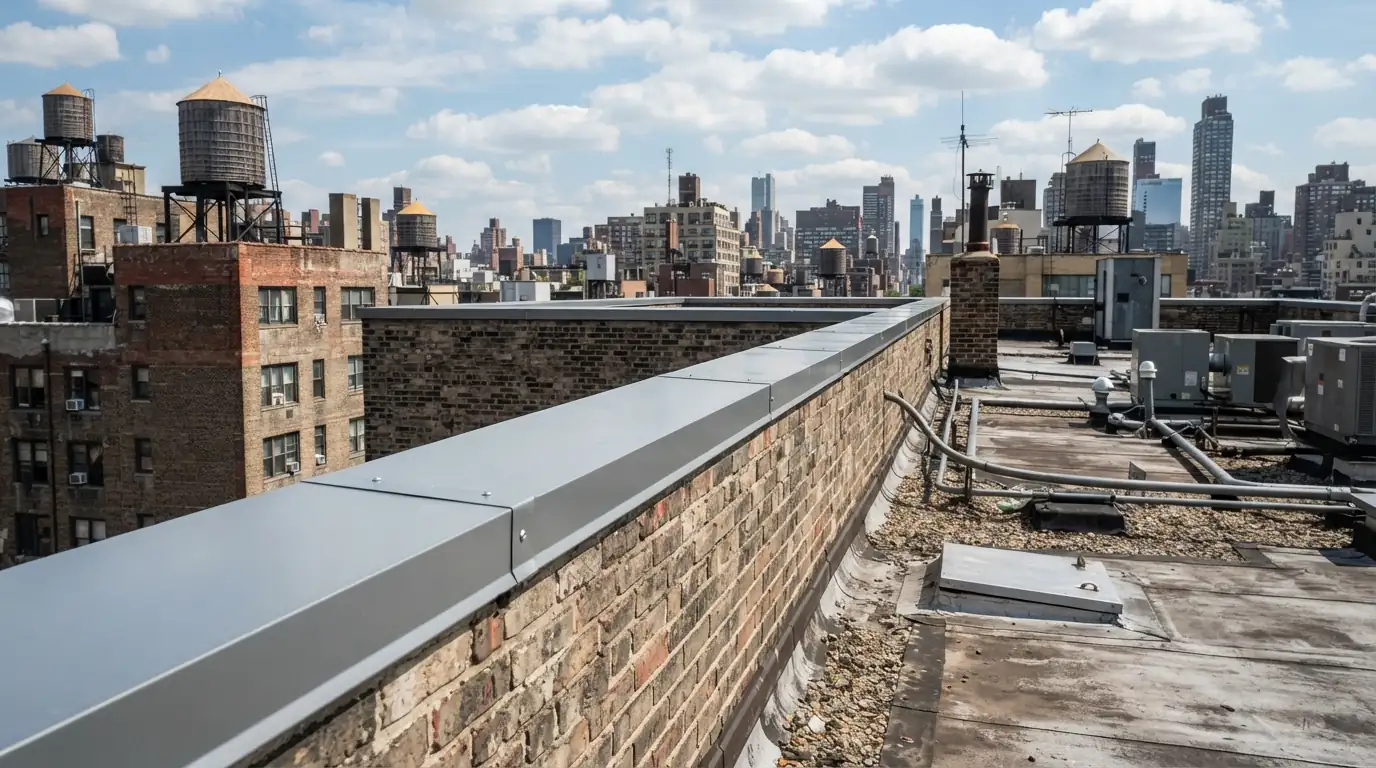
Sheet metal caps run over the top of the wall on cleats, with covered or sealed joints and a slope toward the roof. They suit parapets where tile or stone is not required.
Loose stone is lifted, the bed cleaned, a flashing installed, and the stones reset with new anchors and joints. Cracked stones are patched or replaced to match.
Do it yourself or call
Local conditions
Street-facing parapets in New York City have needed an observation every year since 2024, and loose coping is one of the first things those observations flag. Around Mount Morris Park in Harlem, where more than 250 late 19th-century row houses sit inside a historic district, coping is also a visible part of the facade, so replacement pieces are chosen to match and the work may need Landmarks review.
What is included
How it runs
Pieces lifted and salvaged where they can be reused.
Loose brick relaid, joints repointed, surface leveled.
Through-wall flashing with end dams and drips.
Sloped to the roof, anchored, joints sealed or covered.
Counter flashing and roof membrane lapped correctly.
Questions we hear
Caulk over mortar joints is a short-term fix at best. Without flashing under the coping, water that gets past the joints still soaks the wall.
Both work when flashed and sloped properly. Metal is lighter and simpler; stone or clay tile may be needed to match the building, especially in historic districts.
On a street-facing wall it can be. A piece that falls from a roofline can injure someone below, which is why loose coping is treated as urgent.
In a historic district or on a landmark, work on visible features generally goes through the Landmarks Preservation Commission, and like-for-like replacement is the expectation.
Coping joints eventually open. The flashing underneath catches the water that gets through and sheds it out of the wall instead of down inside it.
Related services
Base flashing, counter flashing and pitch pockets fail long before the open field of the roof does. Often the most cost-effective fix on a building.
Learn moreStep flashing, counter flashing and crowns where brick meets roof, repaired so the chimney stops feeding water into the top floor.
Learn moreStair and elevator bulkheads have their own roofs, walls and door sills, and each one leaks. We roof, flash and seal them as a unit.
Learn moreCall and we will check it before the next storm or the next observation.
New York service office
1256 5th Ave, New York, NY 10029