Membrane peeling off a wall
Base flashing has lost its bond.
The field of a roof rarely leaks first. The edges do: where the membrane turns up a wall, wraps a curb or meets a pipe. That is flashing, and it fails long before the rest.
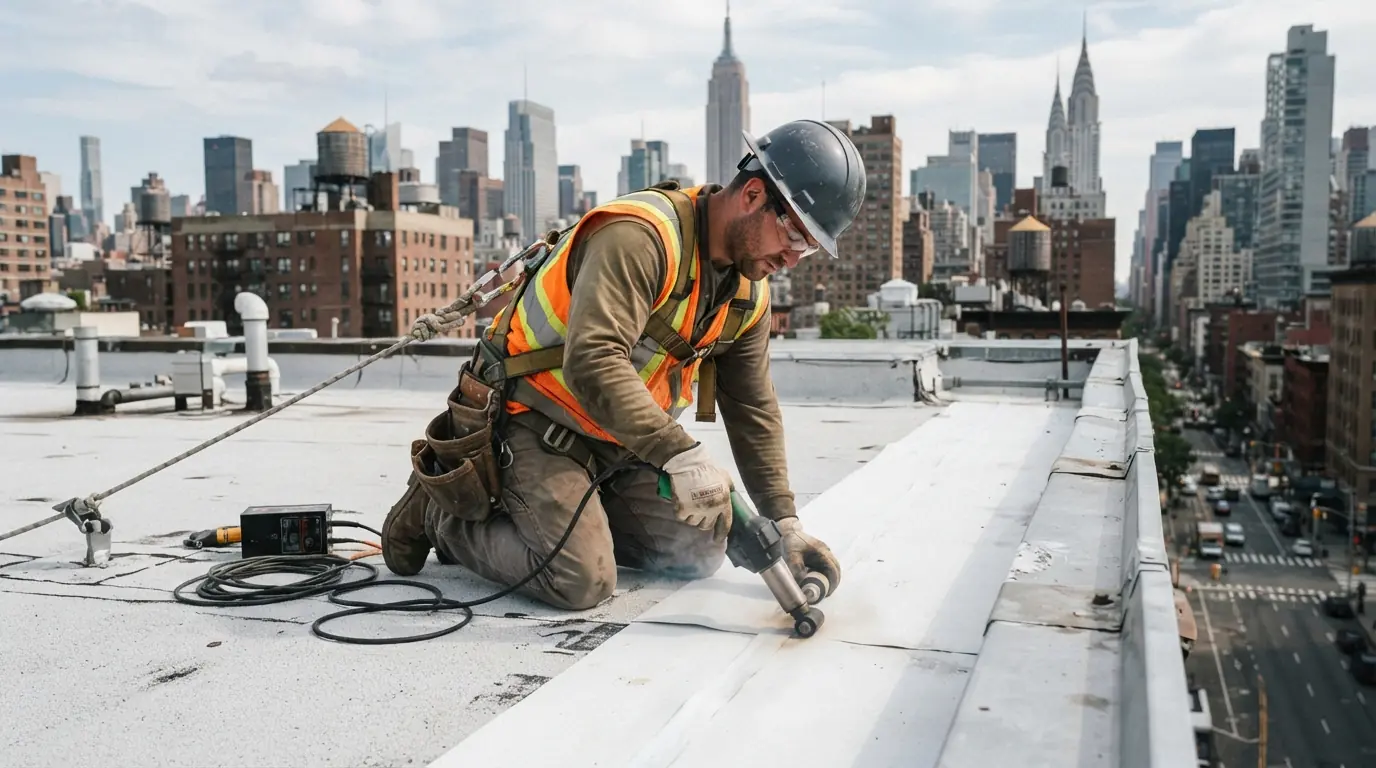
Quick answer: Most roof leaks in New York, NY start at flashing, the membrane or metal that seals the roof where it meets a wall, curb, pipe or chimney. Repair means rebuilding the base flashing up the wall, securing or replacing the counter flashing that covers its top, and rebuilding pitch pockets and pipe boots.
What the job involves
Flashing lives where two materials meet and move differently: a membrane and a brick wall, a curb and a deck, a pipe and a roof. Every season of heat, cold and wind works that joint. Sealants dry out, membrane flashings shrink and pull, and metal counter flashing loosens in its joint.
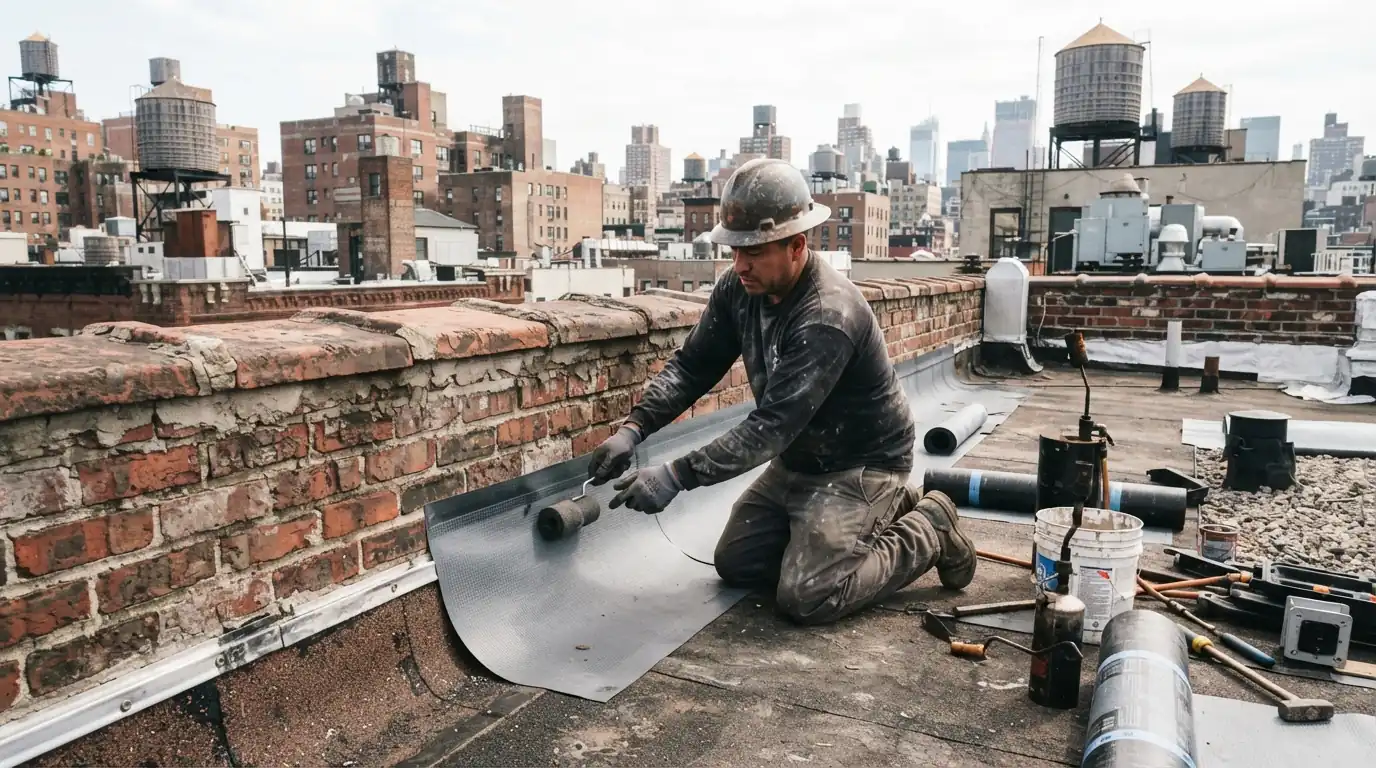
A good repair rebuilds the detail rather than smearing sealant on it. Base flashing goes up the wall to the height the detail needs, counter flashing laps over its top and is secured into the masonry, and every corner is reinforced.
How it runs
Water test at the suspect wall, curb or pipe.
Old flashing removed to sound material.
New membrane up the wall, corners reinforced.
Metal lapped over the top and secured into the masonry.
Water test the detail and send photos.
Warning signs
Base flashing has lost its bond.
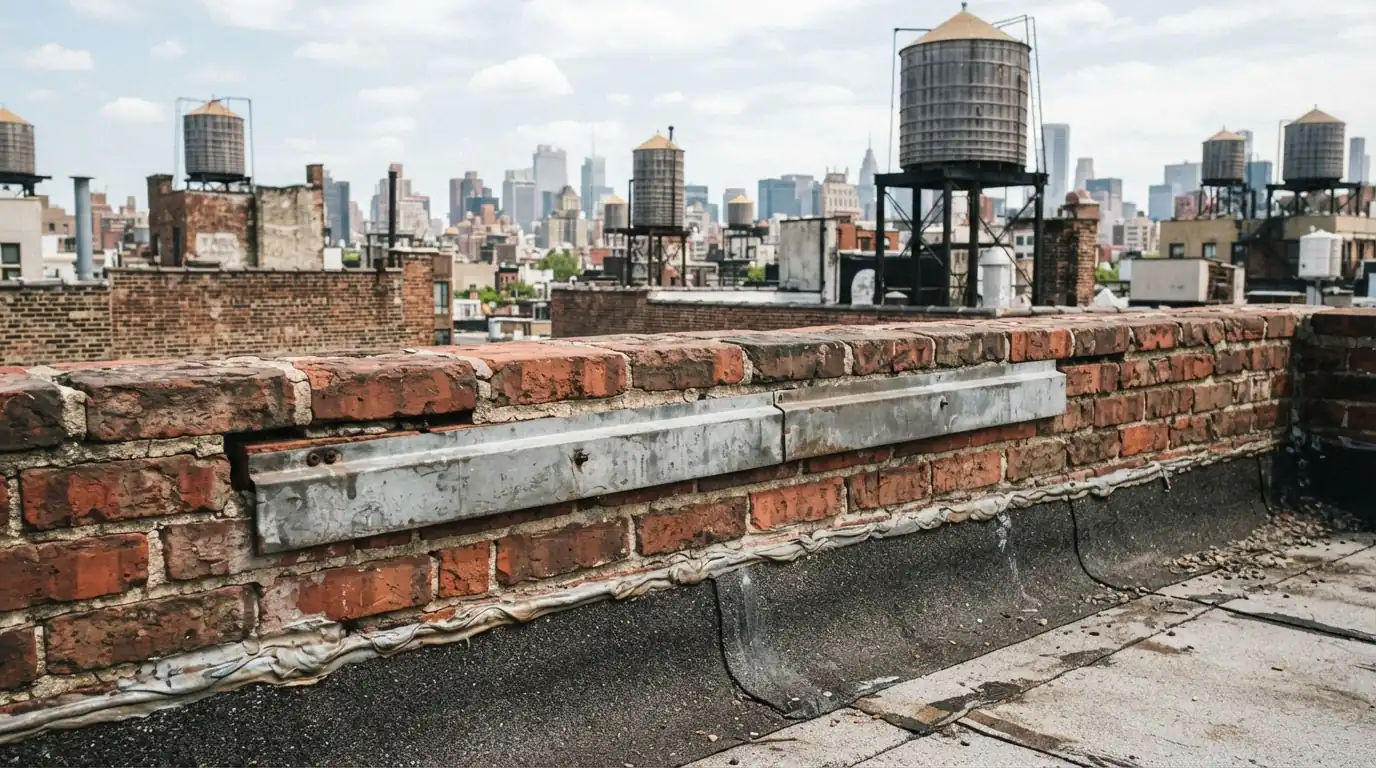
Counter flashing pulled out of its joint.
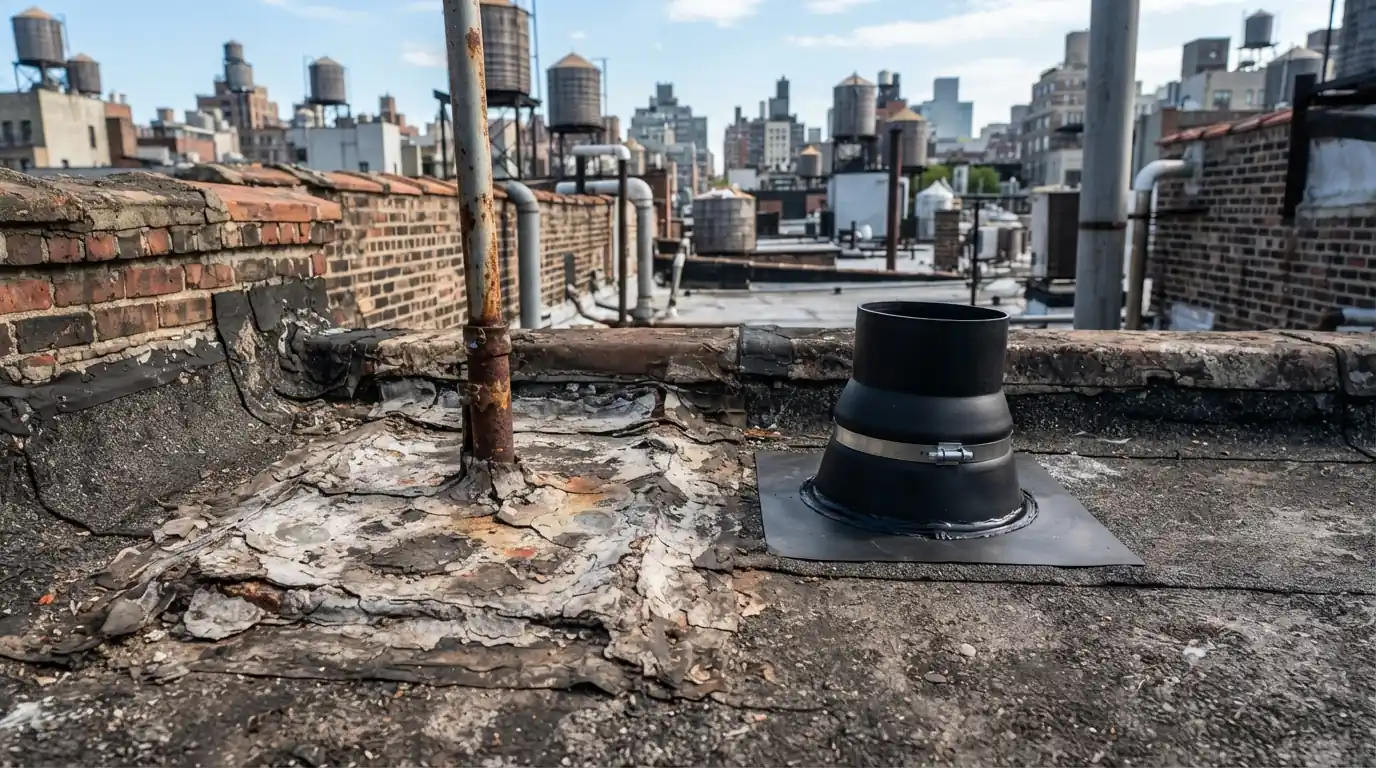
Pitch pockets and boots drying out.
Galvanized steel near the end of its life.
Corners are where flashings split first.
Water getting behind flashing on one side of the roof.
Variations of the job
The membrane turned up a wall or curb. When it shrinks, splits or peels, it is cut back and replaced with new flashing membrane, fully adhered and finished under a termination bar or counter flashing.
The metal that covers the top of the base flashing. Loose or rusted counter flashing is reset into a cut joint in the masonry or replaced, so water cannot run behind the base flashing.
Metal pans filled with sealant around odd-shaped penetrations. They shrink and crack with age, and are refilled or replaced with a prefabricated boot or liquid flashing.
Where a pitched roof meets a wall, step flashing under each shingle course and counter flashing above keep water out. Missing or rusted pieces are replaced as a set.
Local conditions
In historic districts such as Greenwich Village, the Landmarks Preservation Commission expects historic roofing materials to be repaired or replaced in kind wherever possible. Where copper flashing shows on a slate roof or a visible bulkhead, that means copper again, not painted aluminum or a smear of mastic. On a flat roof hidden behind a parapet, the flashing is usually matched to the membrane instead.
Cost factors
Measured along walls, curbs and edges.
Membrane base flashing and metal counter flashing are priced separately.
Cutting new joints or repointing where counter flashing sits.
Copper costs more than aluminum or coated steel.
Each pipe, curb and pitch pocket is its own detail.
Bulkheads, chimneys and high walls need ladders or staging.
Do it yourself or call
Questions we hear
Stains near exterior walls, around chimneys or below rooftop units point to flashing. A water test at the suspect detail confirms it before anything is opened.
Usually. Flashing is a separate detail at the edge of the roof, and on a sound roof it can be rebuilt on its own.
Base flashing is the waterproof layer turned up the wall. Counter flashing is the cap over its top edge that keeps water from getting behind it.
Copper lasts a long time and is often required on historic buildings. Elsewhere, membrane flashing with aluminum or coated steel counter flashing is common and effective.
The sealant in them shrinks and cracks with age. Refilling helps for a while; replacing them with a prefabricated boot or liquid flashing is the longer fix.
Related services
Step flashing, counter flashing and crowns where brick meets roof, repaired so the chimney stops feeding water into the top floor.
Learn moreStair and elevator bulkheads have their own roofs, walls and door sills, and each one leaks. We roof, flash and seal them as a unit.
Learn moreLeaking curbs, cracked domes and rusted roof hatches repaired or replaced, with the curb flashed into the roof properly.
Learn moreCall any time. Flashing is where most roof leaks start, and where we look first.
New York service office
1256 5th Ave, New York, NY 10029