Water standing days after rain
Ponding speeds up wear and hides leaks.
Split seams, blisters, punctures and cracked surfacing on rubber, TPO and modified bitumen roofs, repaired with materials that bond to what is already up there.
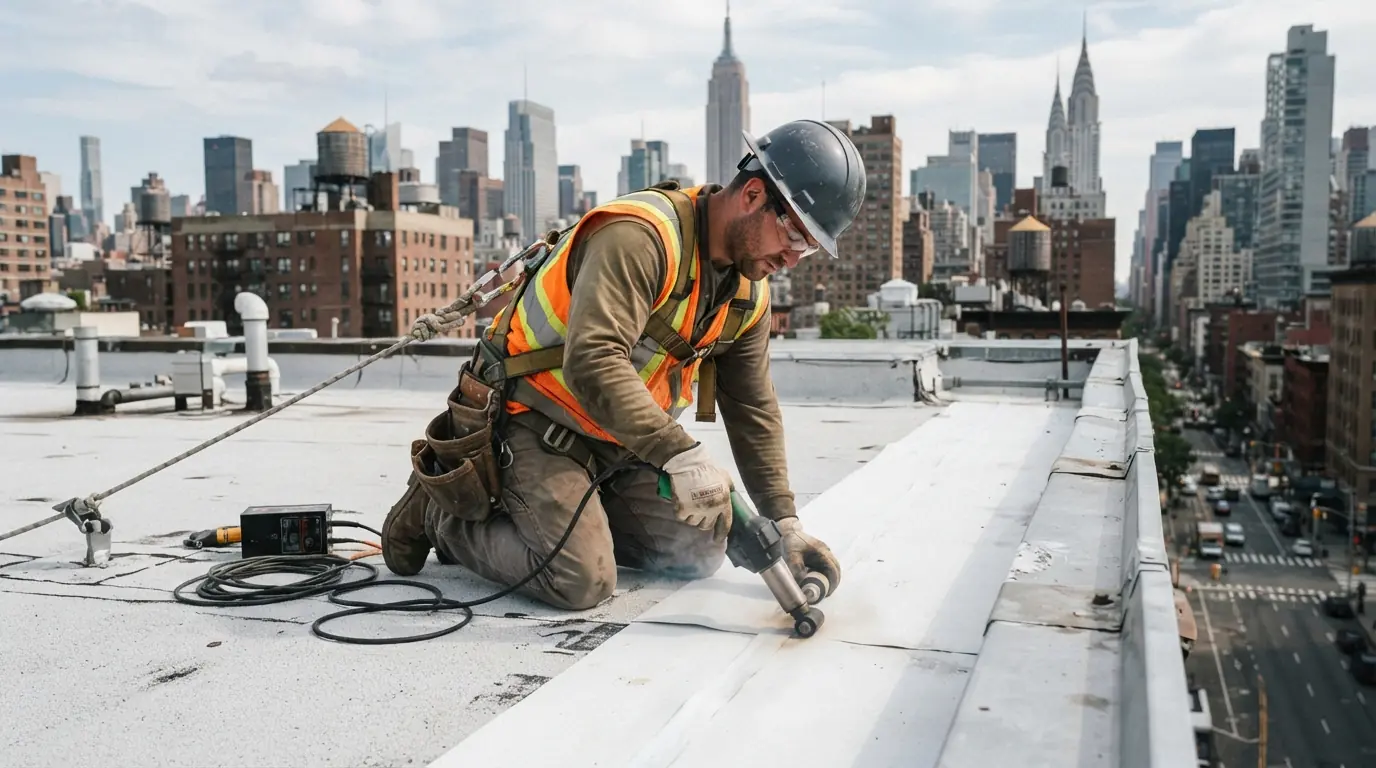
Quick answer: Flat roof repair in New York, NY works when the roof around the damage is still dry and sound. A split seam, a puncture or a failed flashing can be repaired with material that matches the membrane. Wet insulation over a wide area, or patches layered on patches, usually means the roof is due for replacement.
What the job involves
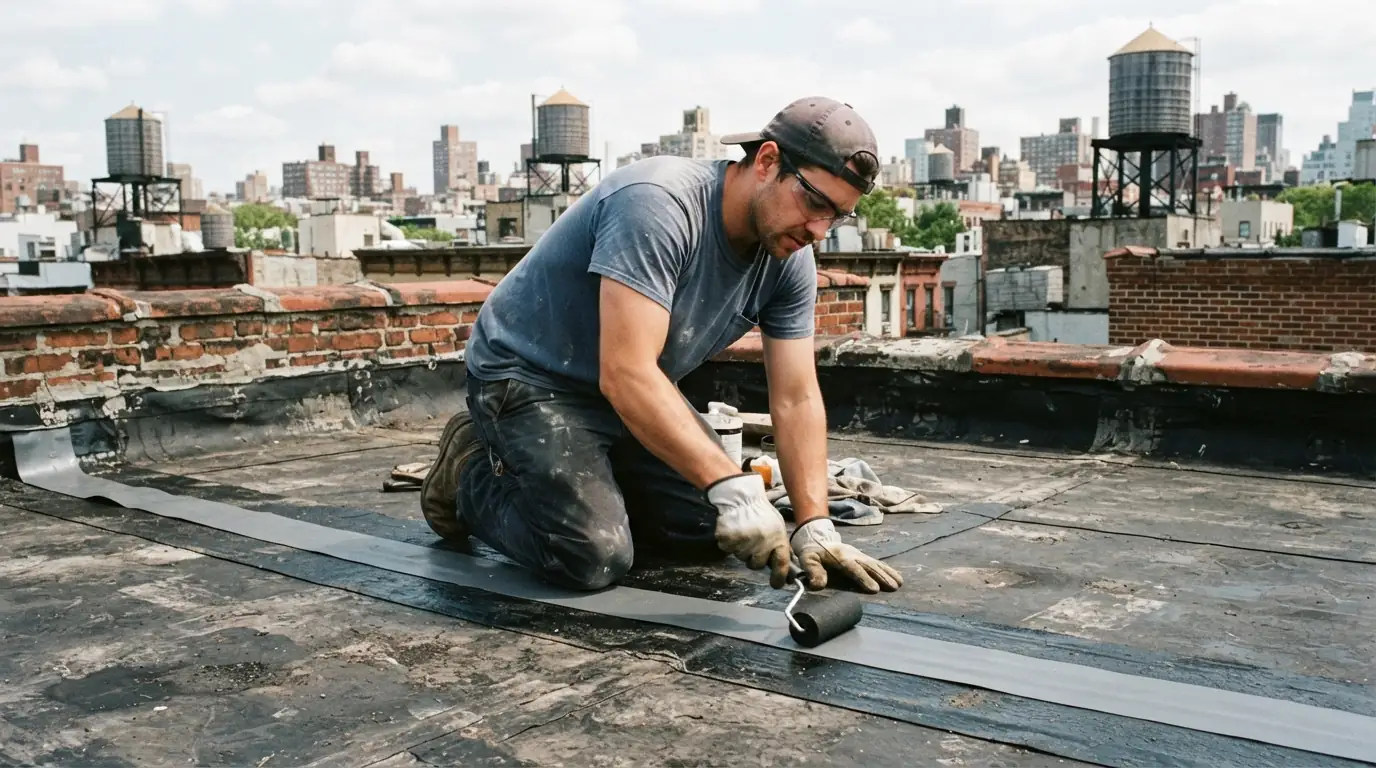
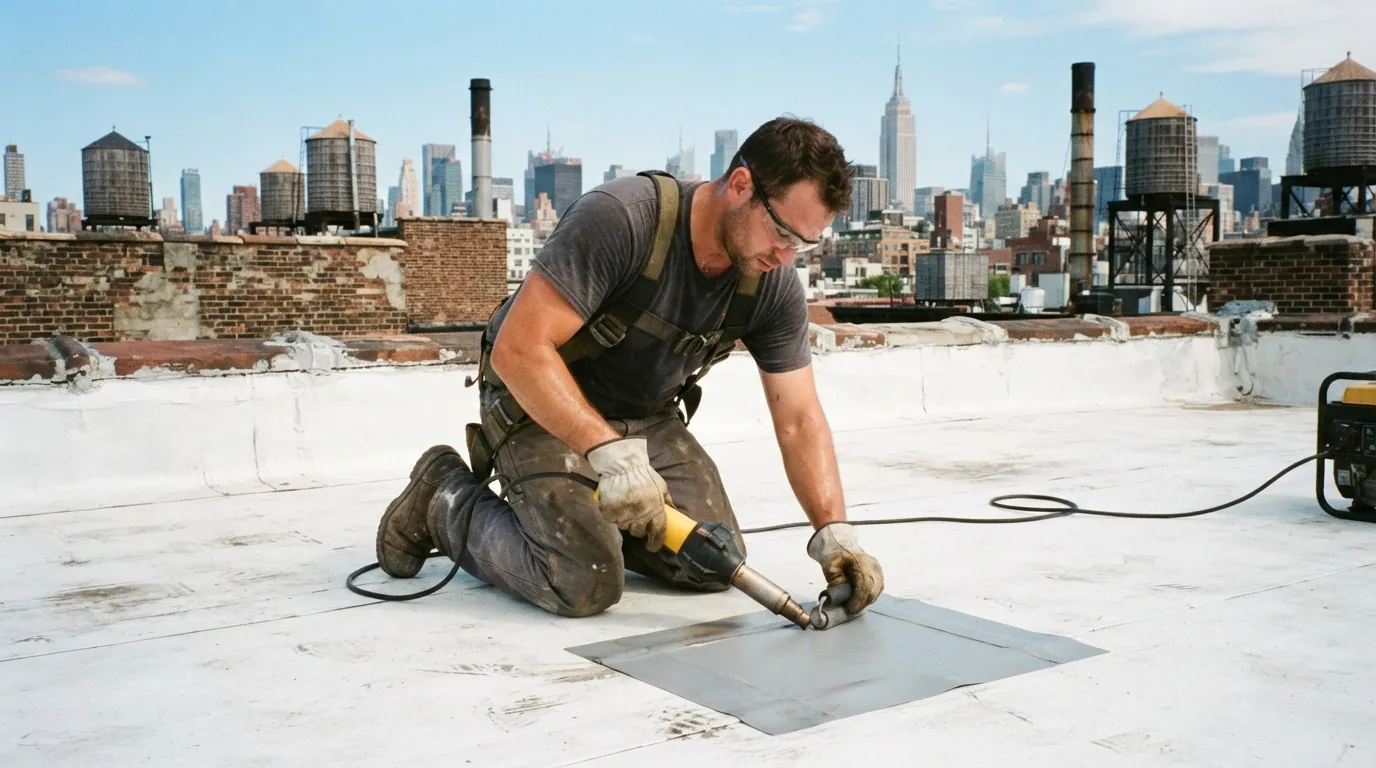
Every flat roof system repairs differently. EPDM rubber takes primer, seam tape and cover strips. TPO is heat-welded, so a new piece fuses to the old one. Modified bitumen takes a cap sheet patch set in compatible adhesive. Use the wrong material and the patch sits on the surface until the next freeze pulls it loose.
Before repairing anything we identify the system, check how wet the area around the damage is, and look for the cause. A puncture from a dropped tool is a patch. A blister field over wet insulation is a sign the patch will not be the end of it.
How it runs
Membrane type, number of layers, and how the roof is attached.
Moisture readings or a small core to confirm the area is dry.
Clean, dry and prime so the repair bonds to the existing membrane.
Tape and cover strip, welded patch or cap sheet, depending on the roof.
Probe or water test the repair and send before-and-after photos.
Warning signs
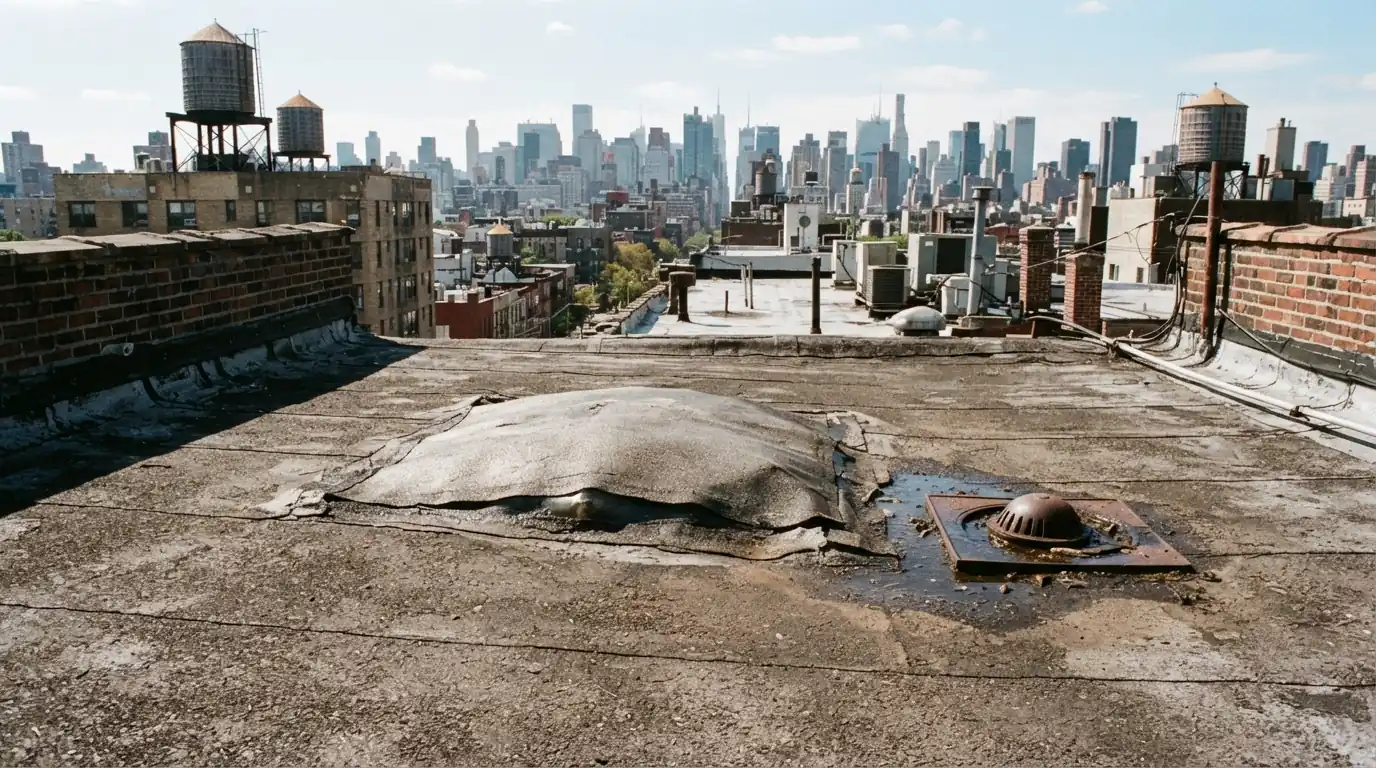
Ponding speeds up wear and hides leaks.
The first stage of a split seam.
Trapped moisture expanding in the heat.
The protective top layer has aged out.
Where most flat roof leaks start.
Older EPDM shrinking and pulling on its flashings.
Variations of the job
Blisters form where moisture or air is trapped between layers. Small, stable ones are often left alone. Large or broken ones are cut out, dried and rebuilt with matching material.
EPDM laps let go as old adhesive fails, and modified bitumen laps open at the edges. We clean and prime the lap, then rebuild it with seam tape and a cover strip or a new cap sheet section.
Dropped tools, dish mounts and foot traffic around rooftop units cause most punctures. We patch them with matching material and add walkway pads where people walk regularly.
Cracked, scaly surfacing on older asphalt roofs means the top layer has aged out. If the membrane underneath is sound, a recoat can extend its life. If not, that section is due for replacement.
Local conditions
Walk-ups in The Bronx and brownstones in Brooklyn mostly sit under flat roofs, and one building can carry more than one system: modified bitumen on the main roof, EPDM on a stair bulkhead, a coated older roof on a rear extension. We identify each before repairing it. City rules also require roofs to meet reflectivity standards, with some exceptions, so a repair on a white roof is finished white rather than left as a dark patch.
Cost factors
EPDM, TPO and modified bitumen use different materials, and some older systems are harder to match.
A single puncture and a twenty-foot open seam are very different jobs.
Soaked insulation is cut out so the repair has something dry to bond to.
Repairs at walls, curbs and drains take longer than open-field patches.
Hatch or ladder access and building height change material handling time.
Reflective roofs need a matching reflective finish on the repair.
Do it yourself or call
Membrane makers you are likely to find on New York flat roofs. Repairs are matched to the system already in place.
Questions we hear
Many repairs can. Some primers and adhesives need a minimum temperature to cure, while heat-welded TPO repairs work in the cold. When a proper repair has to wait, a temporary seal holds in the meantime.
If the problem is local and the roof around it is dry, repair. If readings show wet insulation over a large area, or leaks keep appearing in new places, the roof is near the end of its life.
Not usually. A patch over an active blister traps the moisture that caused it. The blister is cut, dried and rebuilt so the repair bonds to dry material.
Older EPDM seams were glued with liquid adhesive that breaks down over time. Re-lapping with modern seam tape and a cover strip usually outlasts more adhesive by a wide margin.
It should. On a reflective white roof a dark patch absorbs heat and works against the city's reflectivity rules, so repairs are finished to match.
Related services
Tear-off or recover, new insulation, new flashings and drains, with the DOB filing and the sustainable-roof question settled before work starts.
Learn moreFully adhered rubber membrane for rowhouses and small buildings: few seams, flexible through freeze and thaw, simple to patch years later.
Learn moreWhite heat-welded membrane that reflects summer sun and meets the city's cool roof rules without a coating. Strong seams for roofs with equipment.
Learn moreCall any time. We identify your membrane and repair it with materials that match.
New York service office
1256 5th Ave, New York, NY 10029