Roof Coating & Restoration
Silicone and acrylic coatings that extend the life of a sound flat roof and make it reflective, applied only after seams and flashings are fixed.
Learn moreTwo layers of reinforced asphalt membrane, built into a roof that takes foot traffic, dropped tools and rooftop furniture. We install and repair modified bitumen, including flame-free systems.
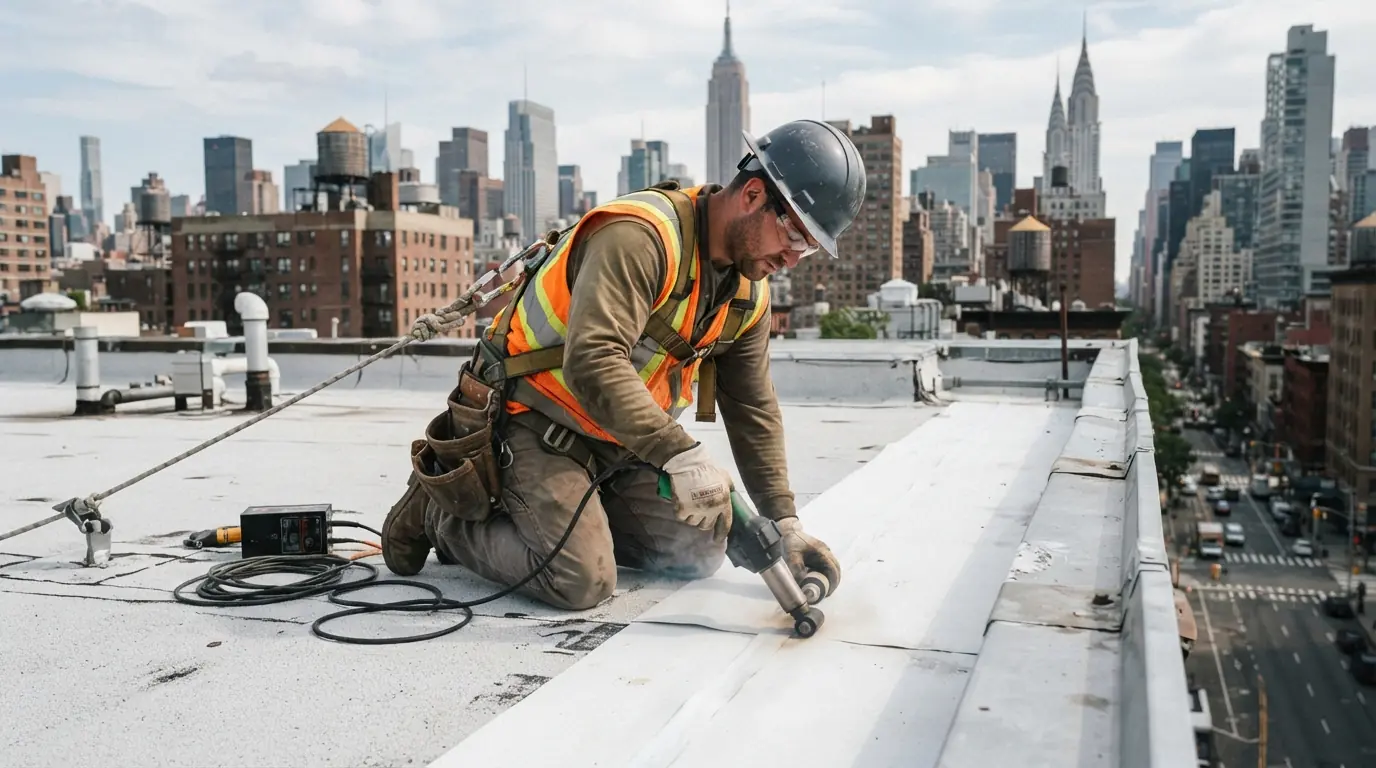
Quick answer: Modified bitumen is an asphalt membrane reinforced with polyester or fiberglass and modified with polymers for flexibility. In New York, NY it is usually installed as a two-ply system, a base sheet under a granulated cap sheet, and suits rowhouse roofs, terraces and roofs with regular foot traffic.
What the job involves
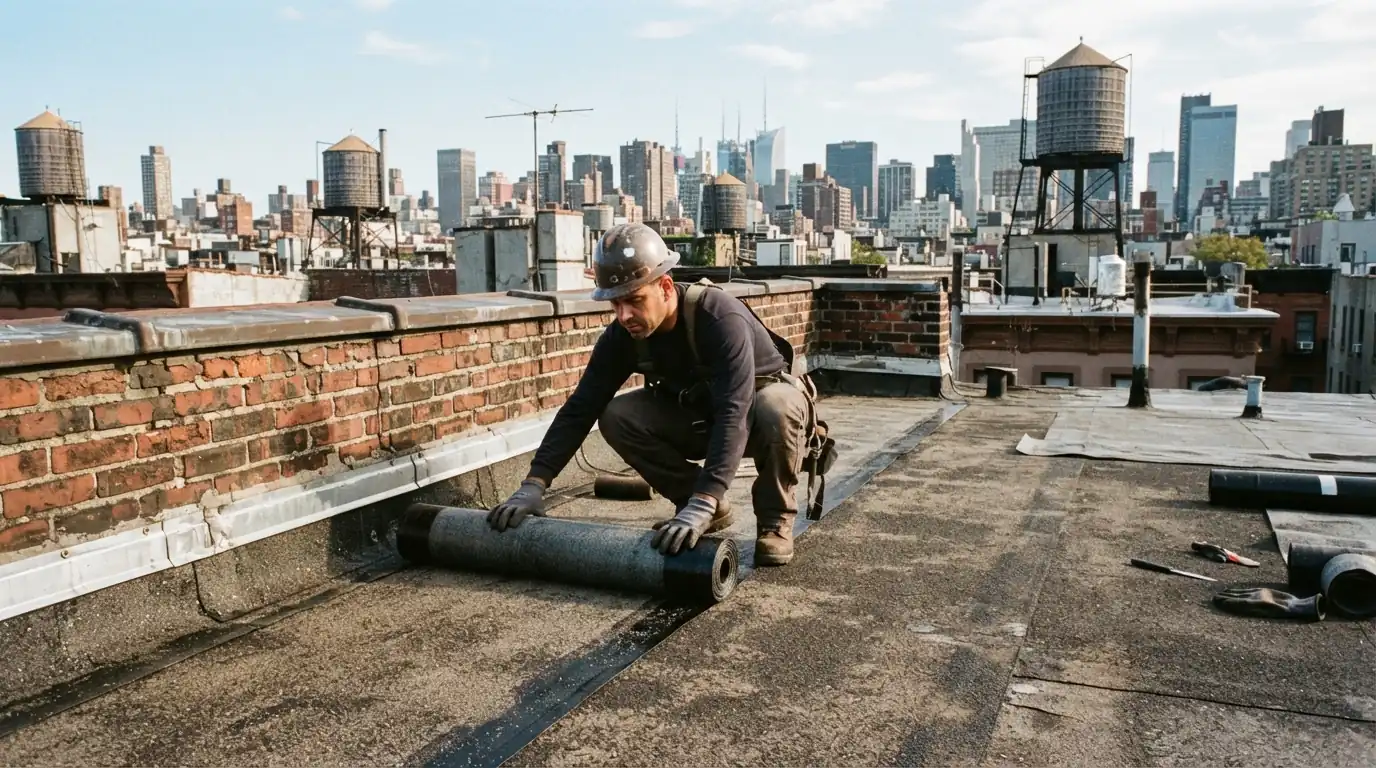
Single-ply membranes rely on one sheet. Modified bitumen builds the roof from a base sheet and a cap sheet, so a puncture through the top layer does not have to become a leak. The granulated cap sheet also shields the asphalt from sun and scuffs.
How the sheets are bonded matters as much as the sheets. Torch application uses open flame, a real fire risk at wood decks, parapets and roof edges. Cold adhesive and self-adhered sheets avoid the flame altogether, which is why many occupied city buildings use them.
Your options
| Method | Strengths | Drawbacks |
|---|---|---|
| Torch-applied | Fast bond, works in cool weather. | Open flame on the roof, a fire risk at wood decks, parapets and edges. |
| Cold adhesive | No flame, suited to occupied buildings. | Slower cure, and sensitive to weather while curing. |
| Self-adhered | No flame, clean and quick. | Needs dry conditions and suitable temperatures to bond. |
Cost factors
Cold adhesive, self-adhered and torch systems differ in labor and material.
Two-ply is standard. A three-ply build costs more.
White or reflective granulated caps cost more than standard.
Meeting energy code above the deck is a large share of the material.
Old built-up and asphalt roofs are heavy to remove.
Parapets, skylights and bulkheads each need their own flashing.
Typical range: Published 2026 New York figures for commercial low-slope re-roofs run from about $6 per sq ft for a ballasted EPDM overlay to about $24 per sq ft for 3-ply modified bitumen with R-30 insulation. Rowhouse roofs are smaller and priced differently; a planning figure, not a quote.
Variations of the job
Sheets set in cold adhesive rather than heat. It is slower to cure, but there is no flame, which suits occupied buildings and roofs over wood decks.
A peel-and-stick cap sheet bonds as it is rolled into place. Clean, quick and flame-free, though it needs dry conditions and suitable temperatures to bond fully.
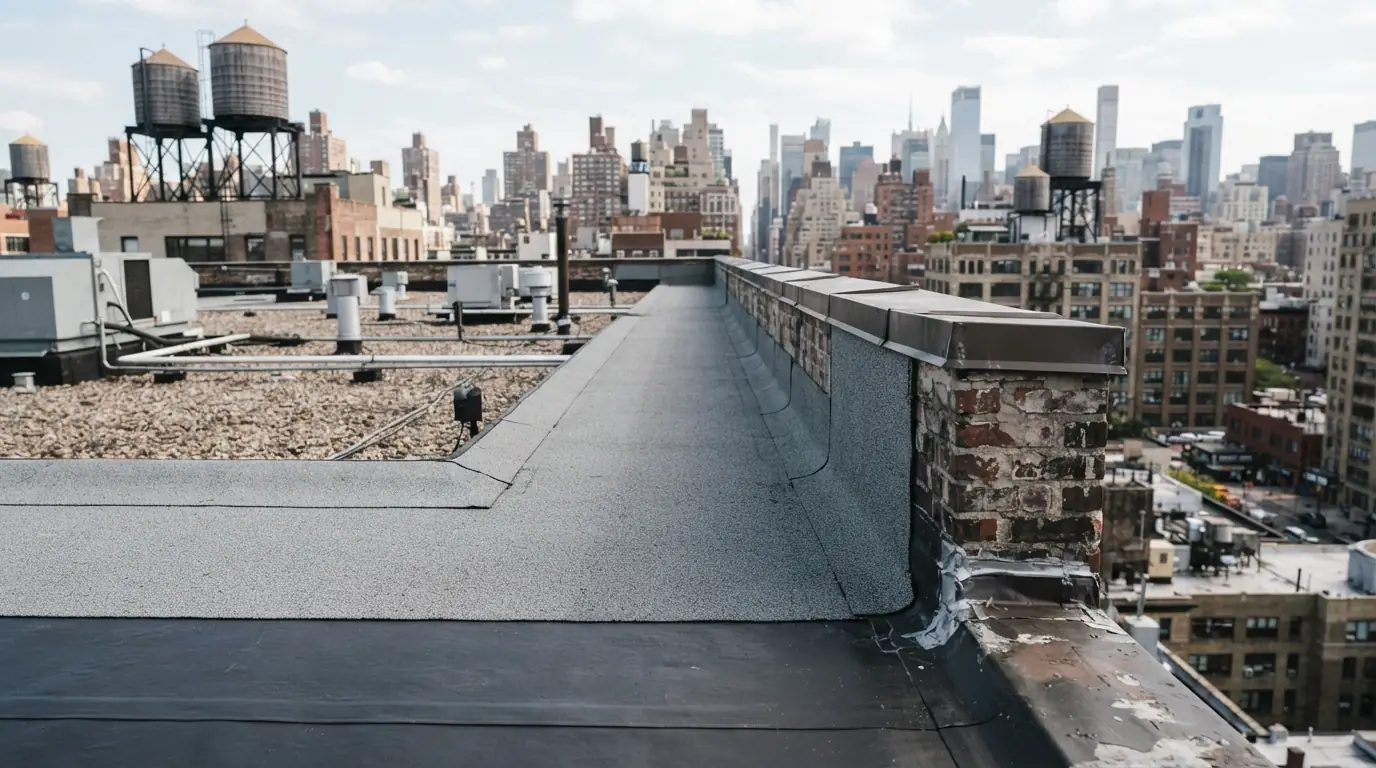
Mineral granules on the top layer protect the asphalt from sun and take foot traffic. White or reflective granulated caps help the roof meet the city's reflectivity rules.
A base sheet and a cap sheet with staggered laps, so no seam in the top layer sits over a seam below. The standard build for a durable rowhouse roof.
Local conditions
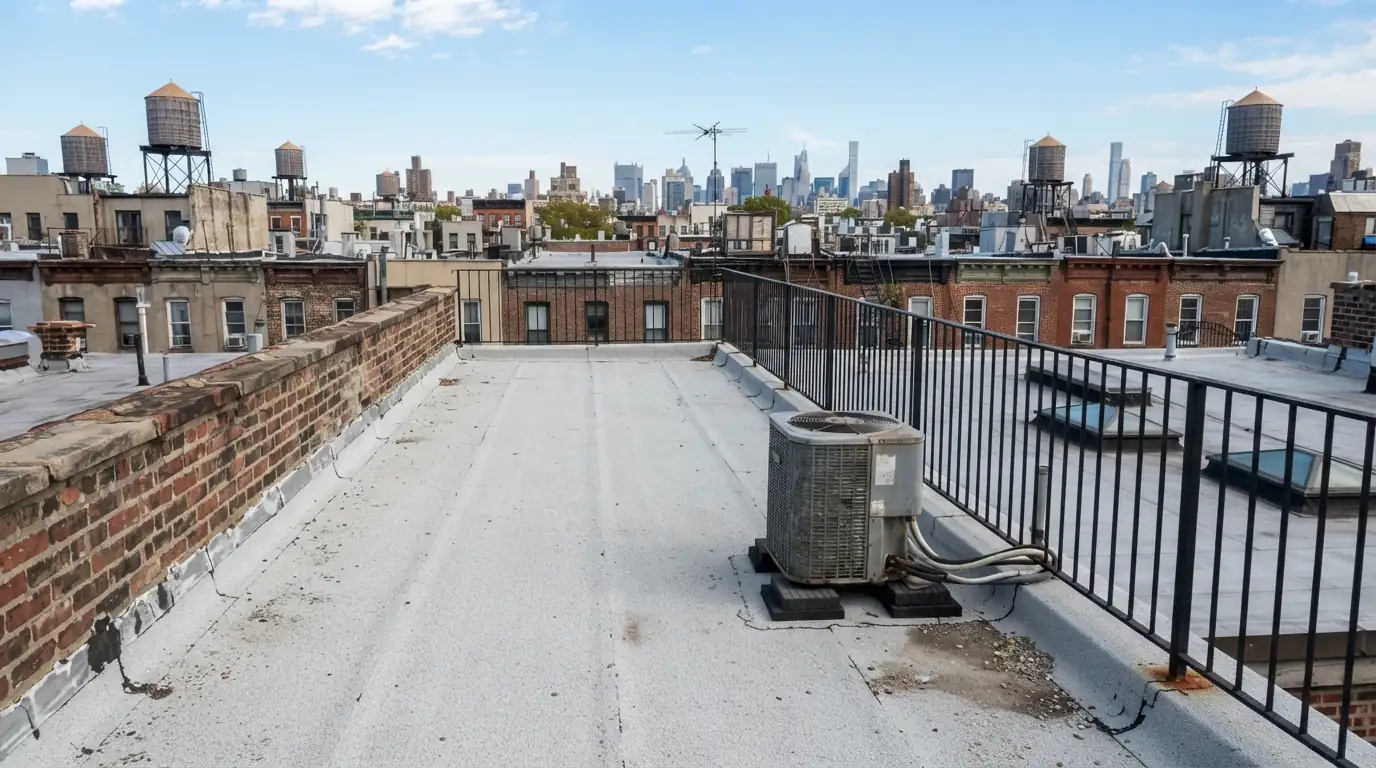
In the Park Slope Historic District, the Landmarks Preservation Commission has signed off flat roof replacements with vents, condensing units and railings under a Certificate of No Effect, the usual route for roof work that cannot be seen from the street. Roofs like that carry equipment and the people who walk up to service it, which is exactly where a two-ply modified bitumen roof with a tough cap sheet earns its place.
How it runs
Tear-off, deck repairs and a clean, dry surface.
Fastened down, with taper where the roof needs slope.
Adhered with laps offset from the cover board joints.
Laps staggered from the base sheet and rolled for full contact.
Two-ply flashings at walls and curbs, then a lap-by-lap check.
Modified bitumen makers you will find on city roofs. Repairs are matched to the cap sheet already in place.
Questions we hear
No. Tar and gravel, or built-up roofing, uses layers of felt and hot asphalt. Modified bitumen uses factory-made sheets modified with polymers, which makes them more flexible and more consistent.
Torching works, but open flame near wood decks, parapets and roof edges is a fire risk. Cold-applied and self-adhered systems remove that risk and are often the better choice on occupied buildings.
Yes. White granulated cap sheets and reflective coatings are both available, and one of them is usually needed to meet the city's reflectivity rules.
The damaged area is cleaned and a new cap sheet section is set in compatible adhesive over it, with laps rebuilt. Roof cement smeared on top does not last.
It is one of the more durable choices under foot traffic, though pavers or decking should sit on pedestals or protection board so they do not wear the cap sheet.
Related services
Silicone and acrylic coatings that extend the life of a sound flat roof and make it reflective, applied only after seams and flashings are fixed.
Learn moreFluid-applied membranes for crowded roofs where sheet goods cannot reach: around dunnage, pipe clusters, railings and odd penetrations.
Learn moreLeaks under a terrace are waterproofing leaks. We lift the pavers or decking, rebuild the membrane and drainage beneath, and put the surface back.
Learn moreCall for a roof survey and a two-ply modified bitumen quote.
New York service office
1256 5th Ave, New York, NY 10029