Roofing guide
Recovering or tearing off a shingle roof on Long Island
Putting new shingles over old ones saves money on the day. The code limits when you can do it, and even when you can, it is often not the better buy.
By Ada Lombardi, Roofing Guides EditorPublished 3 min read
Key takeaways
- Under the New York State residential code, a recover is not allowed over a water-soaked roof, over slate or tile, or over a roof that already has two or more layers.
- A roof replacement removes the existing layers down to the deck.
- Asphalt shingles are by far the most common residential roof covering in New York State.
- Even where a recover is allowed, a tear-off lets the deck be inspected and the flashing replaced.
What the code says
Outside New York City, re-roofing follows the New York State residential code. It defines a roof replacement as removing the existing layers of roof covering down to the roof deck, with an exception that lets an ice barrier membrane adhered to the deck stay in place under a new layer of ice barrier.
It also lists when a recover, a new roof over the old one, is not allowed: where the existing roof is water-soaked or too deteriorated to serve as a base, where it is slate, clay, cement or asbestos-cement tile, and where it already has two or more applications of any roof covering.
Counting the layers
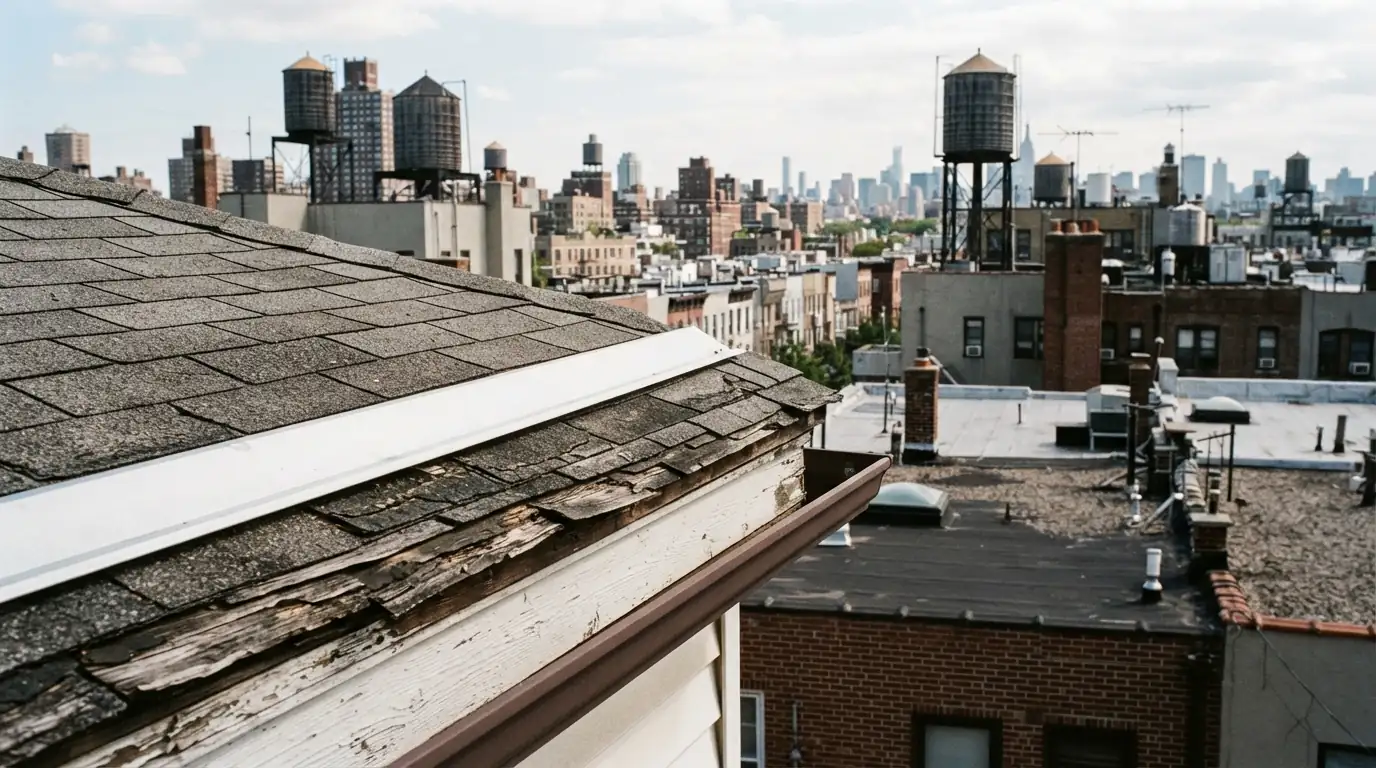
The number of layers is usually visible at the roof edge, along the eaves or the rake, where each layer adds thickness under the drip edge. An inspection lifts an edge to count them and checks the attic for signs of old leaks and soft sheathing.
A house that was recovered once already has its second layer. Its next roof is a full tear-off by code, whatever the shingles on top look like.
Why tear-Off is usually worth it
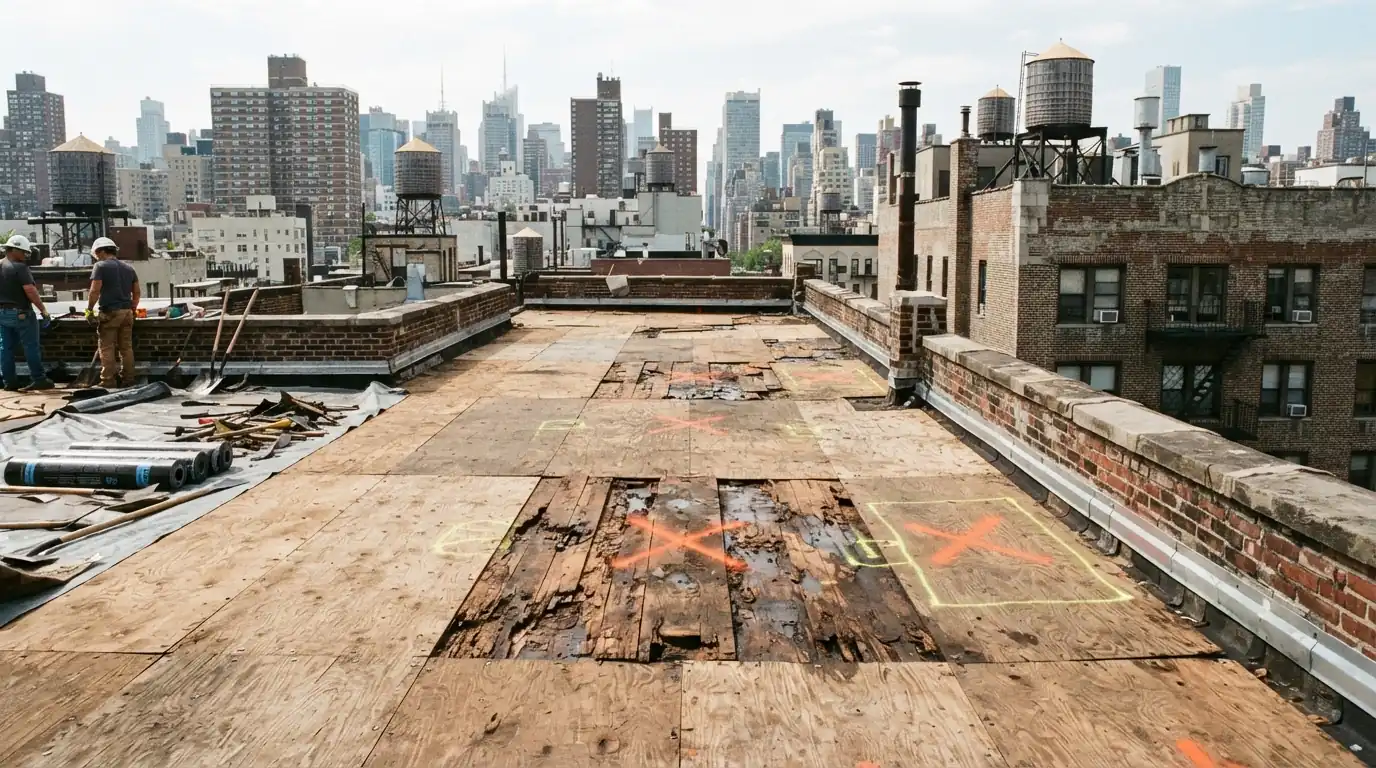
Tearing off exposes the deck, which is where hidden problems live: soft or rotted sheathing, gaps, old leak damage. They get repaired before anything new goes down. It also means new flashing at walls and chimneys, ice barrier laid directly on the deck at the eaves and valleys, and new shingles that lie flat instead of telegraphing the old ones.
Asphalt shingles are the most common residential roof in New York State, and most of them will eventually reach a point where the roof has to come off anyway. Removing the old layer now spares the next owner that cost and weight.
When a recover can make sense
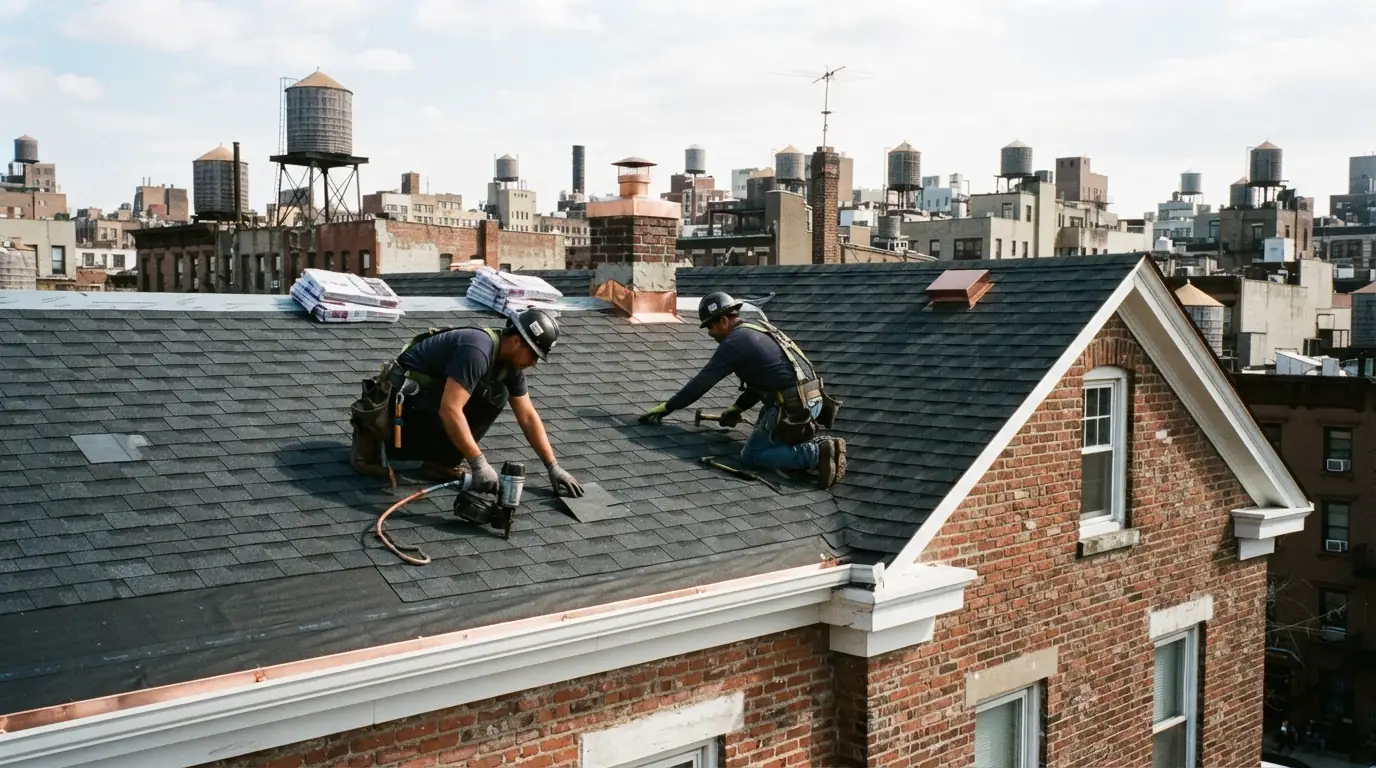
If there is a single existing layer that is dry and sound, the deck shows no signs of trouble, and the shingle maker allows it, a recover saves tear-off labor and disposal. It can suit a house that will be sold soon or a tight budget.
The tradeoffs are real: the deck goes unseen, flashing is often reused or patched, the roof carries more weight, and the next replacement becomes a mandatory two-layer tear-off.
What to ask for in a quote
Ask how many layers will be removed and how deck repairs are priced, what goes at the eaves and valleys, what underlayment covers the rest, whether flashing at walls and chimneys is new, how the attic is ventilated, and how debris and nails are cleaned up. Published 2026 figures put New York residential shingle replacement from around $7 per sq ft, with the metro and Long Island above the rest of the state; your roof's layers and details decide where yours lands.
Sources
Rules and figures in this guide come from these published sources. Check them for changes before relying on a rule for your building.
Get it done
Services related to this guide
Shingle Roof Replacement
Tear-off to the deck, ice barrier at the eaves and valleys, and architectural shingles fastened to the maker's nailing pattern.
Learn moreShingle Roof Repair
Missing tabs, valley leaks and lifted ridge caps on pitched roofs, matched as closely as the age of the roof allows.
Learn moreChimney Flashing & Repair
Step flashing, counter flashing and crowns where brick meets roof, repaired so the chimney stops feeding water into the top floor.
Learn moreDeciding between recover and tear-Off?
Call for an inspection that counts the layers and checks the deck.