Roofing guide
What Local Laws 92 and 94 mean when you replace a roof in New York City
Since November 2019, replacing an entire roof in the city can bring a requirement for solar panels, a green roof, or both. Here is what triggers it and how owners plan for it.
By Ada Lombardi, Roofing Guides EditorPublished 3 min read
Key takeaways
- Local Laws 92 and 94 of 2019 took effect on November 15, 2019, as part of the Climate Mobilization Act.
- They apply to new buildings and to existing buildings replacing an entire roof deck or roof assembly.
- The sustainable roofing zone must be fully covered by solar, a green roof, or a combination.
- Areas for fire access, rooftop structures and equipment, parapets and some stormwater features are excluded.
What the laws require
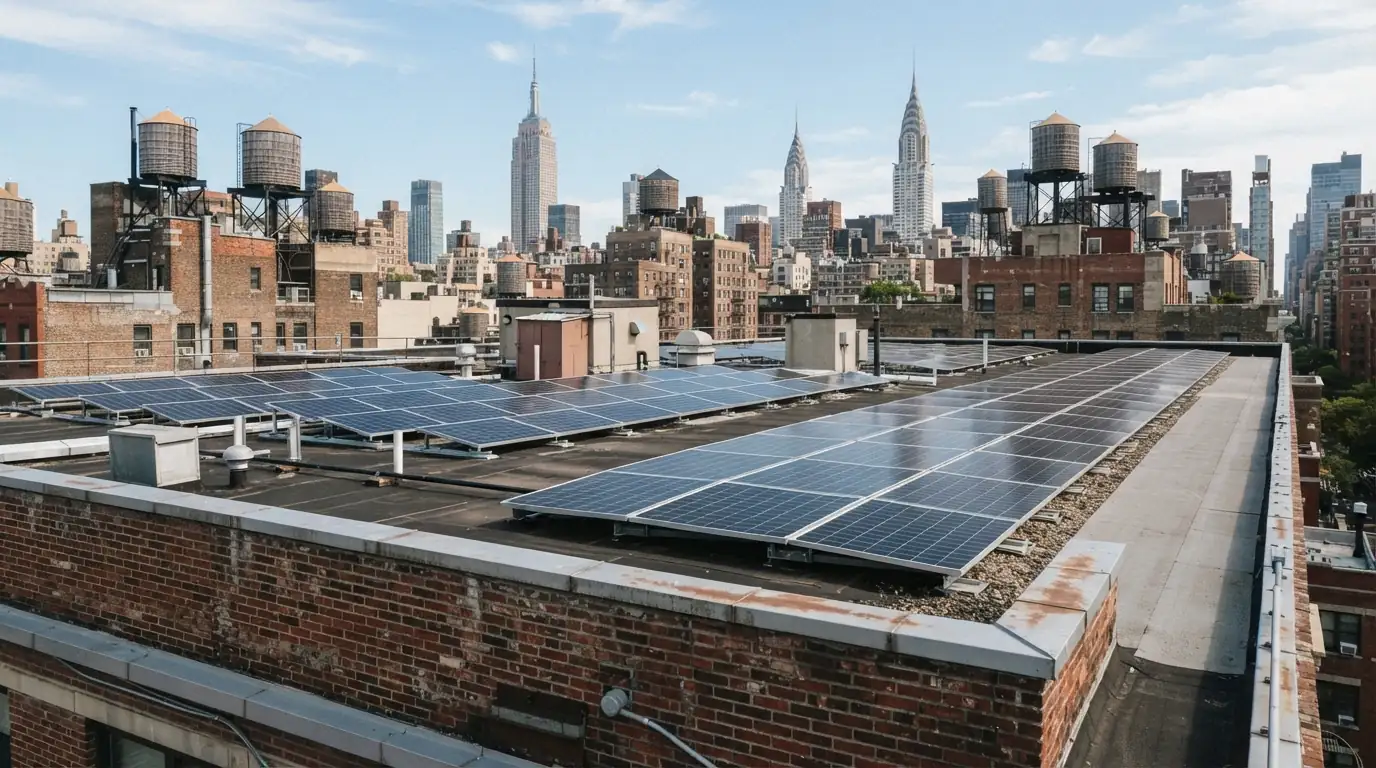
Local Laws 92 and 94 require a sustainable roofing zone on covered roofs, and 100 percent of that zone has to be covered by solar photovoltaic systems, a green roof, or a combination of the two. The same package also raised the reflectivity required under the city's existing cool roof rules.
The requirement applies to projects approved on or after November 15, 2019. Applications approved before that date were not required to comply.
What triggers them, and what does not
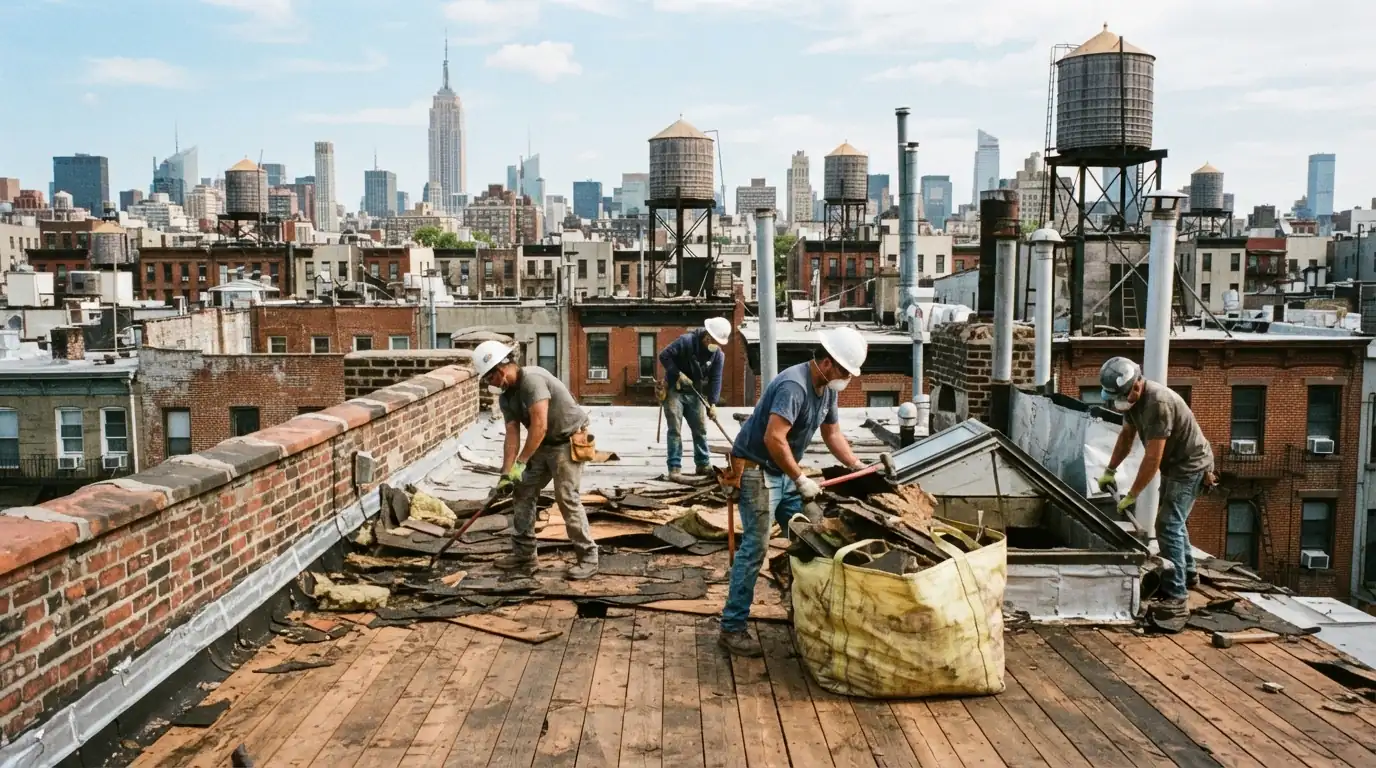
For an existing building, the trigger is replacing the entire existing roof deck or roof assembly. The Department of Buildings has been clear that not all roof work at existing buildings is subject to the requirement.
That distinction matters when you plan. Repairs to seams, flashing and drains leave the assembly in place. A coating over a sound roof restores its surface without replacing it. A full tear-off and new roof is the job that brings the sustainable roofing zone into play, and the permit filing has to include a Local Law 92/94 form certifying compliance or an exemption.
What comes out of the zone
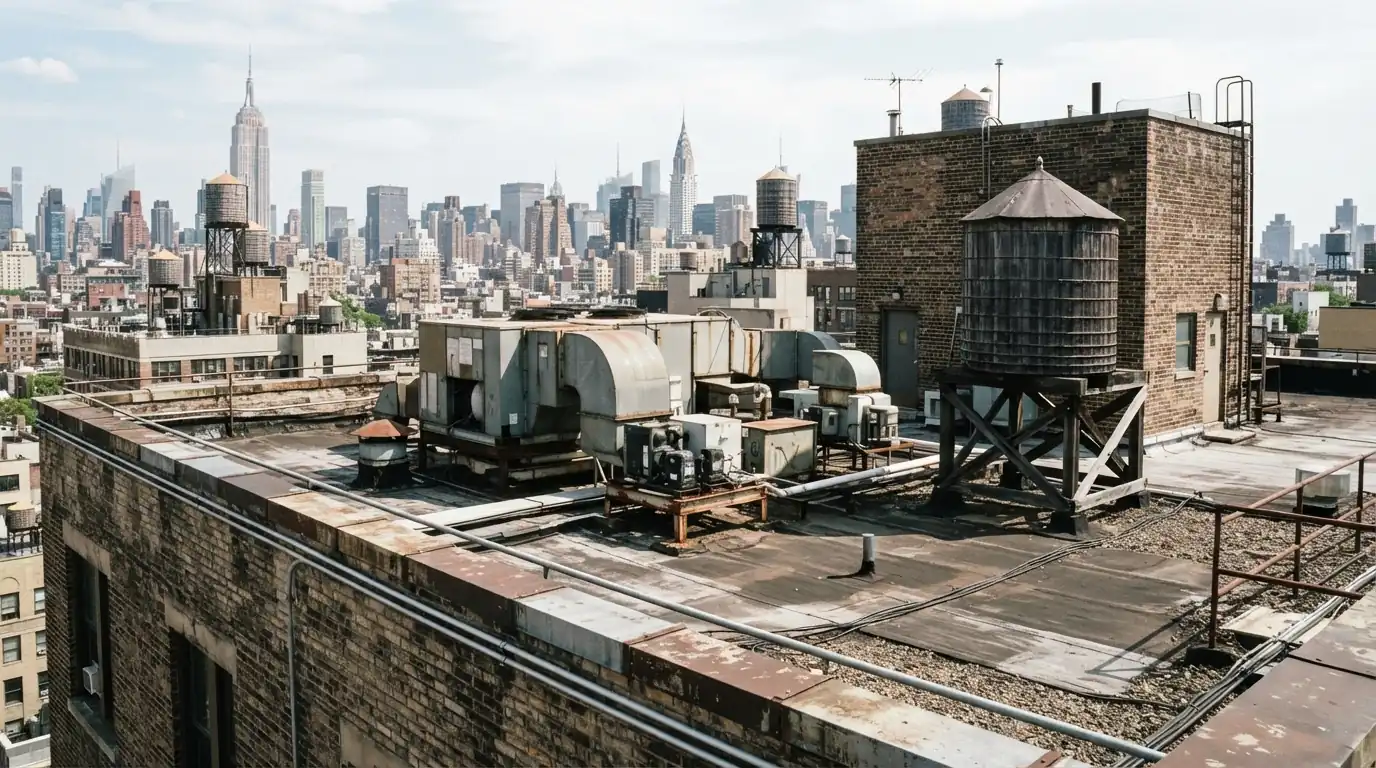
The zone is not simply the whole roof. The city allows exclusions for areas that must stay clear for setbacks or access under the Fire Code, the Construction Codes or the Zoning Resolution; areas taken up by rooftop structures, mechanical equipment, towers, parapets, guardrails and solar thermal systems; and areas used for stormwater management, including blue roofs installed under DEP guidelines.
Some steep-slope conditions and certain recreation areas can also be excluded. On a crowded city roof, the qualifying area left after exclusions can be much smaller than the roof itself, and on some roofs it is very small.
Solar, green roof, or both
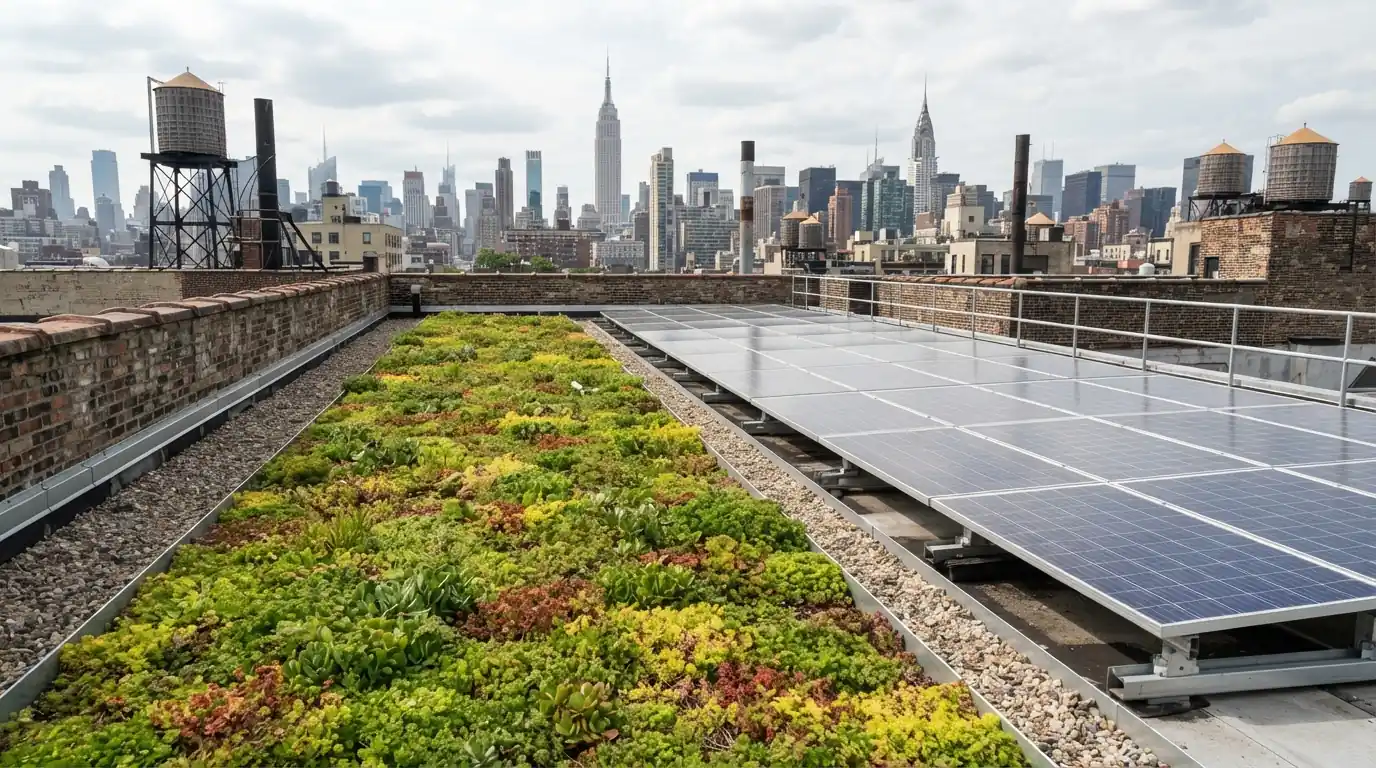
Solar suits roofs with open, sunny area and room for the fire access paths it needs. A green roof suits roofs that are shaded or where the owner wants rainwater held on the roof, but it adds weight, so the structure has to be checked by an engineer, and it needs periodic maintenance.
Many roofs end up with a combination: solar on the clear, sunny part and a green roof where solar cannot go. Either way, the membrane underneath has to be sound and suited to what sits on it, since lifting panels or a garden to fix a leak later is expensive.
Planning a replacement around the rule
Work out early whether your project replaces the whole assembly. If it does, have the qualifying zone measured with the building's design professional before the roofing system is chosen, because the choice of membrane, insulation and edge details depends on what goes on top.
Build the approvals and the sustainable system into the schedule and the budget from the start. A roofing quote for a full replacement in the city that never mentions the sustainable roofing zone is leaving out part of the job.
Sources
Rules and figures in this guide come from these published sources. Check them for changes before relying on a rule for your building.
- Local Laws 92/94: Solar and Green Roofs (NYC Department of Buildings)
- Green and Solar Roof Requirements, Buildings News (NYC Department of Buildings)
- NYC's Sustainable Roof Laws (Urban Green Council)
- Sustainable roofs required and deadline clarified by DOB (Design 2147)
- NYC Local Law 92 and 94: What to Know, including the permit form (Brooklyn SolarWorks)
Get it done
Services related to this guide
Flat Roof Replacement
Tear-off or recover, new insulation, new flashings and drains, with the DOB filing and the sustainable-roof question settled before work starts.
Learn moreGreen Roof Installation
Tray and built-in-place green roofs for owners meeting the sustainable roofing zone requirement, over a membrane built to carry them.
Learn moreRoof Coating & Restoration
Silicone and acrylic coatings that extend the life of a sound flat roof and make it reflective, applied only after seams and flashings are fixed.
Learn morePlanning a full roof replacement?
Call for a survey. The sustainable roofing zone is worked out before the roof is priced.