Roofing guide
The annual parapet observation rule, explained for building owners
Since January 2024, a lot of low-rise buildings that never faced a facade rule now need a yearly look at their parapets. Here is what the rule asks and how to meet it without fuss.
By Ada Lombardi, Roofing Guides EditorPublished 3 min read
Key takeaways
- Local Law 126 of 2021 added an annual parapet observation, starting January 1, 2024.
- It covers buildings of any height with a parapet facing a street, sidewalk or public right-of-way; detached one- and two-family homes are exempt.
- The owner keeps the report for six years; it is not filed with the Department of Buildings.
- Unsafe conditions are reported, the public is protected, and the condition is corrected within 90 days.
Where the rule comes from
Local Law 126 of 2021 is best known for creating periodic inspections of parking garages. The same law added a section to the Administrative Code requiring periodic observation of building parapets, and the city set January 1, 2024 as the start date to give owners time to prepare.
Which buildings it covers
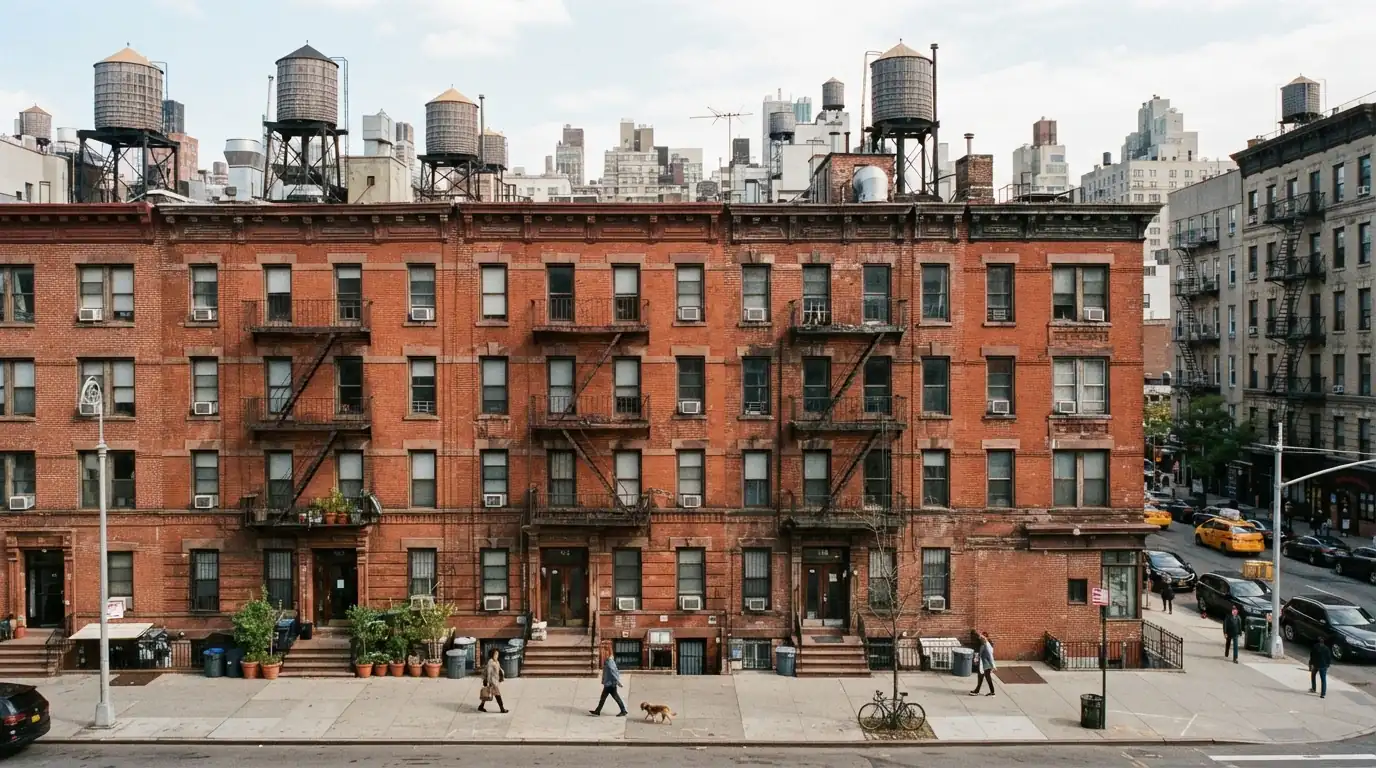
The rule applies to buildings in New York City with parapets facing a street, sidewalk or other public right-of-way, regardless of height. Detached one- and two-family homes are exempt, and so are buildings with barriers that keep the public away from the exterior wall.
That is a much wider net than the Facade Inspection Safety Program, which runs on a five-year cycle and excludes buildings under six stories. Walk-ups, rowhouse apartment buildings and small mixed-use buildings that never had a facade inspection now need a yearly parapet observation.
What the observation involves
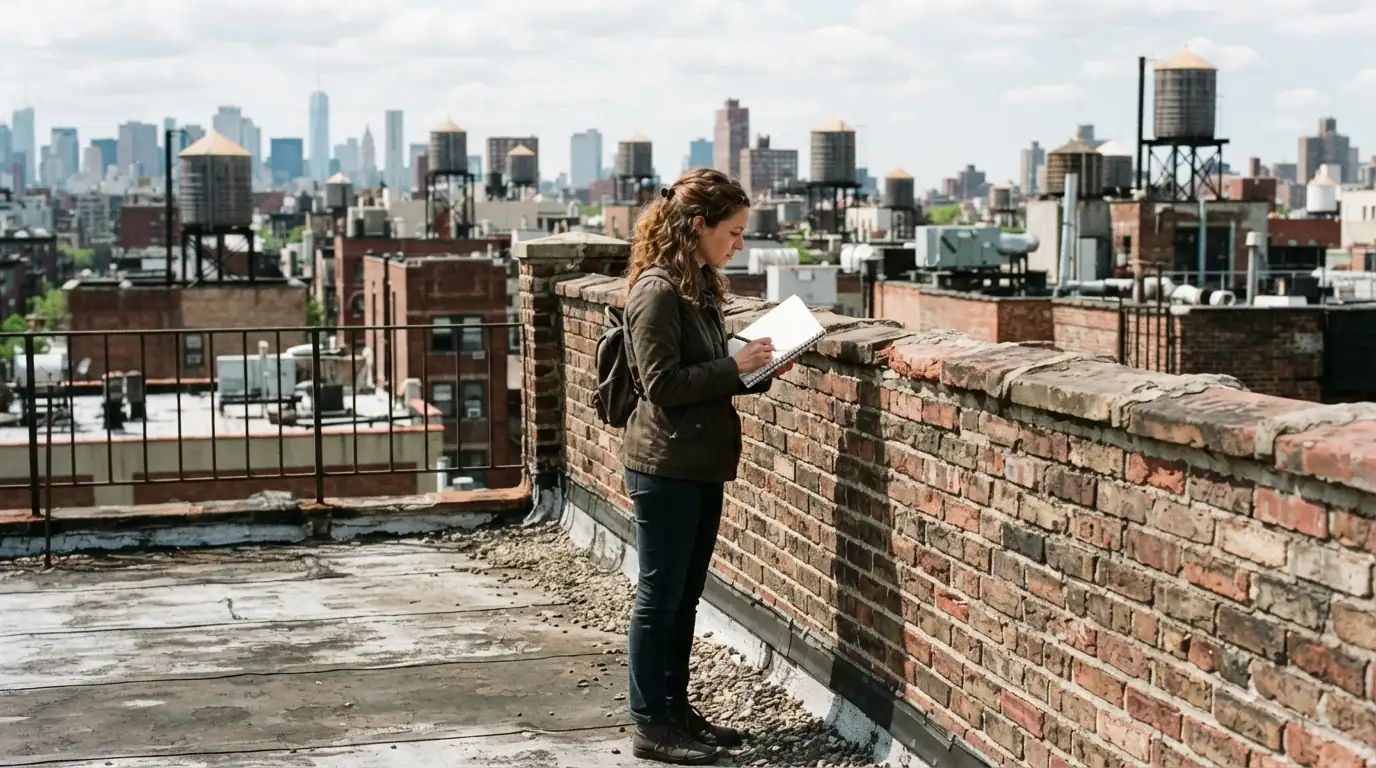
The observation has to be an up-close look at the entire parapet, from the roof or a fire escape, done once each calendar year between January 1 and December 31. The rules allow it to be performed by any competent person, such as a mason, superintendent, architect or engineer, not only a licensed professional.
The result is a written observation report. It is not filed with the Department of Buildings. The owner keeps each report for at least six years and provides it if the department asks for it.
When a parapet is unsafe
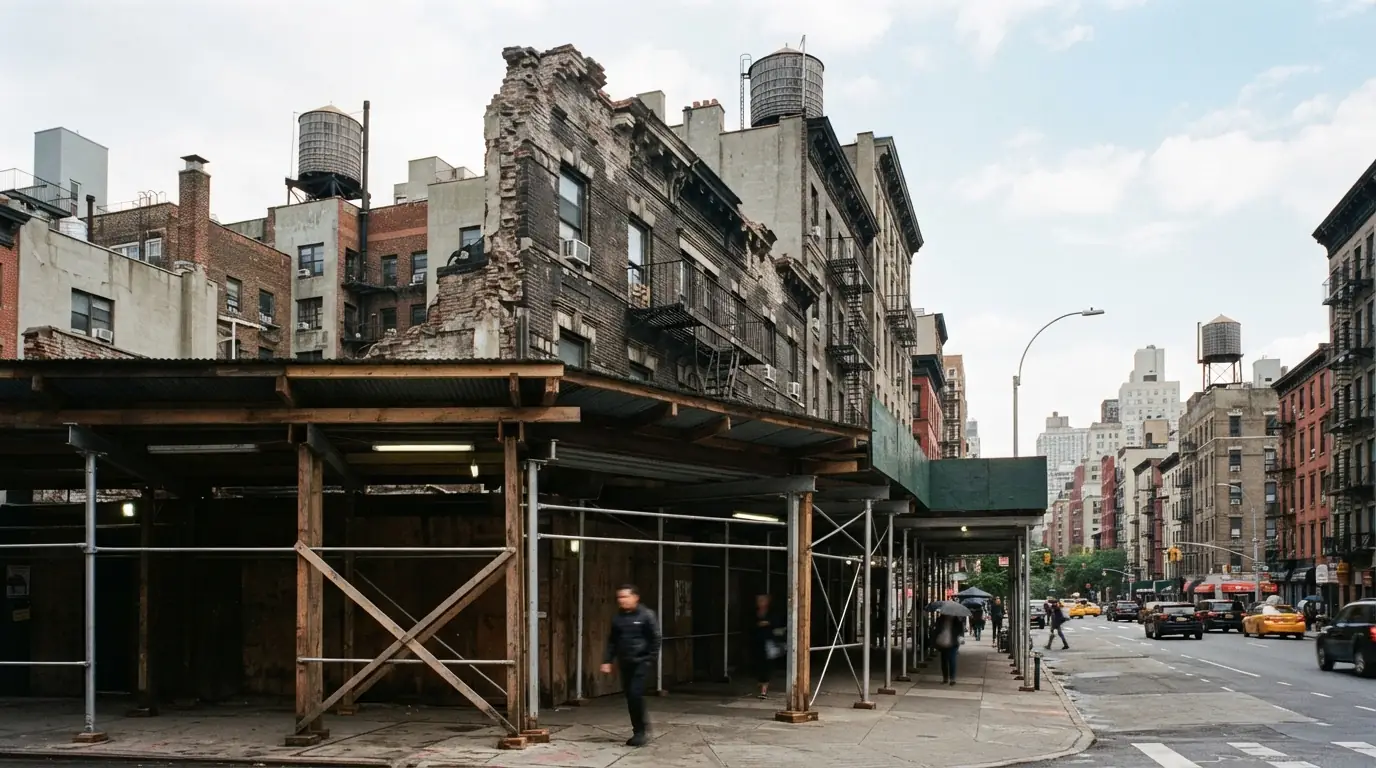
If the observation finds an unsafe condition, the person who did it has to notify the Department of Buildings right away. The owner has to install public protection, such as a sidewalk shed, fence or safety netting, and keep it in place until the problem is fixed.
The unsafe condition has to be corrected within 90 days. Masonry work goes slowly in cold weather, which is one reason not to leave the observation until December.
Making it painless
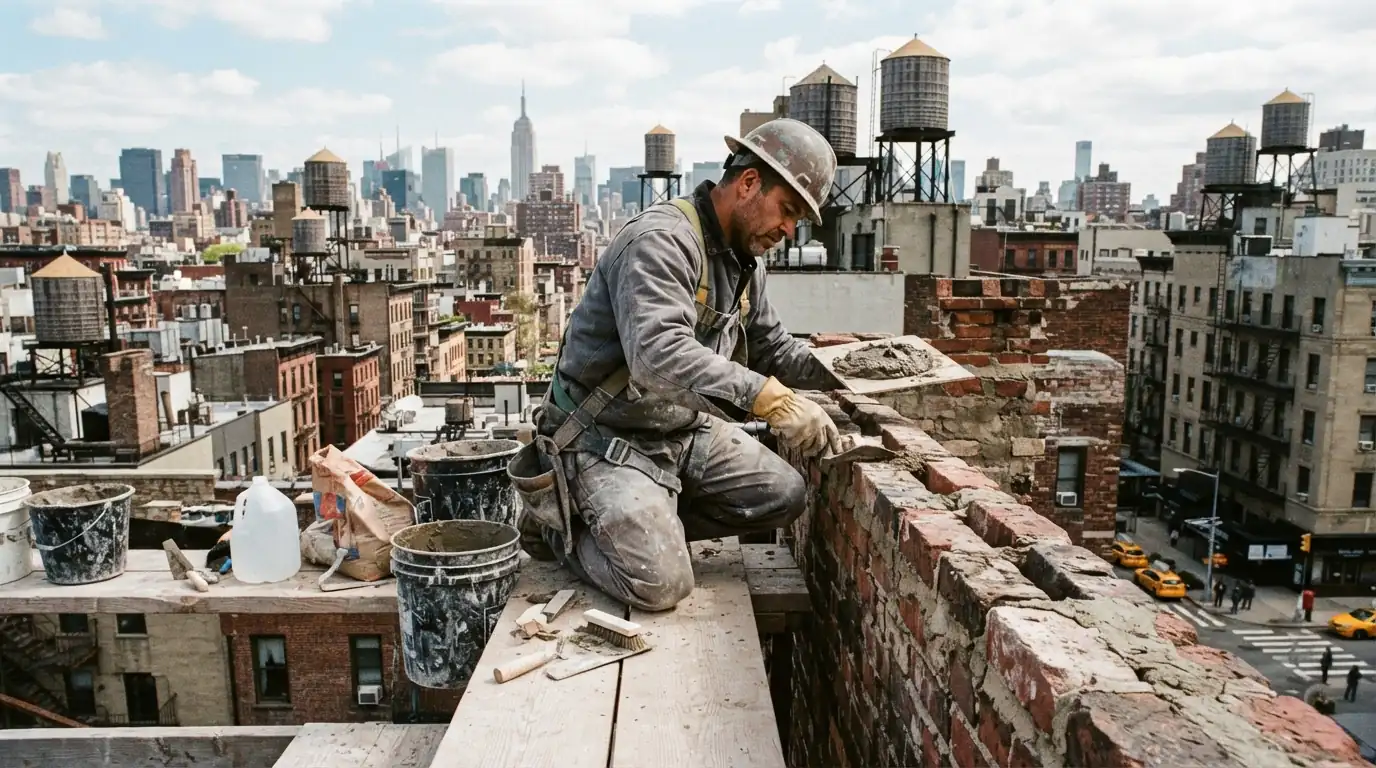
The simplest approach is to pair the observation with work that already puts someone on the roof: a spring roof inspection, a maintenance visit, or planned exterior work. Whoever is checking the roof is already standing next to the parapet.
Keep each year's report with photos in one place, so six years of records are ready if the department asks. And treat recommended repairs seriously even when nothing is yet unsafe; a parapet with open joints this year is next year's unsafe condition.
Sources
Rules and figures in this guide come from these published sources. Check them for changes before relying on a rule for your building.
- New rule mandates annual parapet inspections for New York City buildings (Building Design + Construction)
- NYC Parapet Inspections Bulletin (Hoffmann Architects + Engineers)
- NYC To Require Annual Parapet Inspections Come 2024 (Cole Schotz)
- NYC Annual Parapet Inspection Requirement Fact Sheet (Rand Engineering)
Get it done
Services related to this guide
Annual Parapet Observation
For buildings with a street-facing parapet: a yearly up-close look, a written observation report, and repair of anything unsafe.
Learn moreParapet Wall Repair
Open joints, bulging brick and failed inside-face flashing are where many top-floor leaks begin. We repoint, rebuild and reflash.
Learn moreCoping Stone & Cap Replacement
Cracked clay tile, loose stone and rusted metal caps let water straight into the top of a wall. We reset, replace and flash coping.
Learn moreParapet observation due?
Call to schedule it with your roof check and get the report for your records.