Roofing guide
Roof coating or replacement: how to tell which your flat roof needs
A coating costs less than a new roof and avoids a tear-off. On the right roof it is a smart move. On the wrong one it is money spent covering a problem.
By Ada Lombardi, Roofing Guides EditorPublished 3 min read
Key takeaways
- A coating restores the surface of a dry, sound roof; it does not fix wet insulation, failed flashing or poor slope.
- A moisture survey confirmed with core cuts decides whether a roof can be coated.
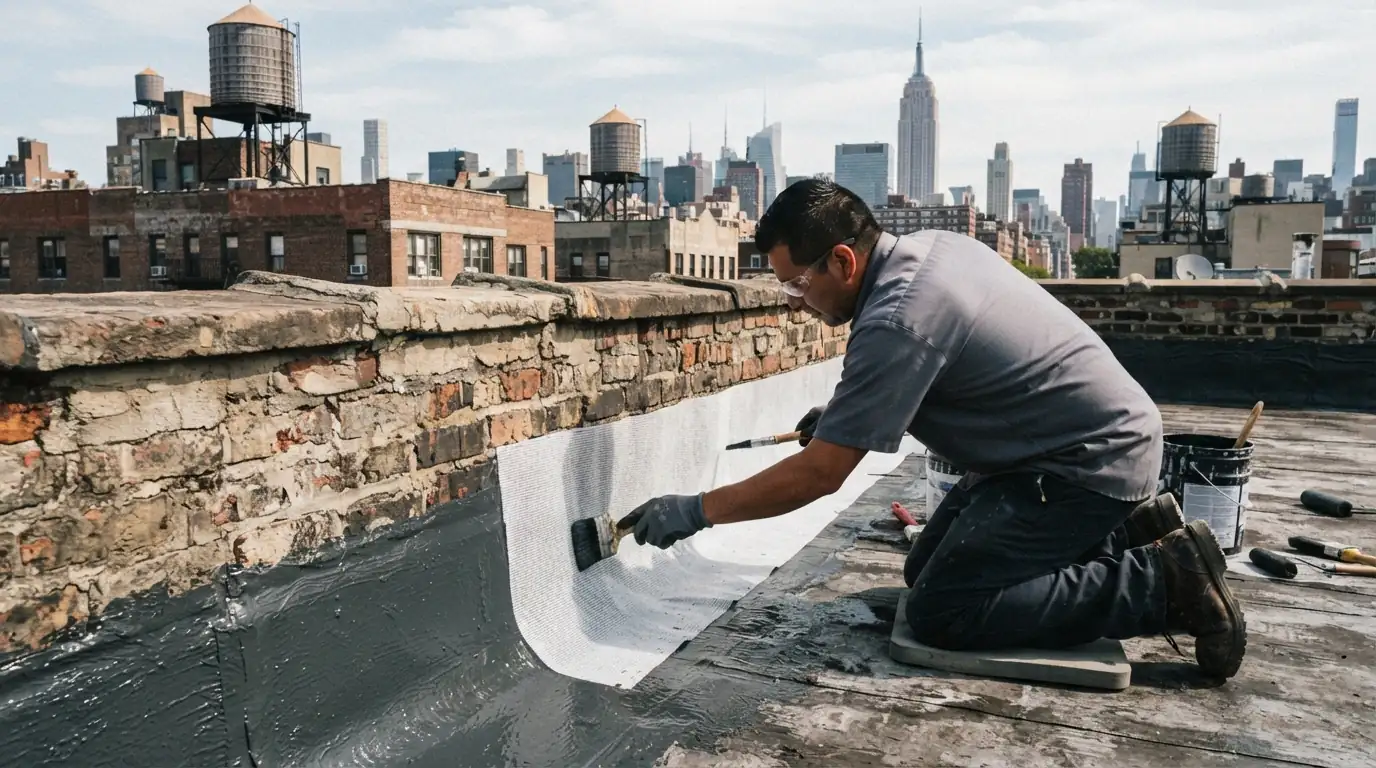
- Seams, flashing and penetrations are reinforced before any coating goes on.
- A coating restores a roof without replacing its assembly, which is what triggers Local Laws 92 and 94.
What a coating can and cannot do
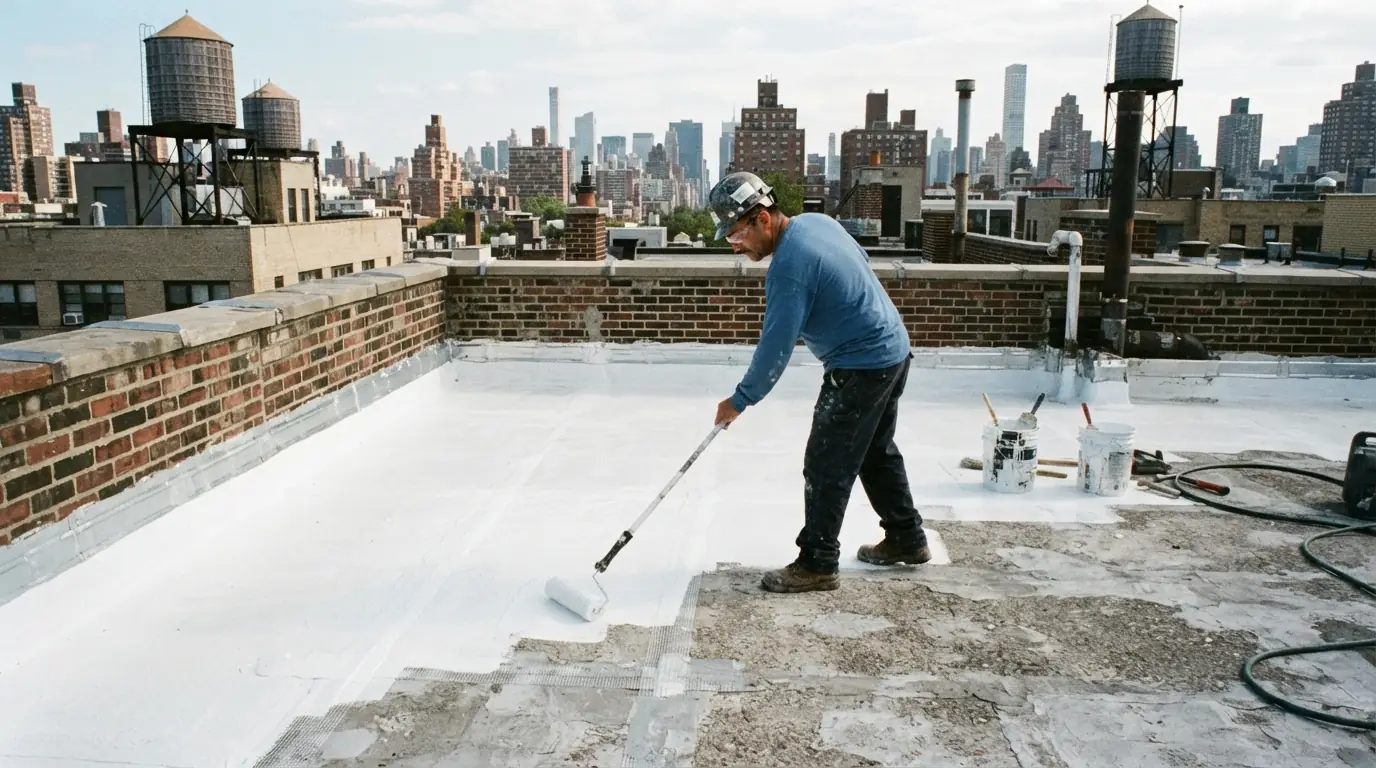
A roof coating is a liquid applied over an existing membrane in measured coats. It adds a new wearing surface, seals small cracks and weathered areas, and can turn a dark roof reflective. Model building codes allow a new protective coating over existing modified bitumen, built-up, single-ply and several other roof types without tearing them off.
What it cannot do is fix what is underneath. Wet insulation stays wet under a coating. A failed flashing at a parapet still leaks unless it is rebuilt first. A roof that ponds still ponds, because a coating adds no slope.
The test that decides it
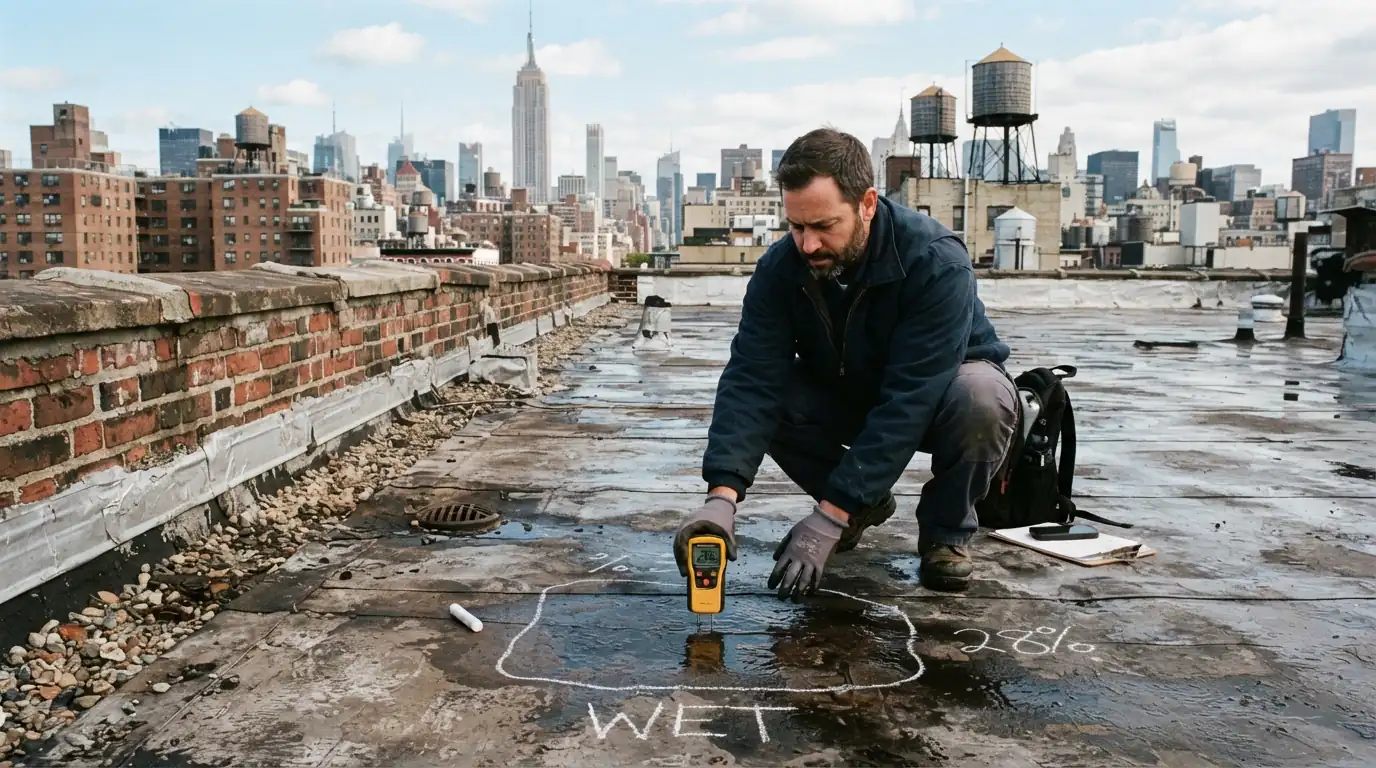
Before anyone quotes a coating, the roof should be checked for moisture. Readings taken on a grid across the surface show where the insulation is wet, and small core cuts confirm what the readings suggest and show how many layers are there.
If the wet areas are small and isolated, they can be cut out and replaced with new insulation and membrane before the roof is coated. If wet insulation runs across a large part of the roof, coating it traps the water, and the money is better spent on replacement.
Signs a roof is a good candidate
The membrane is weathered but watertight across most of the roof. Leaks, where there are any, trace back to details such as flashings, seams or drains that can be repaired. Moisture readings come back dry, or nearly so.
The roof drains, or a coating rated for standing water is chosen for the low areas. And the owner wants reflectivity or a longer life from a roof that is not yet finished.
Signs it needs replacing instead
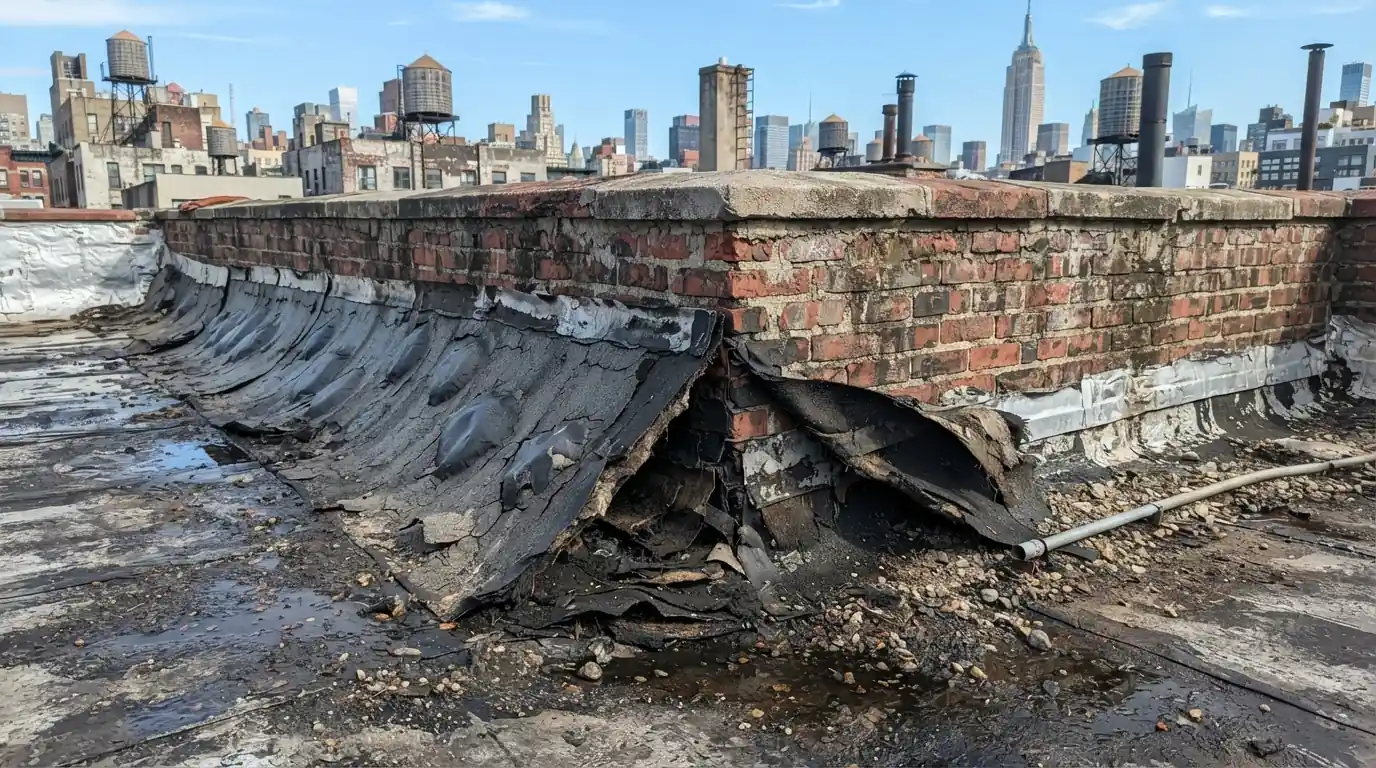
Widespread blistering, seams splitting in many places, a membrane that has shrunk and pulled away from its flashing, or a deck that feels soft underfoot all point past a coating. So do leaks that keep appearing in new places after each repair.
The deciding evidence is usually the moisture survey. A roof that is wet across a wide area is a replacement, whatever its surface looks like.
Cost and the city rules
Construction in the New York City metro runs well above the national average, which makes extending the life of a sound roof more valuable here than in most places. A coating done at the right time can put off a full replacement.
It also matters for the city's roof rules. Local Laws 92 and 94 apply when an existing building replaces its entire roof deck or roof assembly, which a coating does not do. A white coating rated for the purpose is also one way a darker roof is brought up to the city's reflectivity requirement.
Sources
Rules and figures in this guide come from these published sources. Check them for changes before relying on a rule for your building.
Get it done
Services related to this guide
Roof Coating & Restoration
Silicone and acrylic coatings that extend the life of a sound flat roof and make it reflective, applied only after seams and flashings are fixed.
Learn moreRoof Leak Detection
For the leak three roofers have already patched. Moisture surveys, core cuts and water tests show where the roof is wet and why.
Learn moreFlat Roof Replacement
Tear-off or recover, new insulation, new flashings and drains, with the DOB filing and the sustainable-roof question settled before work starts.
Learn moreWondering if a coating will work?
Call for a moisture check and an honest answer.