Roofing guide
Repairing a slate roof in a New York City historic district
Slate can outlast several owners of the house beneath it. In a historic district, the city also has a say in how it is repaired. Here is how the two fit together.
By Ada Lombardi, Roofing Guides EditorPublished 3 min read
Key takeaways
- Good slate usually outlasts the nails and flashing that hold it, so most repairs replace those, not the stone.
- In historic districts, the Landmarks Preservation Commission permits roof work, and historic materials are to be repaired or replaced in kind wherever possible.
- Replacement slate is matched by color, size and thickness; salvaged slate fills gaps for discontinued stone.
- Tar and roof cement on slate trap water and make proper repairs harder.
How slate roofs fail
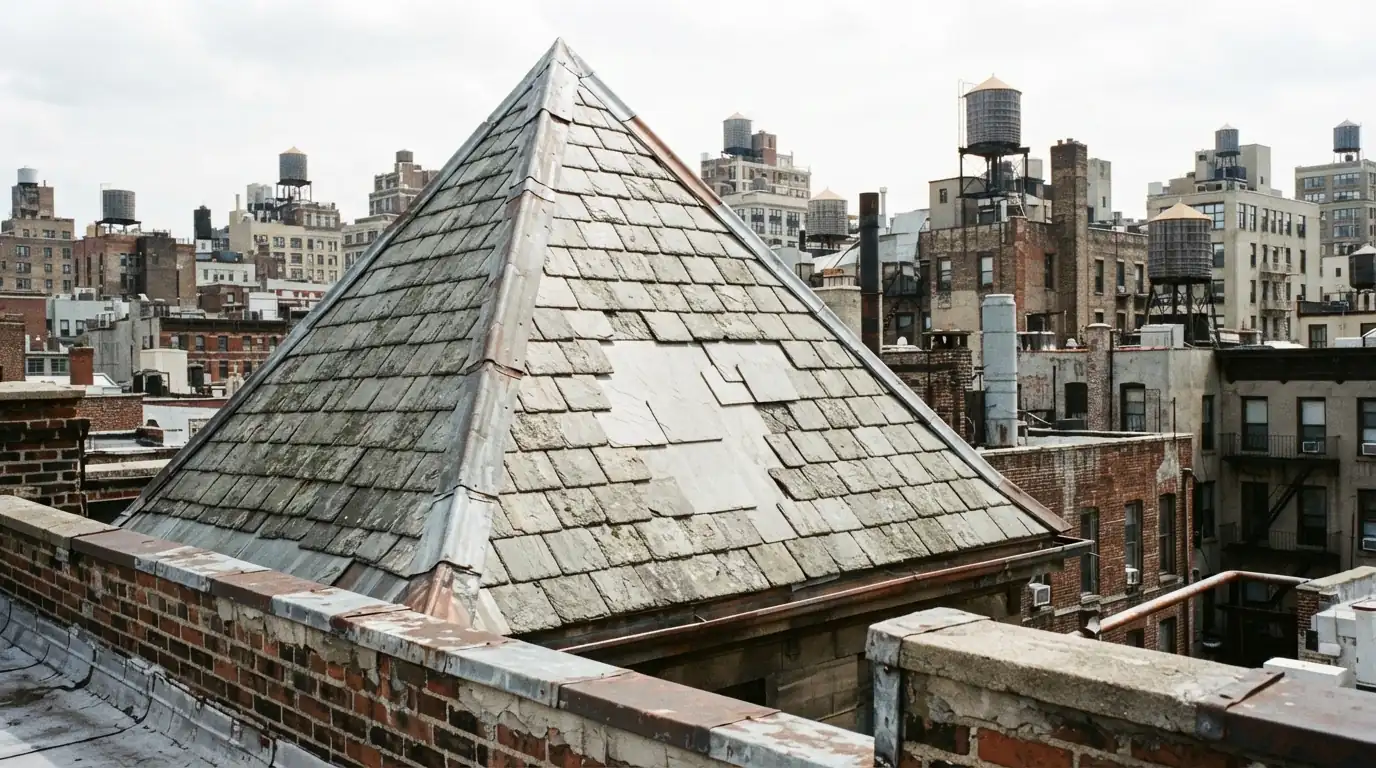
Slate is stone, and good slate lasts a very long time. What wears out first is everything around it: the nails rust through and slates slip out of their courses, copper valleys and chimney flashing thin and split, and the felt underneath dries out.
Some slate does fail on its own. Softer stone flakes and delaminates with age, and any slate cracks when people walk on it. On a roof where the stone itself is breaking down across every slope, replacement becomes the honest answer.
Why slate is repaired, not replaced
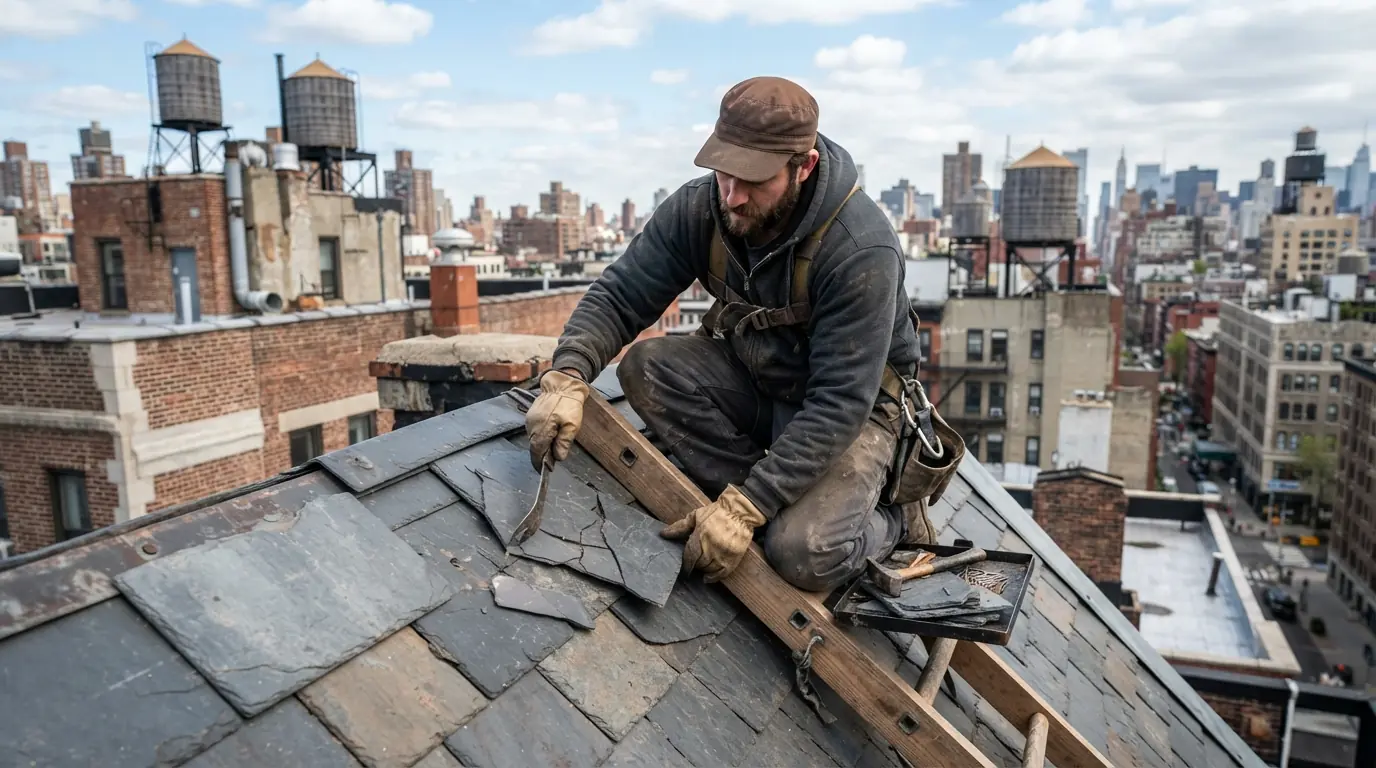
A broken slate is removed with a slate ripper, which cuts the old nails without disturbing the courses around it. A matching slate is slid into place and held with a copper slate hook, or with a copper nail covered by a small bib flashing so the nail head does not leak.
Worn valleys and flashing are replaced in copper or lead-coated copper, so they last as long as the stone around them. Done this way, a slate roof can keep going for generations with periodic repair rather than a single large replacement.
What Landmarks review means
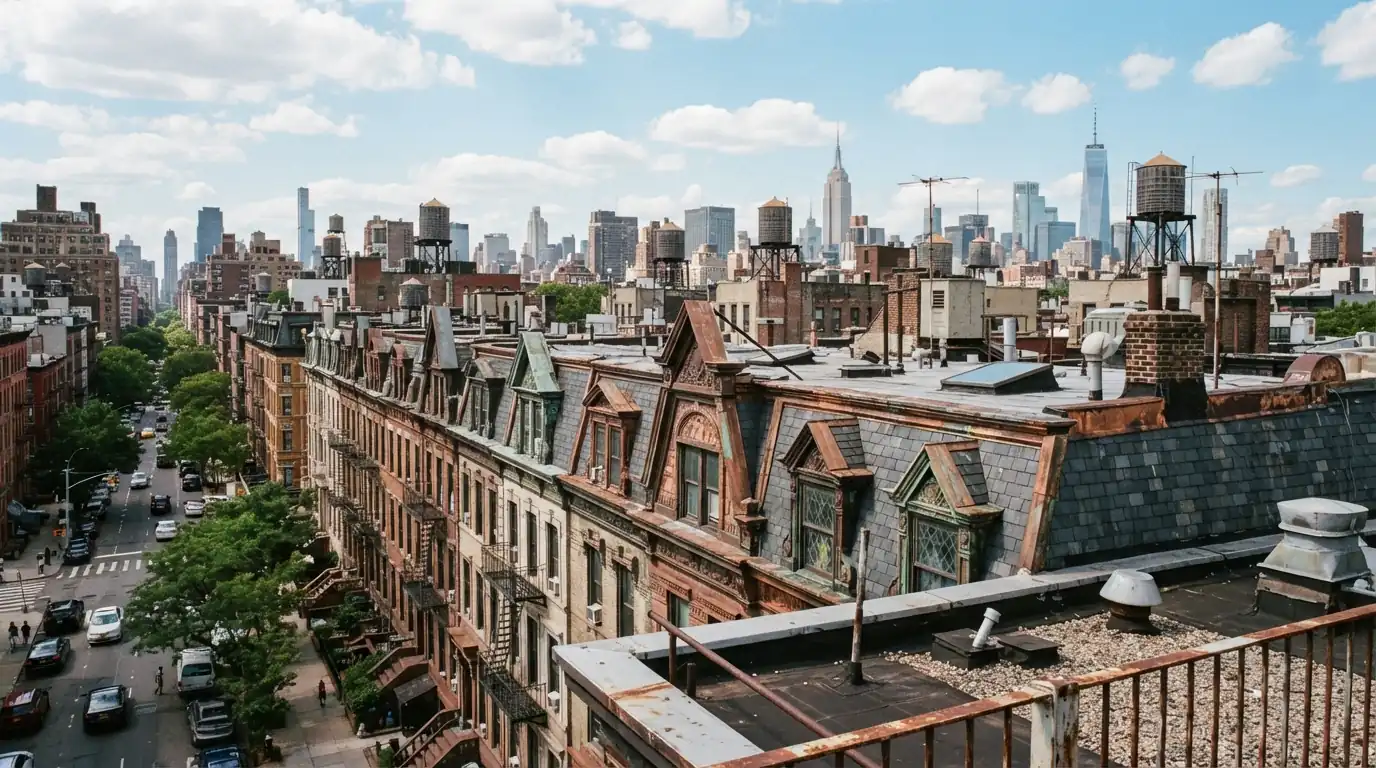
In a historic district or on a landmark, roof work goes through the Landmarks Preservation Commission. The Commission's permit guidance says historic materials must be maintained, repaired and replaced in kind whenever possible, and its staff can issue permits for repair and replacement work that meets its criteria.
Permits the Commission has issued show what that looks like in practice: slate shingles and copper flashing replaced in kind, with sound historic material kept. Historic districts with slate and other historic roofing range from Mount Morris Park in Harlem, designated in 1971 and extended in 2015, to Park Slope, Ditmas Park and Greenwich Village.
Matching slate and metal
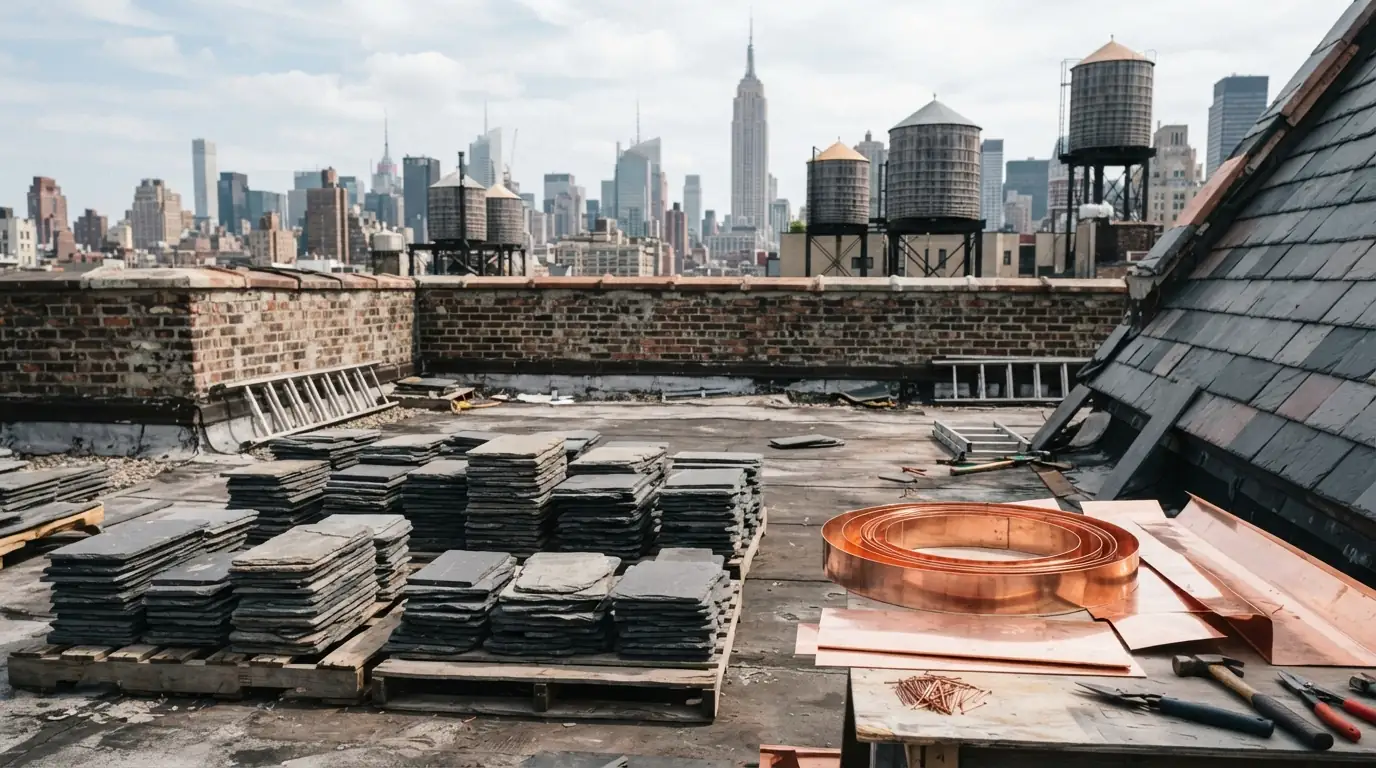
Replacement slate is matched by color, size and thickness, and by how it weathers. Many colors are still quarried. Where a stone is no longer available, salvaged slate from other roofs fills the gap.
Metal is matched too. Copper flashing, valleys and snow guards are replaced in copper where copper was used, which is both what in-kind review expects and what lasts.
Planning slate work
Start with an inspection that does not involve walking on the slate: from roof ladders and hooks, a lift, or binoculars from the ground. Gather any fallen pieces, since they help match the stone.
If the house is in a historic district, get the Landmarks permit before work starts, and plan access such as staging or a lift. Doing slate, flashing and snow guards in one visit keeps access costs down.
Sources
Rules and figures in this guide come from these published sources. Check them for changes before relying on a rule for your building.
Get it done
Services related to this guide
Slate Roof Repair
Slipped and broken slates replaced one at a time with matching stone and proper hooks or nails, so a slate roof keeps its long life.
Learn moreMansard Roof Repair
Slate and shingle mansards, with the dormers, gutters and flashing that come with them, repaired on steep faces most roofers avoid.
Learn moreMetal Roofing
Standing seam, copper and flat-seam metal installed and repaired on pitched roofs, mansards, dormers and bay tops.
Learn moreSlate roof needs work?
Call and we will match the stone and plan the repair around any Landmarks review.